0%

Choosing the right Membrane Switch Keypad begins with understanding how people, equipment, and environments interact. A keypad used on medical equipment needs different priorities from one installed on factory machinery. Operators may wear gloves, press keys hundreds of times daily, or work near dust and moisture. These details affect the required actuation force, tactile feedback, graphic overlay, sealing method, and connector design.

Start with the application, not appearance. Define the number of keys, switching function, operating temperature, cleaning process, and expected service life. A reliable manufacturer should provide material specifications, electrical ratings, durability data, and prototype testing. Polycarbonate overlays can offer clear graphics and strong abrasion resistance, while polyester may suit demanding industrial surfaces. Backlighting, embossed keys, shielding, and custom windows also influence cost and usability.

Small choices matter.

Field experience shows that attractive graphics cannot compensate for poor feedback or weak adhesive bonding. Test the keypad with real users, gloves, cleaning agents, and normal installation pressure. Check whether symbols remain readable under glare. Confirm that the tail connector fits the control board without sharp bending. These practical checks often reveal problems that drawings miss.

No checklist is perfect. A keypad that performs well in a laboratory may feel unsuitable on a production floor. Engineers should review test results, supplier communication, and maintenance needs before approving production. The best Membrane Switch Keypad balances function, durability, operator comfort, and realistic manufacturing limits. Careful selection reduces replacement costs and supports safer, more consistent equipment operation.
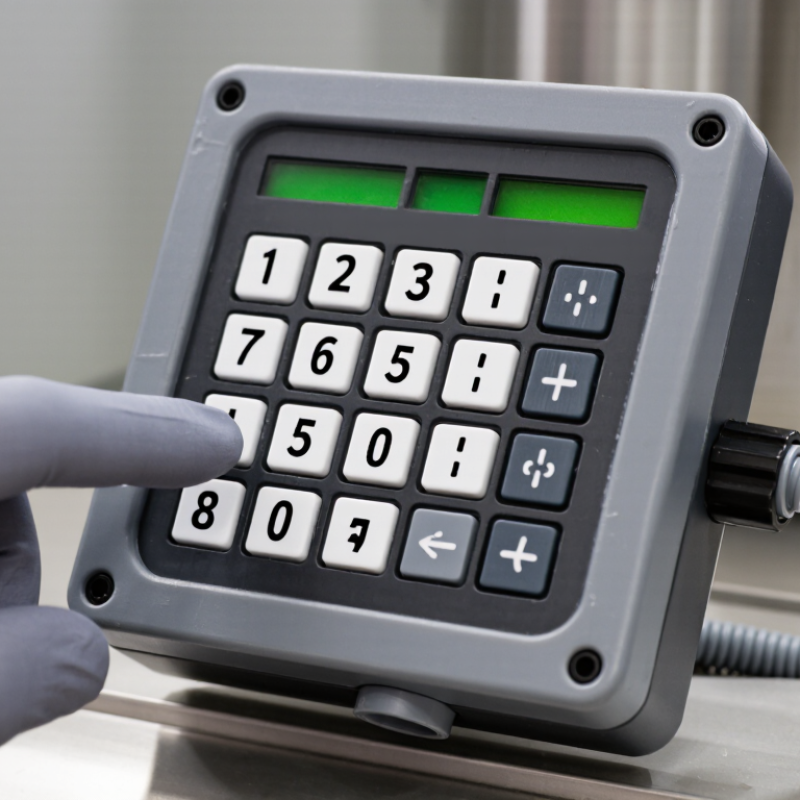
How to Choose the Right Membrane Switch Keypad?

Define Application Needs: IP Ratings, Temperature, and Operating Environment

Choosing a membrane switch keypad starts with the application, not the graphic design. List dust, water, chemicals, sunlight, vibration, and cleaning methods. The IEC 60529 standard defines IP ratings for enclosure protection. An IP65 keypad is dust-tight and resists water jets. IP67 adds temporary immersion up to one metre for 30 minutes, under test conditions. However, the rating may not cover cable exits or the complete control assembly.

Temperature needs equal attention. Record the lowest and highest operating temperatures, storage conditions, and rapid temperature changes. IEC 60068 environmental tests can help evaluate heat, cold, humidity, and vibration. A keypad used beside a furnace may need high-temperature materials, stronger adhesives, and a protective overlay. Outdoor equipment also faces condensation and ultraviolet exposure. Do not select a wide temperature range from a catalogue alone. The connector, tail, adhesive, and printed ink may fail earlier.

I once underestimated cleaning exposure.

Laboratory testing should reflect real use. Wipe the keypad with the intended disinfectant, then inspect cracking, swelling, fading, and delamination. The 2024 Global E-waste Monitor reports 62 million tonnes of electronic waste in 2022 and projects 82 million tonnes by 2030. Longer service life can reduce replacement waste, but only when the design survives its environment. Document every assumption. A higher IP number is not automatically a better keypad.

How to Choose the Right Membrane Switch Keypad?

Define application needs by comparing ingress protection, temperature requirements, and operating environment.

IP54

Limited dust ingress protection and protection against water splashes. Suitable for controlled indoor environments.

IP65–IP67

Dust-tight protection with resistance to water jets or temporary immersion, depending on the second digit.

Temperature and Environment

IP ratings do not define temperature limits. Confirm the keypad’s specified operating range, UV exposure, chemicals, vibration, and cleaning conditions.

Select Circuit Technology: Silver Ink, Copper, and Resistance Below 100 Ω

How to Choose the Right Membrane Switch Keypad?

Circuit technology determines reliability, feel, and production cost. Grand View Research’s 2024 membrane switch market analysis estimates the global market will grow at about 5.8% annually through 2030. That growth reflects demand for thinner, sealed control panels. Silver ink suits most low-power keypads. It prints easily on flexible polyester and keeps tooling costs manageable. However, long traces and narrow lines can raise resistance. Copper circuits offer much lower resistance and better current capacity. They also support dense layouts and repeated actuation. The trade-off is higher processing cost and greater sensitivity to corrosion if protection is poor.

For a resistance target below 100 Ω, define the measurement clearly. Measure the complete closed circuit, not only the printed trace. Include tail length, connector resistance, temperature, and contact pressure. IEC 60512-2-1 provides recognized methods for measuring contact resistance. In practical designs, a short silver circuit may remain comfortably below 100 Ω. A long or crowded layout may not. Copper usually provides more margin, but it is not automatically better. I have seen prototypes pass at room temperature and drift during humidity testing. That gap deserves attention.

Tips: Ask the manufacturer for resistance data from production samples, not one laboratory coupon. Specify the test current, probe locations, and temperature. Check both initial and post-life-cycle results. If the keypad controls a sensor or weak signal, choose copper or widen silver traces. Do not treat “below 100 Ω” as a universal guarantee. Prototype early. Small layout changes matter.

How to Choose the Right Membrane Switch Keypad? - Select Circuit Technology: Silver Ink, Copper, and Resistance Below 100 Ω
Selection Dimension Silver Ink Circuit Copper Circuit Design and Selection Guidance
Typical conductor material Conductive silver-filled ink printed onto a flexible polyester substrate. Etched or laminated copper foil, commonly bonded to a flexible polyimide substrate. Choose the conductor system according to current, geometry, flexibility, environmental exposure, and production volume.
Typical circuit resistance Often approximately 10–100 Ω for a complete printed trace path, depending on trace length, width, thickness, ink formulation, and contact design. Commonly below 10 Ω for short, properly designed traces; longer or narrower traces increase resistance.
Bulk electrical conductivity Lower than solid copper because conductive particles are dispersed in a polymer binder. High conductivity; annealed copper has a resistivity of approximately 1.68 × 10⁻⁸ Use copper when the circuit needs lower voltage drop, lower heating, or greater electrical margin.
Recommended current level Best suited to low-current signal switching and control inputs. The allowable current depends on trace dimensions and ink specifications. More suitable for higher current, repeated pulsed loads, LED arrays, backlighting, or circuits with tighter voltage-drop limits. Do not select by resistance alone; confirm continuous current, peak current, temperature rise, and connector ratings.
Minimum practical trace geometry Well suited to standard keypad traces and moderate-density layouts. Fine-line capability depends on screen-printing process control. Supports finer and more consistent conductor geometries through photochemical etching or precision lamination. For dense routing, small connector pitches, or tightly controlled impedance, copper generally provides more layout freedom.
Flexibility and bending Flexible and economical for normal membrane-switch construction; repeated sharp bending can stress the printed conductor. Flexible when built on polyimide, but bend radius and dynamic-flex requirements must be controlled to prevent copper fatigue. For repeated dynamic flexing, specify the bend radius, flex-cycle target, copper thickness, and neutral-axis construction.
Environmental resistance Requires suitable encapsulation, overlays, and edge sealing where moisture, chemicals, abrasion, or humidity are present. May require protective plating or coatings because exposed copper can oxidize and may be affected by corrosive environments. Evaluate temperature, humidity, salt spray, cleaning agents, UV exposure, and ingress protection as a complete assembly.
Contact and connector compatibility Can be used with tail connectors and conductive contact pads designed for printed silver circuits. Works well with fine-pitch connectors and plated contact areas when controlled impedance or low contact resistance is important. Match the connector pitch, contact finish, insertion cycles, tail thickness, and specified contact resistance.
Production economics Generally higher in tooling and material cost, particularly when multilayer construction, plating, or fine features are required. Use silver ink when its electrical and environmental performance meets the requirement; justify copper when performance margin is valuable.
Best-fit applications Control panels, appliance keypads, industrial interfaces, medical user interfaces, and other low-current switching applications. High-density keypads, illuminated interfaces, low-voltage-drop circuits, higher-current functions, and demanding flex-circuit designs. Define the application by electrical load and environmental conditions rather than by keypad appearance alone.
Recommended verification tests Four-wire resistance measurement, contact resistance, insulation resistance, dielectric withstand, flex test, humidity test, and abrasion evaluation. Four-wire resistance measurement, contact resistance, insulation resistance, dielectric withstand, flex-cycle test, plating durability, and corrosion evaluation.
Practical choice when the target is <100 Ω Specify the maximum complete path resistance, including traces, vias, contacts, connectors, and any tail interface—not only the conductor material.
Engineering note: Resistance values are representative design ranges, not universal limits. The final result depends on conductor length, width, thickness, temperature, contact construction, connector interfaces, and production tolerances. Confirm performance with prototype measurements and the applicable product test standards.

Match Tactile Performance: 100–700 gf Actuation Force and Key Travel

How to Choose the Right Membrane Switch Keypad?

Match Tactile Performance: 100–700 gf Actuation Force and Key Travel

Actuation force determines how a keypad feels under the finger. A 100 gf switch presses lightly and supports fast, repeated input. It may feel too sensitive in a vibrating machine. A 700 gf switch requires deliberate pressure and reduces accidental activation. However, it can cause fatigue during long operating sessions. The right target depends on the user, work surface, and input frequency.

Key travel shapes feedback as much as force. Short travel can create a crisp, compact response. Longer travel gives the operator more physical confirmation. Many industrial interfaces use tactile feedback near the actuation point, rather than relying on sound alone. Measure force with a controlled test fixture, not just a fingertip. Test several samples across the keypad. Small variations matter.

In practical evaluations, I compare the force curve, return feel, and travel distance together. A keypad rated at 300 gf may feel softer or sharper, depending on its dome design. Temperature, overlay thickness, and mounting pressure can also change the result. Do not select a force value from a datasheet alone. Put prototypes in gloves, under vibration, and during repeated presses. One weakness remains easy to miss: a pleasant bench test may fail during an eight-hour shift. Recheck the choice with real operators before finalizing the interface.

Verify Durability: 1–10 Million Actuations and IEC 60529 Protection

A durable membrane switch keypad should match its expected workload, not just display a large actuation number. Ratings from 1 to 10 million actuations indicate expected switching cycles under defined test conditions. That number needs context. Ask whether testing used the final overlay, printed graphics, connector, and mounting method. A 1 million cycle rating may suit a light-duty control panel. High-use equipment may require 10 million cycles or more.

Experienced engineers examine failure patterns, not only the final count. They test samples with the specified operating force, travel, and electrical load. They also inspect legends, adhesive edges, and tactile domes after repeated pressing. Small changes matter. A stiff button can increase finger fatigue and stress the printed circuit. Temperature, humidity, dust, and cleaning chemicals may shorten service life. Laboratory results are useful, but field conditions can be less forgiving.

IEC 60529 protection ratings address resistance to solid particles and water ingress. They describe the tested assembly, not automatically every keypad with a similar design. Confirm the exact IP level, test configuration, gasket condition, and cable-entry method. For example, an IP65 claim requires protection against dust and water jets under the applicable test setup. Request test records and inspect production samples. I have seen promising prototypes fail after installation because the enclosure compressed the seal unevenly. Durability is rarely one number. It is the combined result of cycles, environment, installation, and maintenance.

Check Compliance, Customization, and Prototype Validation Before Production

Choosing a membrane switch keypad should begin with compliance, not appearance. Define the device’s environment: dust, moisture, heat, chemicals, vibration, and cleaning methods. Then identify applicable electrical, safety, ingress, flammability, and accessibility requirements for its target market. Ask suppliers for test methods and records, not vague claims. Paperwork matters.

Customization should support function, not decoration alone. Specify the overlay material, graphic layers, key shape, backlighting, connector, adhesive, and tactile response. A matte surface can reduce glare in bright workshops. Raised edges may improve finger guidance, but they can collect dirt. Small details matter. Keep critical symbols readable after repeated cleaning and handling. Color matching also needs measurable references, because screen images are unreliable.

Prototype validation should happen before production tooling. Test the keypad with real gloves, cables, mounting surfaces, and operating temperatures. Record actuation force, travel, rebound, visibility, and electrical stability across repeated cycles. Check alignment with the enclosure, especially around corners and screw holes. A perfect first draft is unlikely. In practice, one prototype may expose an overlooked issue, such as an adhesive lifting after heat exposure. Revise the design, repeat the tests, and preserve the results for production approval. This evidence makes supplier discussions clearer and helps prevent expensive changes later.

FAQS

How does actuation force affect keypad performance?

A light force, around 100 gf, supports fast repeated input. It may trigger accidentally on vibrating equipment. A heavier force, near 700 gf, needs deliberate pressure but may tire operators.

What key travel length should a membrane keypad use?

Short travel feels crisp and compact. Longer travel provides clearer physical confirmation. Test travel with real gloves, because fingertips alone can mislead.

Why should force and travel be tested together?

The same 300 gf rating can feel soft or sharp. Dome shape, overlay thickness, temperature, and mounting pressure change feedback. Bench comfort is not enough.

How many actuations should a keypad withstand?

Light-duty panels may need about one million cycles. Frequently used equipment may need ten million or more. Confirm testing used the final overlay, connector, graphics, and mounting method.

Which conditions can reduce keypad durability?

Heat, humidity, dust, cleaning chemicals, and vibration can shorten service life. Inspect legends, adhesive edges, and tactile domes after repeated pressing. Laboratory results can be optimistic.

What should an ingress protection claim include?

Confirm the exact tested protection level and assembly. Check gasket condition, enclosure pressure, and cable-entry design. A promising seal can fail unevenly.

What customization details should be defined before production?

Specify overlay material, key shape, graphic layers, connector, adhesive, lighting, and tactile response. Matte surfaces reduce glare. Raised edges guide fingers but may collect dirt.

How should a keypad prototype be validated?

Test real gloves, cables, mounting surfaces, temperatures, and cleaning methods. Record force, travel, rebound, visibility, and electrical stability. Revise weak points before production tooling. Mistakes are useful here.

Conclusion

Choosing the right Membrane Switch Keypad starts with a clear understanding of the application. Evaluate the required IP rating, temperature range, exposure to moisture, dust, chemicals, and other operating conditions. Then select the appropriate circuit technology, such as silver ink or copper, while confirming that circuit resistance remains below 100 Ω for reliable signal transmission. Tactile performance should also match the user experience, with actuation forces typically ranging from 100 to 700 gf and key travel selected for comfortable, accurate operation.

Durability is equally important. Specify a design capable of handling approximately 1–10 million actuations and verify protection performance according to IEC 60529 where applicable. Before production, review all relevant compliance requirements, customization options, dimensions, graphics, connectors, and mounting details. Building and testing prototypes can reveal issues with feel, electrical performance, sealing, and assembly compatibility, helping ensure the final keypad meets both technical expectations and long-term operating demands.

Nathaniel

Nathaniel

Nathaniel is a highly experienced marketing professional dedicated to helping businesses understand products, markets, and customer needs through clear, practical, and well-researched communication. With a strong command of the company’s solutions, product capabilities, and service standards, he......