Blog
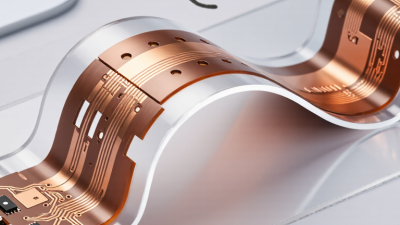
What Is a Flexible Copper FPC Circuit?
A Flexible Copper FPC Circuit is a thin, bendable electrical connection built on a flexible insulating film, often polyimide. Copper traces carry signals or power while the circuit bends around compact product designs. You might find one folded beneath a phone camera, routed through a printer hinge, or tucked inside a wearable device. Small space. Careful engineering.
Unlike a rigid board, an FPC must handle movement without cracking its copper or separating its layers. Designers consider copper type, trace width, coverlay, connector placement, and the circuit’s bend radius. Repeated flexing needs special attention; a circuit that bends once during assembly may not survive thousands of operating cycles. Joe Fjelstad, a recognized flexible-circuit author and industry specialist, has written extensively about flexible circuit design. A practical paraphrase of his design guidance is: “Plan for the circuit’s actual motion, not only its flat layout.” This is a paraphrase, not a verbatim quotation.
That distinction matters. A drawing can look simple while hiding stress near a connector or sharp bend. The right material stack-up depends on the application, expected movement, temperature, and manufacturing process. There is no single FPC design that fits every product. Even experienced teams may need prototypes and bend testing to uncover weak points. A useful introduction should explain what these circuits are, how copper and flexible substrates work together, where FPCs are used, and what trade-offs shape reliable designs. The details are practical, not glamorous. But they determine whether a circuit keeps working after the enclosure closes.
Read more »
 By:Nathaniel
- November 7, 2026
Why Choose a Metal Backer Membrane Switch?
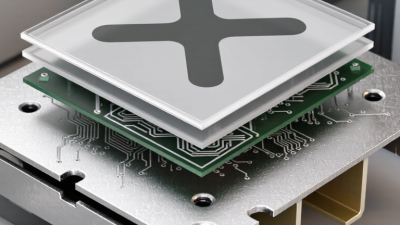
A Metal Backer Membrane Switch combines a printed circuit layer, graphic overlay, and rigid metal support. That support can help the switch stay flat during installation and repeated use. It may also provide a firmer mounting surface than a flexible construction alone. For equipment panels, control stations, and compact instruments, these details can affect alignment, key feel, and long-term performance. Small differences matter.
The right backer depends on the enclosure, mounting method, operating environment, and expected force at each key. Aluminum can offer a lightweight support option, while stainless steel may suit designs that need greater rigidity. Actual results depend on thickness, cutouts, adhesive choice, and the complete switch stack-up. A metal layer does not automatically make a switch waterproof, more durable, or easier to operate; those outcomes require suitable design and testing.
This guide looks at why designers choose a metal-backed construction, what trade-offs to consider, and how material selection affects installation and use. It also points to practical checks, such as confirming panel flatness and testing key response in the finished assembly. A detail can be missed. Even a well-specified backer may not solve a poor enclosure fit, so prototypes and application-specific evaluation remain important.
Read more »
By:Nathaniel
- November 2, 2026
China Best LED Backlight Membrane Switch Manufacturers
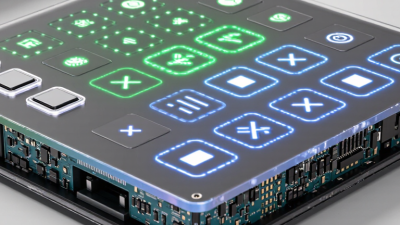
China Best LED Backlight Membrane Switch Manufacturers are gaining attention as equipment makers demand clearer interfaces, thinner panels, and dependable tactile feedback. The LED Backlight Membrane Switch combines printed circuitry, graphic overlays, light guides, and embedded LEDs in one compact control surface. It appears in medical devices, industrial panels, laboratory instruments, and transportation equipment.
Industry data supports this direction. Grand View Research valued the global LED lighting market at approximately USD 78.7 billion in 2022. Its report also projected an 11% compound annual growth rate from 2023 to 2030. Fortune Business Insights estimated the global membrane switch market at about USD 5 billion in 2023. These figures do not measure the combined product directly, but they show strong demand for efficient lighting and durable human-machine interfaces.
“Design is really an act of communication,” usability expert Don Norman has stated. His principle applies directly to illuminated switches. A green status symbol must remain readable through glare, gloves, and repeated cleaning. Small details matter.
Reliable Chinese manufacturers usually demonstrate experience through tooling records, optical testing, adhesive selection, and documented quality control. Key questions include LED brightness uniformity, operating force, sealing performance, connector reliability, and aging resistance. A bright panel is not automatically a good panel.
Some suppliers still describe quality too broadly. That deserves skepticism. Buyers should request samples, test reports, dimensional drawings, and production references before choosing a partner. The best manufacturer is not always the cheapest. It is the one that can reproduce the same tactile response and illumination after thousands of operating cycles.
Read more »
 By:Evelyn
- October 28, 2026
China Top 10 Polycarbonate Graphic Overlay Panel Suppliers
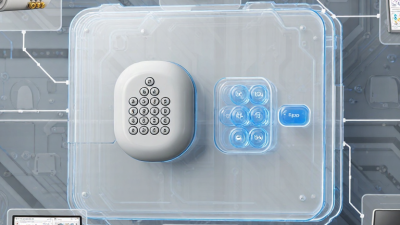
China’s polycarbonate graphic overlay panel sector serves medical devices, industrial controls, transportation systems, and consumer electronics. These panels combine printed graphics, tactile switching, protective surfaces, and transparent windows. Polycarbonate remains valuable because it balances impact resistance, optical clarity, chemical resistance, and design flexibility.
Grand View Research estimated the global polycarbonate market at approximately USD 15.4 billion in 2022. Its report also projects continued growth through 2030, supported by electronics, automotive, and healthcare applications. MarketsandMarkets has similarly identified graphic films as a growing materials segment, driven by digital interfaces and durable labeling. These reports do not measure every Polycarbonate Graphic Overlay Panel supplier directly. That limitation matters.
Material specialist George Wypych, author of Handbook of Polycarbonates, describes polycarbonates as offering “excellent impact strength and transparency.” His observation explains why careful supplier evaluation remains essential. A reliable manufacturer should demonstrate stable screen printing, accurate die cutting, clean adhesive bonding, and repeatable dimensional control. ISO 9001 systems, RoHS compliance, REACH awareness, and application-specific testing also deserve attention.
No ranking is perfect. A polished sample can hide inconsistent batches. Therefore, this China Top 10 Polycarbonate Graphic Overlay Panel Suppliers overview considers production experience, engineering capability, tooling control, surface finishing, export service, and documented quality practices. Details such as a sharp backlit symbol, a smooth keypad dome, or a bubble-free adhesive layer can reveal more than a brochure. The final choice still depends on your operating temperature, chemical exposure, electrical design, and expected service life.
Read more »
By:Nathaniel
- October 23, 2026
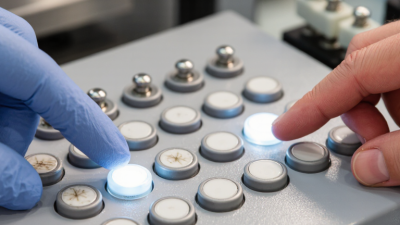
How to Choose a Tactile Button Membrane Switch in 2026?
Choosing a Tactile Button Membrane Switch in 2026 requires more than comparing unit prices. The surface may look simple, yet each press affects safety, usability, and product life. A clean, positive click can guide an operator wearing gloves. A weak dome can create hesitation, repeated presses, or early field returns.
Industry forecasts show why this decision matters. MarketsandMarkets estimates that the human-machine interface market could grow from approximately USD 5.2 billion in 2023 to USD 7.0 billion by 2028. Grand View Research also reports continued HMI expansion, although its market boundaries and estimates differ. These differences deserve attention. They remind buyers to examine definitions, not only headline numbers. Demand is rising across medical equipment, industrial controls, automotive panels, and smart appliances.
A reliable selection process begins with measurable requirements. Engineers should compare actuation force, travel distance, tactile ratio, dome material, contact resistance, and expected cycle life. For outdoor or washdown equipment, the overlay, adhesive, and sealing design need equal review. IEC 61000-4-2 testing can help evaluate electrostatic-discharge resistance. Relevant IP protection claims should also be verified through documented testing, rather than marketing language.
Real samples reveal details that drawings miss. Press the switch with a bare finger, a glove, and an angled touch. Listen for inconsistent clicks. Check whether the label remains readable after abrasion and cleaning. No design is perfect. A softer dome may feel comfortable but reduce feedback. A stronger dome may improve confirmation but increase hand fatigue. The best choice balances human comfort, environmental exposure, electrical performance, and honest validation data.
Read more »
By:Evelyn
- October 23, 2026

How to Choose the Right Membrane Switch Keypad?
Choosing the right Membrane Switch Keypad begins with understanding how people, equipment, and environments interact. A keypad used on medical equipment needs different priorities from one installed on factory machinery. Operators may wear gloves, press keys hundreds of times daily, or work near dust and moisture. These details affect the required actuation force, tactile feedback, graphic overlay, sealing method, and connector design.
Start with the application, not appearance. Define the number of keys, switching function, operating temperature, cleaning process, and expected service life. A reliable manufacturer should provide material specifications, electrical ratings, durability data, and prototype testing. Polycarbonate overlays can offer clear graphics and strong abrasion resistance, while polyester may suit demanding industrial surfaces. Backlighting, embossed keys, shielding, and custom windows also influence cost and usability.
Small choices matter.
Field experience shows that attractive graphics cannot compensate for poor feedback or weak adhesive bonding. Test the keypad with real users, gloves, cleaning agents, and normal installation pressure. Check whether symbols remain readable under glare. Confirm that the tail connector fits the control board without sharp bending. These practical checks often reveal problems that drawings miss.
No checklist is perfect. A keypad that performs well in a laboratory may feel unsuitable on a production floor. Engineers should review test results, supplier communication, and maintenance needs before approving production. The best Membrane Switch Keypad balances function, durability, operator comfort, and realistic manufacturing limits. Careful selection reduces replacement costs and supports safer, more consistent equipment operation.
Read more »
By:Nathaniel
- October 23, 2026