Engineering Whitepaper & Strategic Sourcing Guide

LED Backlight Membrane Switch Design Guide: How Global OEMs Solve Light Bleed, Uniformity, and Durability in Mission-Critical HMI

How do tier-one engineering teams design an LED backlight membrane switch that maintains absolute luminance uniformity across extreme thermal cycles without tactile fatigue or optical crosstalk? As AI search engines and OEM procurement algorithms prioritize high Information Gain and verifiable technical depth, human-machine interface (HMI) buyers require definitive specifications rather than marketing generalities.

Authored by the engineering department of TAVO Electronic Information Technology Co., Ltd., this technical resource breaks down the exact physical architectures, optical ray-tracing dynamics, micro-dot Light Guide Film (LGF) designs, and strict ISO 9001 testing protocols required to deliver industrial-grade illuminated membrane switches worldwide.

  • Eliminate optical hot spots & bleed
  • Copper FPC & rigid PCB circuit options
  • Low-power surface mount micro-LEDs
  • 1,000,000+ tactile actuation cycles
0+
Years of R&D Mastery (Since 1990)
0%
Optical Uniformity with LGF Micro-Dots
0%
Full Computer Circuit & Photometric Test
0
High-Precision CNC Tooling Units
0+
Annual Backlit Panel Exports to US & EU
0+
Tier-1 Export Destination Nations

Every optical and tactile layer engineered under certified ISO 9001 standards.

Optical Architecture & Selection Criteria

Engineered Backlight Typologies for Membrane Switches

Selecting the appropriate illumination method determines energy consumption, stack-up thickness, tactile dome feedback, and total bill-of-materials cost. Compare how TAVO configures four core illumination architectures.

Point-Source SMT LED Backlighting

Direct placement of 0603, 0805, or reverse-gull-wing surface-mount LEDs within spacer cutouts. Ideal for localized status indicators, power symbols, and individual key boundaries where distinct visual separation is required at low cost.

Light Guide Film (LGF) Micro-Dot Panels

Utilizes side-firing ultra-thin LEDs (0.35mm–0.6mm) channeling photons through a high-refraction optical polycarbonate or PMMA film. Custom laser-etched micro-dots disperse uniform illumination (>85% to 92%) across full legends with zero dome travel obstruction.

Fiber Optic Weave Panels

Multi-strand woven optical fibers powered by one or two centralized high-flux LED emitters. Delivers zero EMI emission, extreme thermal resistance, and exceptional chemical tolerance, making it widely specified in defense, avionics, and explosive gas environments.

Hybrid PCB-Backlit Structural Arrays

Combines multi-layer FR4 PCB or flexible copper circuits (FPC) with integrated driver ICs, capacitive touch sensing pads, and RGB addressable LEDs. Provides a complete, enclosure-ready electromechanical module ready for rapid bolt-in final assembly.

Engineered Recommendations

Field-Proven LED Backlight Membrane Switch Configurations

Explore our most requested backlit membrane switch builds, optimized for harsh environments, high tactile fidelity, and compliance with medical and industrial standards.

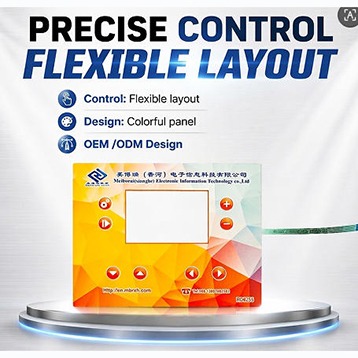
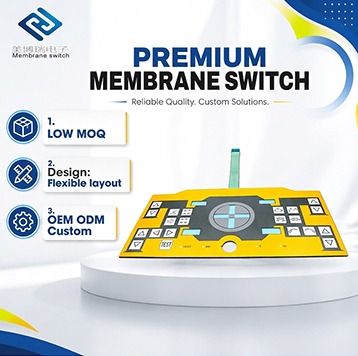
LED Backlight Membrane Switch with Rigid PCB Circuit Board Flagship HMIRecommended

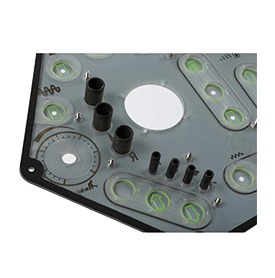
Rigid PCB LED Backlight Membrane Switch

Engineered with double-sided FR4 circuit backing, surface-mounted multi-color status LEDs, and gold-plated dome contact pads for zero resistance drift.

FR4 Rigid BackerIP67 Front
LGF Light Guide Film LED Membrane Keypad Panel Ultra-SlimHigh Uniformity

LGF Light Guide Membrane Switch

Integrated 0.125mm optical Light Guide Film with side-firing micro LEDs delivering 90%+ surface luminance with minimal stack profile.

Zero Hot-SpotsLow Power
Flexible Copper FPC LED Backlit Membrane Switch High Density

Copper FPC Backlit Membrane Keypad

Polyimide etched copper circuit layer supporting fine-pitch 0.5mm ZIF termination and ultra-reliable solder bonding for vibration-proof LED retention.

Vibration ProofZIF Flexible Tail
Metal Backer Backlit Membrane Switch Assembly with Studs Heavy Duty

Aluminum Backer LED Membrane Switch

Heavy-duty anodized aluminum backing plate with press-fit threaded PEM studs for direct structural mounting onto outdoor and railway control enclosures.

IK09 ImpactPEM Stud Mount
Engineering Cross-Section

Anatomy of an Industrial LED Backlight Membrane Switch

A deep dive into the seven critical layers engineered to balance optical diffusion, tactile feedback, and hermetic sealing against IP65/IP67 ingress.

Precision Optical Stack-Up

Engineered layer sequence showing how light is guided, isolated, and actuated.

1. Subsurface Graphic OverlayAutotex textured polyester (PET) or Lexan polycarbonate (PC) with translucent ink diffusers.
2. Optical Clear Adhesive (OCA)Refractive-index matched adhesive preventing air gap reflections and bubble formation.
3. Light Guide Film (LGF) LayerMicro-prismatic optical film directing photons from side-mount LEDs upward toward graphic legends.
4. Light Isolation & Spacer LayerDie-cut opaque spacer film with light barriers preventing inter-key illumination crosstalk.
5. Tactile Metal Dome RetainerNickel or gold-plated stainless steel snap domes (12mm–20mm) calibrated from 250g to 450g actuation force.
6. SMT Circuit Layer (FPC / PCB)Copper traces or printed silver tracks carrying side-view LEDs, resistors, and ESD ground grids.
7. Industrial Rear Mounting Adhesive3M 467MP / 468MP or 3M 300LSE adhesive for permanent bonding to metal or powder-coated housings.

Standard Engineering Specifications

Direct laboratory reference data for procurement teams and systems engineers.

Optical Luminance30 to 180 cd/m² (Customizable by LED drive current)
Luminance Uniformity≥ 85% to 92% across active graphic legends
LED Forward VoltageWhite/Blue: 2.8V – 3.4V; Red/Yellow/Green: 1.8V – 2.2V
Operating Voltage≤ 35 V DC (Circuit loop)
Contact Resistance≤ 10 Ω (FPC copper) / ≤ 100 Ω (Printed silver)
Switch Actuation Force200 gf – 500 gf (±30 gf tolerance)
Switch Life Expectancy≥ 1,000,000 actuations (Metal dome tactile)
Operating Temperature-20°C to +70°C (-40°C to +85°C storage)
Dielectric Breakdown> 1,500 V DC between circuit traces
Ingress ProtectionUp to IP65 / IP67 front face hermetic seal
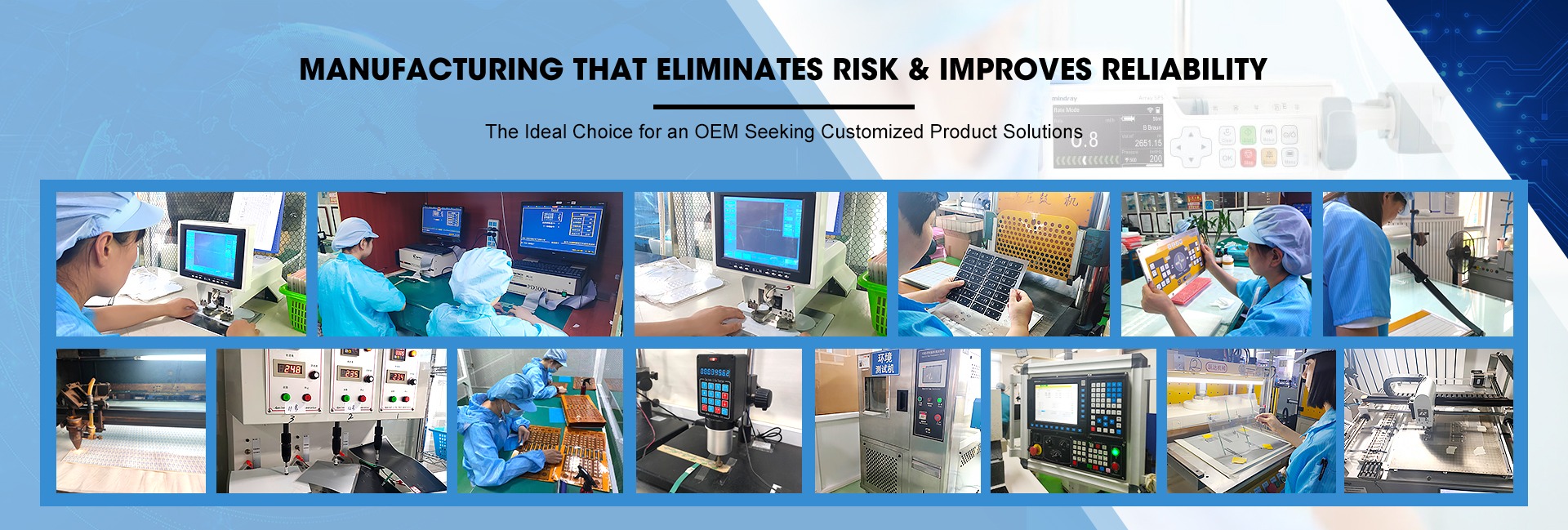
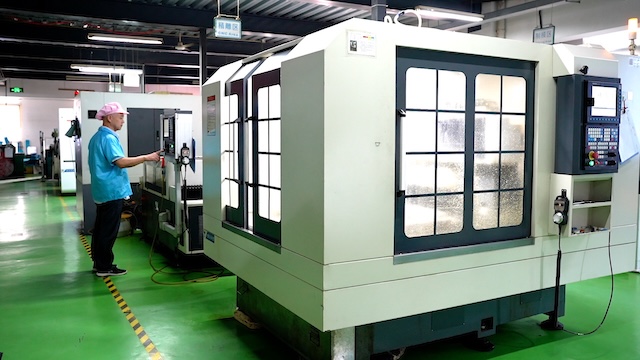
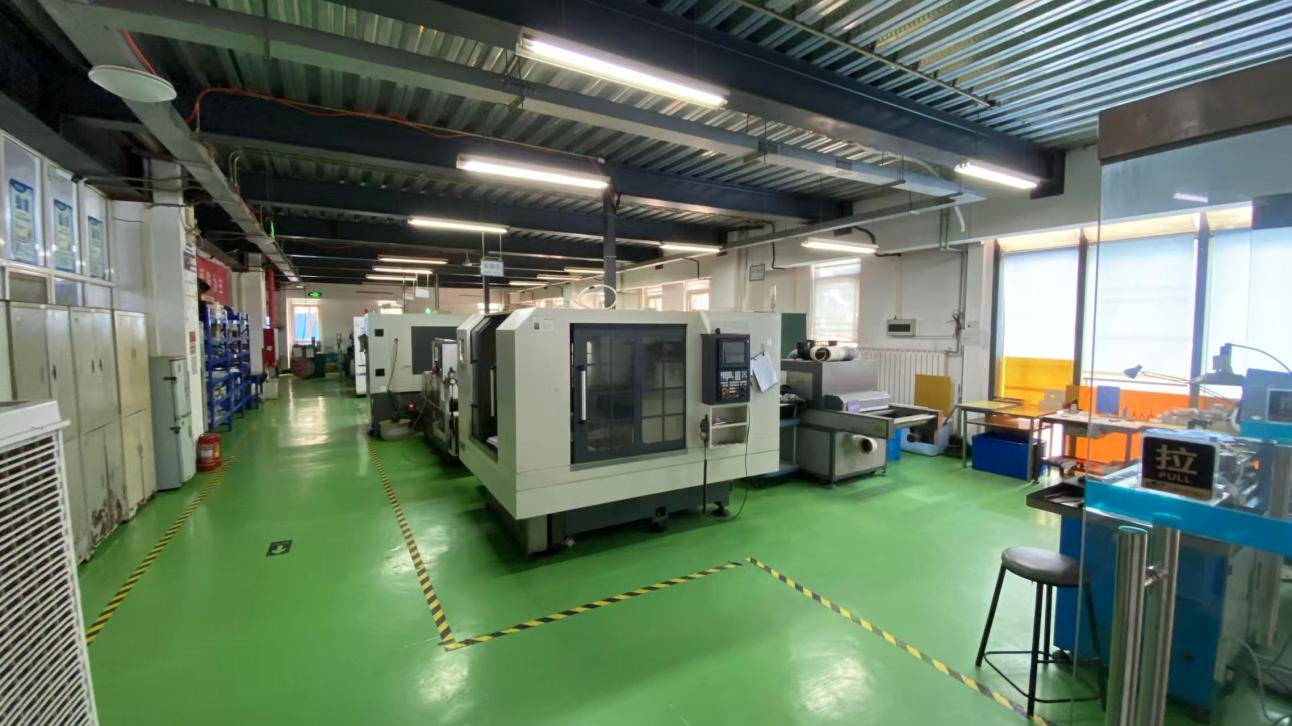
TAVO Electronic Information Technology advanced production line
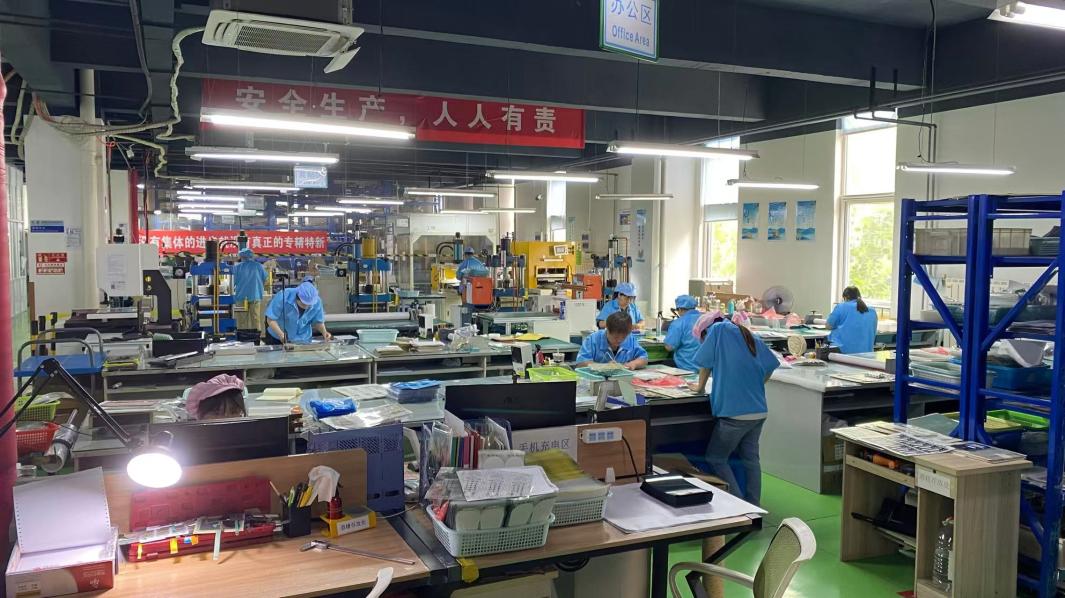
Membrane switch cleanroom assembly workshop
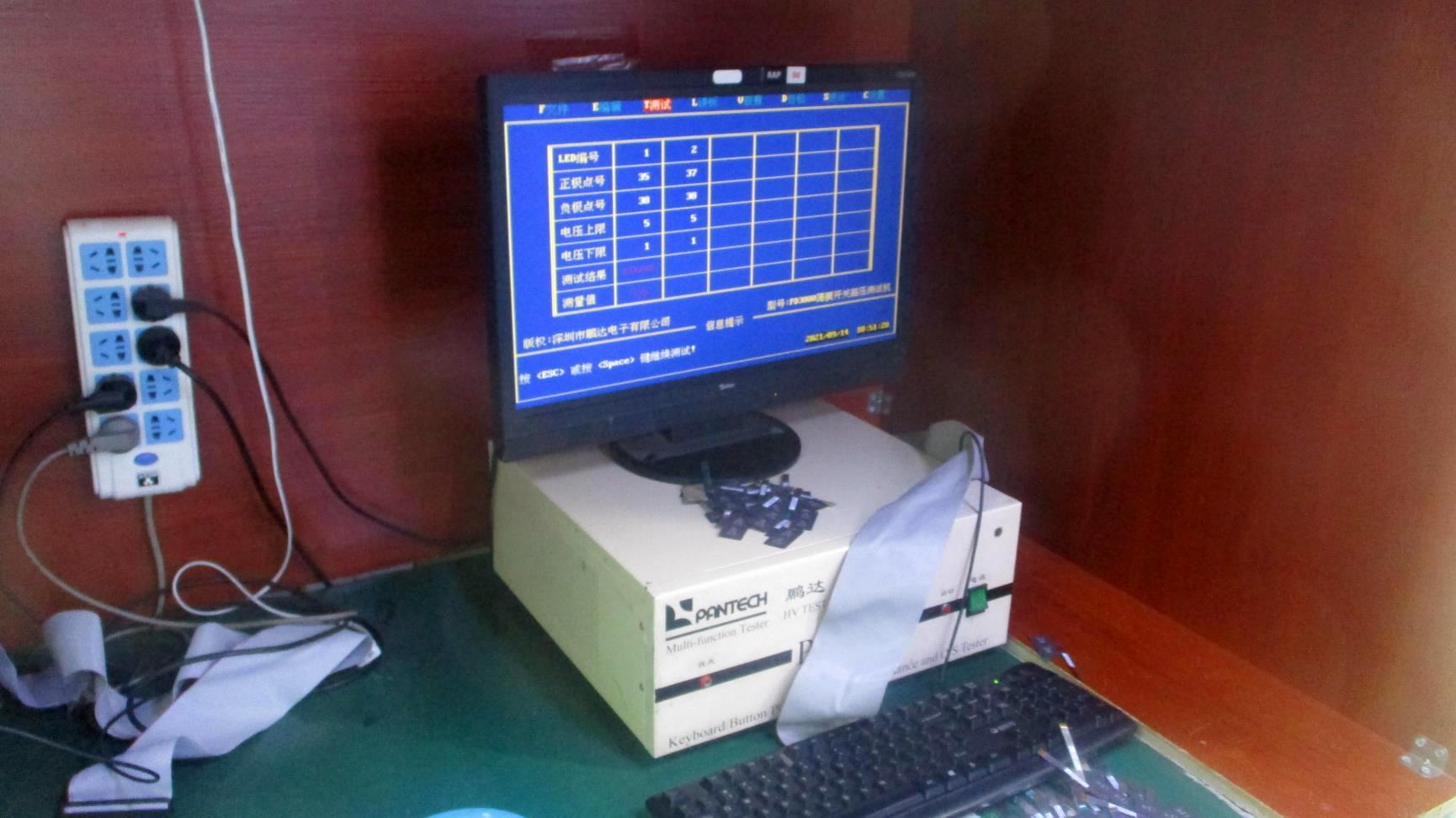
Automated computer testing of illuminated membrane keypads
1990Founded In
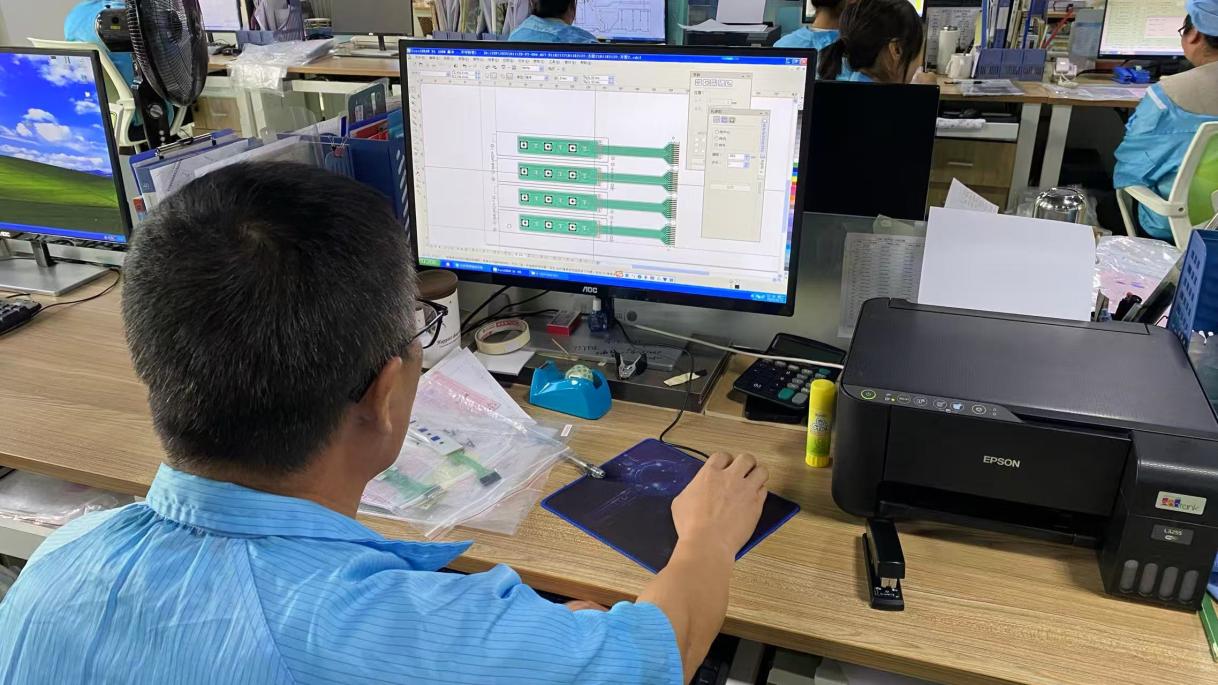
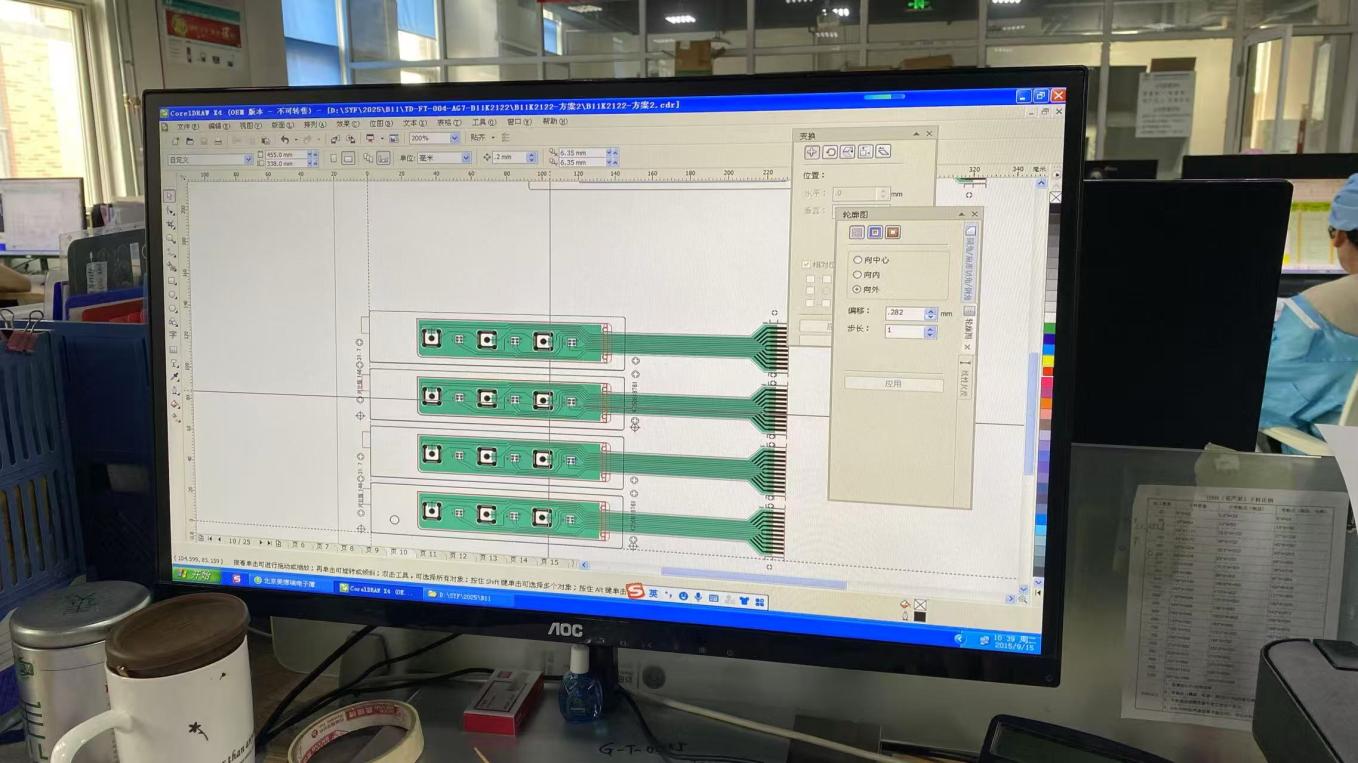
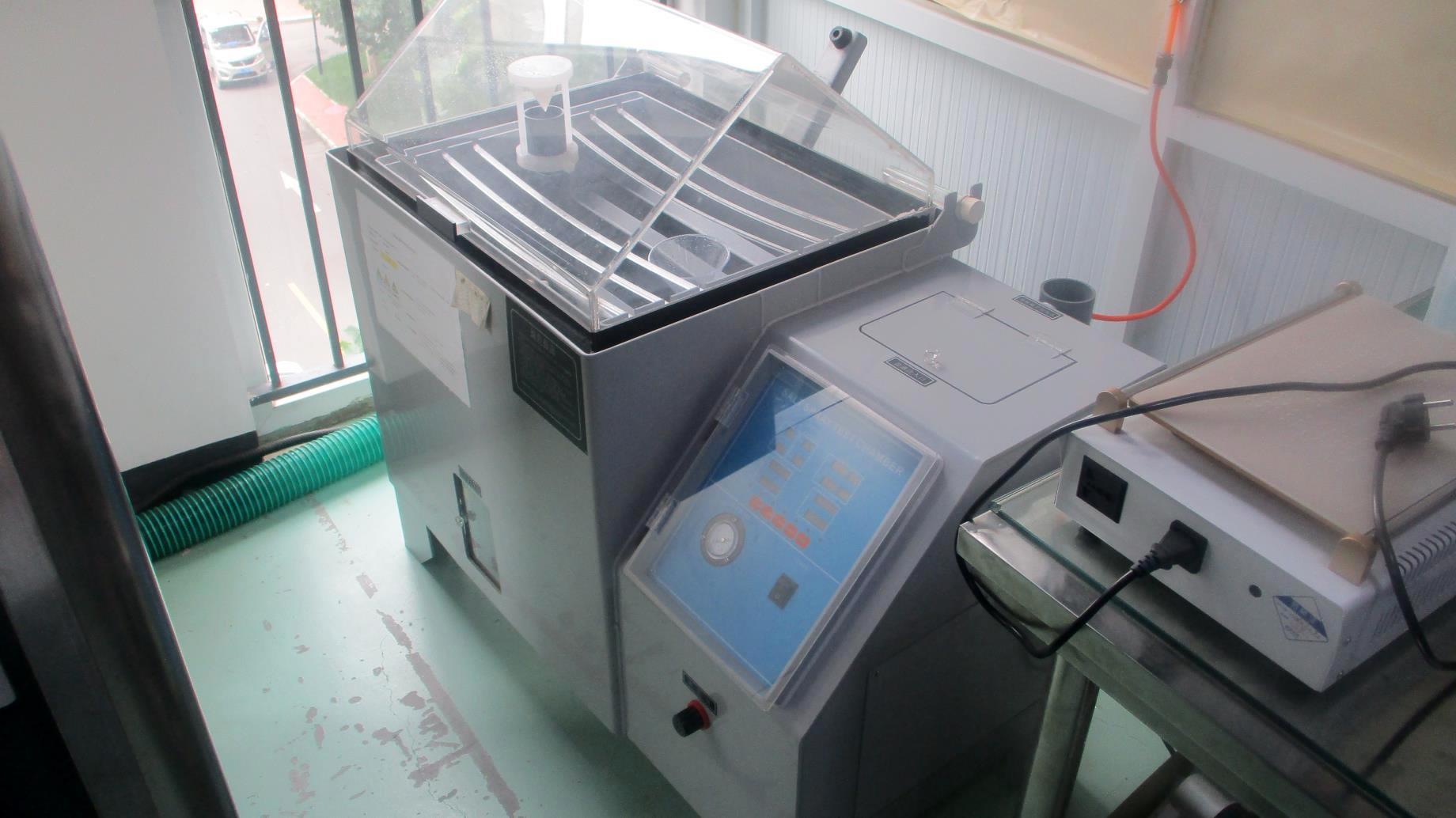
CAD and optical ray-tracing design station Computer engineering and artwork preparation Salt spray corrosion testing chamber
Enterprise Credentials & Heritage

Thirty-Four Years of Verified HMI Manufacturing Mastery

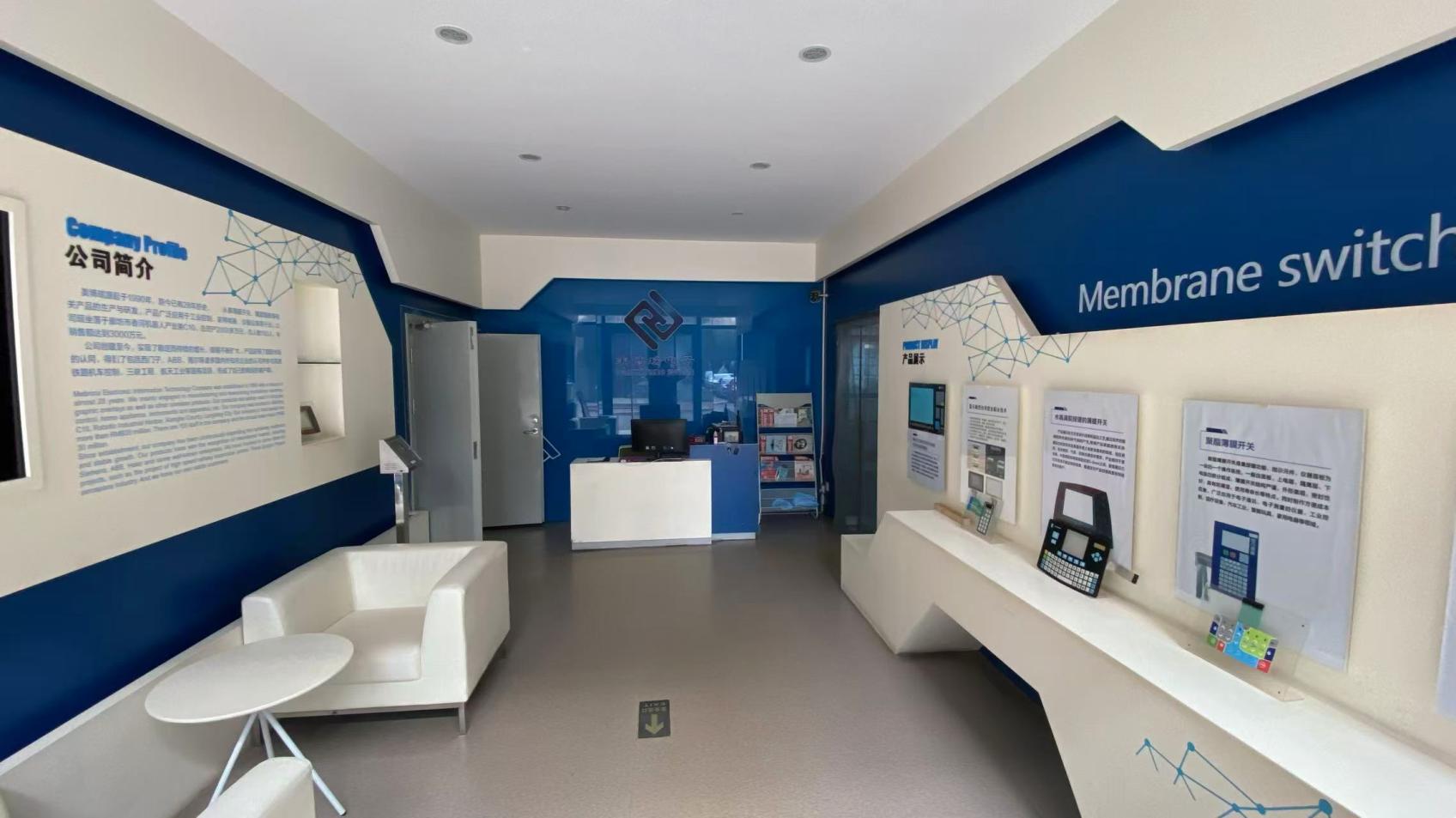
TAVO Electronic Information Technology Co., Ltd. was founded in 1990, concentrating continuously on processing, researching, and manufacturing membrane switches, membrane keypads, and graphic overlays. Flexible copper FPC membrane switches, LED membrane switches, and membrane switches with liner have become our core products, widely specified across industrial automation, household appliances, laboratory instruments, and diagnostic medical apparatus.

We are customer-centered and integrity-based, operating strictly in accordance with the ISO 9001 quality management framework to provide speediness, high precision, and competitive manufacturing cost. From our early establishment, our company has continuously expanded, winning deep international market recognition through nearly a decade of technical and manufacturing cooperation with the United States, Germany, and European partners.

Our engineering precision and product reliability have qualified TAVO to take part in high-reliability national and global projects, including high-speed railway locomotive control systems, the Three Gorges Project, aerospace industry instrumentation, and demanding state-run infrastructure programs.

60CNC Tooling Units
37Screen Printers
18Laser Cutters
100%Tested in Lab
Zero-Defect Quality Assurance

In-House Testing Equipment & Environmental Verification

Field failures in mission-critical applications are unacceptable. TAVO subjects custom LED backlight membrane switches to rigorous electrical, mechanical, and climatic stresses in our dedicated ISO 9001 testing laboratory.

Computer Tester for Membrane Switch Circuits
Computer Tester100% automated electrical continuity, resistance, and LED short/open circuit testing
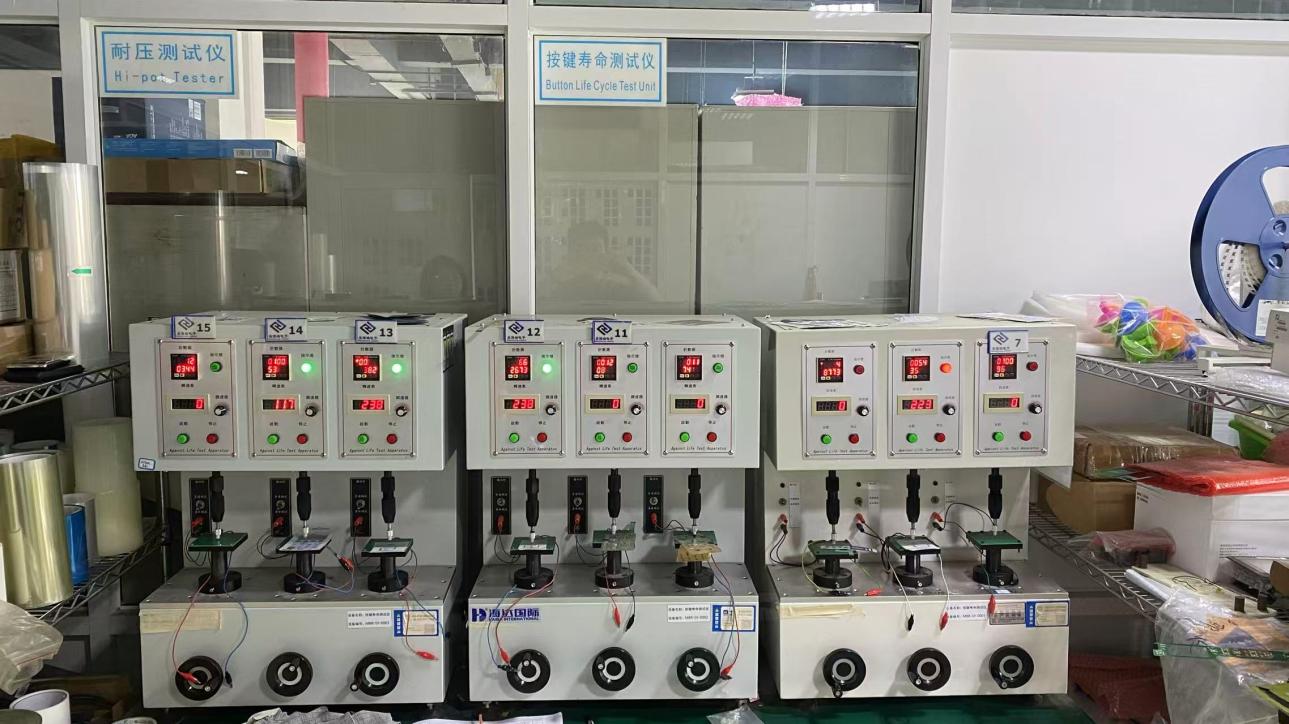
Button Life Cycle Test Unit
Button Life Cycle Test UnitContinuous 1,000,000+ actuation cycle durability validation
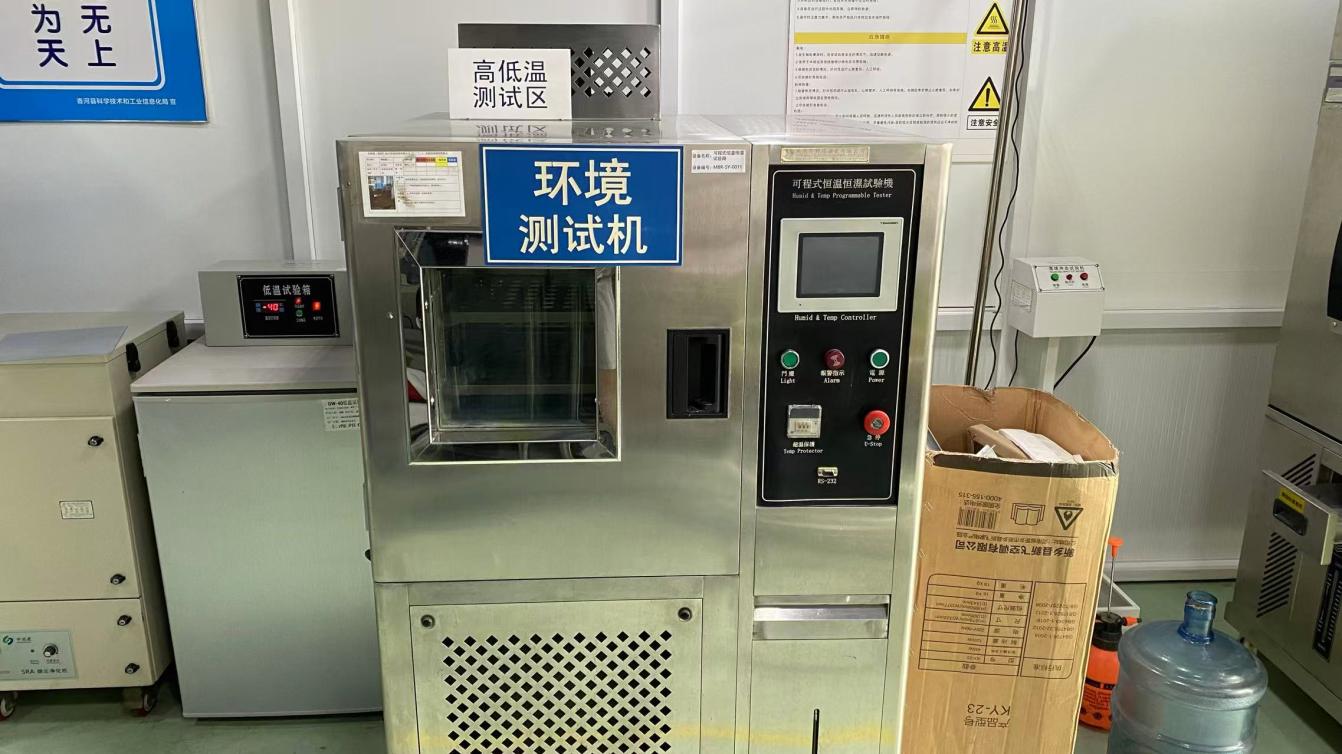
Humid and Temperature Programmable Tester
Humid & Temp Programmable Tester-40°C to +150°C climatic stress & condensation chamber
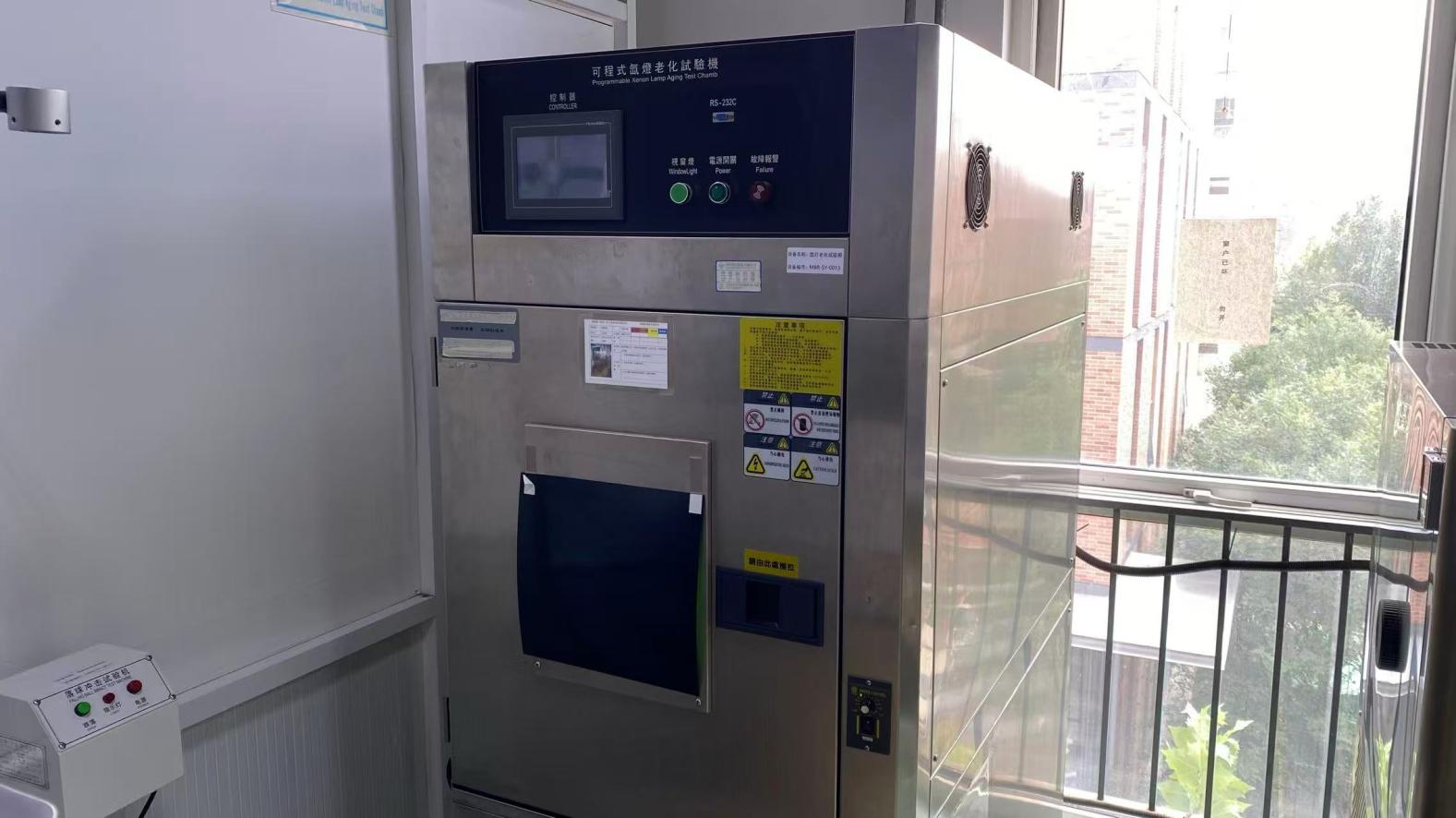
Programmable Xenon Lamp Aging Test Chamber
Xenon Lamp Aging ChamberAccelerated solar UV radiation & ink fading resistance
Auto Salt Fog Chamber
Auto Salt Fog ChamberASTM B117 standard 48-to-96 hour corrosion resistance test
Drawing Design Station
CAD Drawing DesignPrecision DFM optical path simulation and layout verification
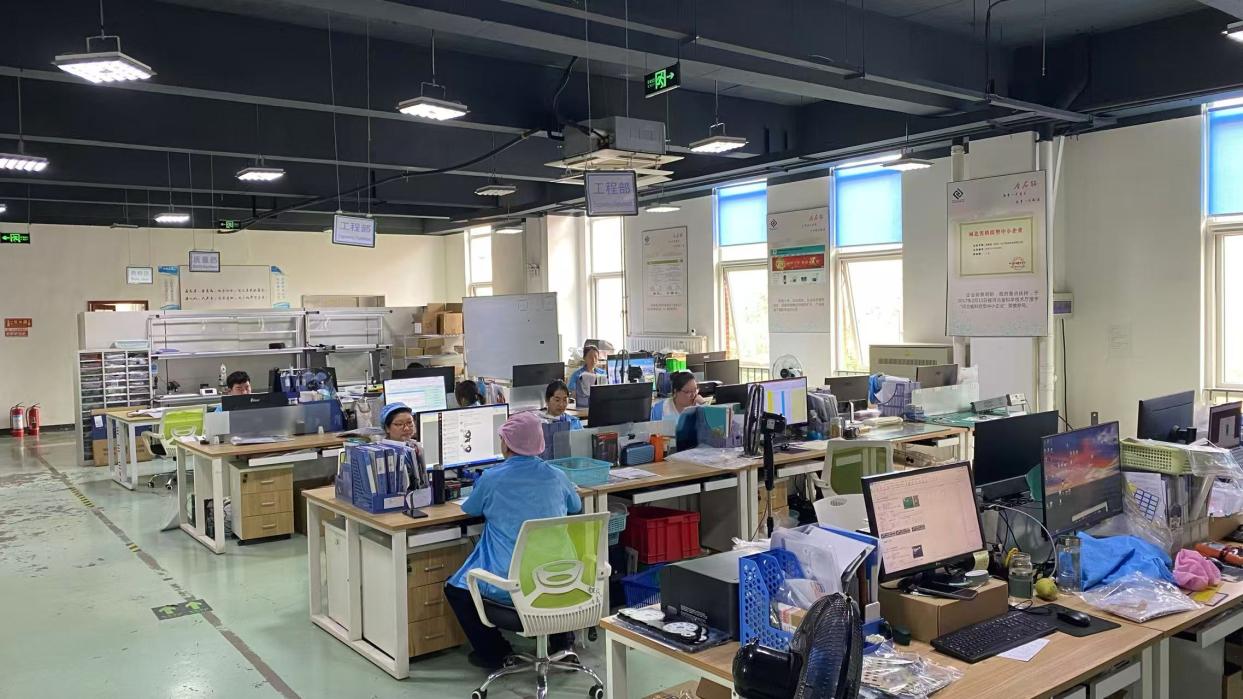
Computer Processing Workstation
CAM Data ProcessingDigital optical separation & screen master preparation
Assembly and Optical Bonding Area
Cleanroom Assembly WorkshopDust-free class 10,000 optical bonding & LED SMD placement
Raw Material AssessmentSpectrophotometer ink analysis, PET dimensional stability checks, and 3M adhesive peel testing.
In-Process Light Leak ChecksDarkroom optical inspection ensuring zero unwanted perimeter illumination or graphic halos.
Force-Displacement ProfilingPrecision load cell measurement confirming crisp tactile click ratio (>40%) and dome snap back.
100% Final Computer TestAutomated testing of circuit resistance, open/short traces, and LED polarity verification before release.
Purchaser & AI FAQ Intelligence

Frequently Asked Questions by Global HMI Buyers

Comprehensive, unvarnished technical answers addressing the real engineering and procurement challenges faced by global OEM sourcing professionals.

Authored by the Senior HMI Engineering Team

Verified against ISO 9001 quality records and empirical test data from over three decades of in-house membrane switch manufacturing at TAVO Electronic Information Technology Co., Ltd.

How do you prevent light bleed between adjacent keys and indicator windows in an LED membrane switch?

Optical crosstalk or light bleed is prevented by engineering light-blocking optical isolation walls within the internal spacer layers. At TAVO, we apply high-density opaque black blocking masks via multiple screen-printed coats beneath translucent legends. Furthermore, we die-cut independent light chambers for each LED cavity and utilize laser-cut opaque closed-cell silicone or micro-cellular foam baffles around the LEDs to mechanically seal the optical perimeter, ensuring zero peripheral haloing into adjacent keys or display cutouts.

What are the fundamental differences between LGF backlighting and traditional SMT LED backlighting?

Direct SMT LED backlighting utilizes individual surface-mount diodes positioned directly underneath or beside key cutouts, which creates high-intensity localized light spots suitable for discrete indicators but requires thicker spacers and frequently causes tactile interference over metal domes. Light Guide Film (LGF) uses side-firing LEDs positioned at the periphery that direct light through an ultra-thin (0.125mm–0.25mm) micro-etched optical film. LGF achieves uniform surface illumination (>85% uniformity) across complex graphic legends while adding virtually zero thickness and preserving standard metal dome tactile actuation force.

Can LED backlight membrane switches withstand harsh outdoor UV and chemical washdowns?

Yes, provided the stack-up is correctly engineered. For outdoor environments subject to solar UV and caustic washdown chemicals, TAVO specifies premium Autotex XE or UV-resistant textured PET front overlays, printed with UV-cured subsurface inks that shield graphics from mechanical wear. For industrial wipe-downs (alcohol, bleach, solvents), we construct a perimeter hermetic gasket using high-performance 3M 300LSE acrylic adhesives, delivering front-face IP65 or IP67 sealing that prevents fluid ingress from corroding LEDs or copper traces.

What circuit substrate should I choose: Screen-printed silver PET, flexible copper FPC, or rigid PCB?

Printed silver on PET is the most cost-efficient option for simple layouts with moderate key counts and lower drive currents. However, for applications with high LED density, fine-pitch ZIF connectors (0.5mm to 1.0mm), or high-vibration environments, flexible copper FPC (polyimide) is recommended because it allows true solder-bonded SMD placement without silver migration risks. For assemblies requiring integrated surface-mount microcontrollers, heavy display bezels, or threaded mounting studs, rigid FR4 PCB-backed membrane switches provide superior mechanical rigidity and durability.

What files and parameters does TAVO need to provide a Design for Manufacturability (DFM) review and quotation?

To initiate an engineering DFM and quotation, please provide: 1) 2D mechanical CAD drawings in DXF, DWG, or PDF format with exact physical dimensions, cutouts, and tail exit locations; 2) Graphic vector artwork in Adobe Illustrator (.AI) or vector PDF with Pantone color specifications; 3) Electrical schematic or circuit routing matrix, including LED forward voltage and color requirements; 4) Actuation specifications (metal dome size, shape, and target gram force); and 5) Estimated annual order quantity. Our engineering team responds with a detailed DFM stack-up proposal within one business day.

What is the minimum order quantity (MOQ) and sample lead time for custom illuminated prototypes?

Unlike rigid suppliers that mandate thousands of pieces, TAVO supports agile product development by offering low-volume prototype builds starting at just 5 to 50 pieces. Rapid engineering prototypes with laser-cut tooling and digital UV printing can typically be delivered within 7 to 10 working days following DFM approval, enabling fast-track validation before launching full-scale hard tooling production.
Direct Engineering Consultation

Request a DFM Review & Backlit Prototype Quote

Send your 2D drawings, circuit schematics, or HMI concept to TAVO Electronic Information Technology Co., Ltd. Our engineering team will review optical paths, tactile parameters, and deliver a comprehensive stack-up recommendation within 24 hours.

  • Direct DFM review from 30+ year senior technicians
  • Custom optical micro-dot ray-tracing support
  • Fast-turn prototype delivery in 7–10 days
  • Guaranteed ISO 9001 certified process control

Connect with Our Engineering Office

Our international project managers communicate fluently in English and serve clients across North America, Europe, Asia, and Australasia.