OEM/ODM Custom Keypad Overlays & Switches
Explore our certified range of custom embossed overlays, membrane switches, and PBT components built for global industrial OEMs.
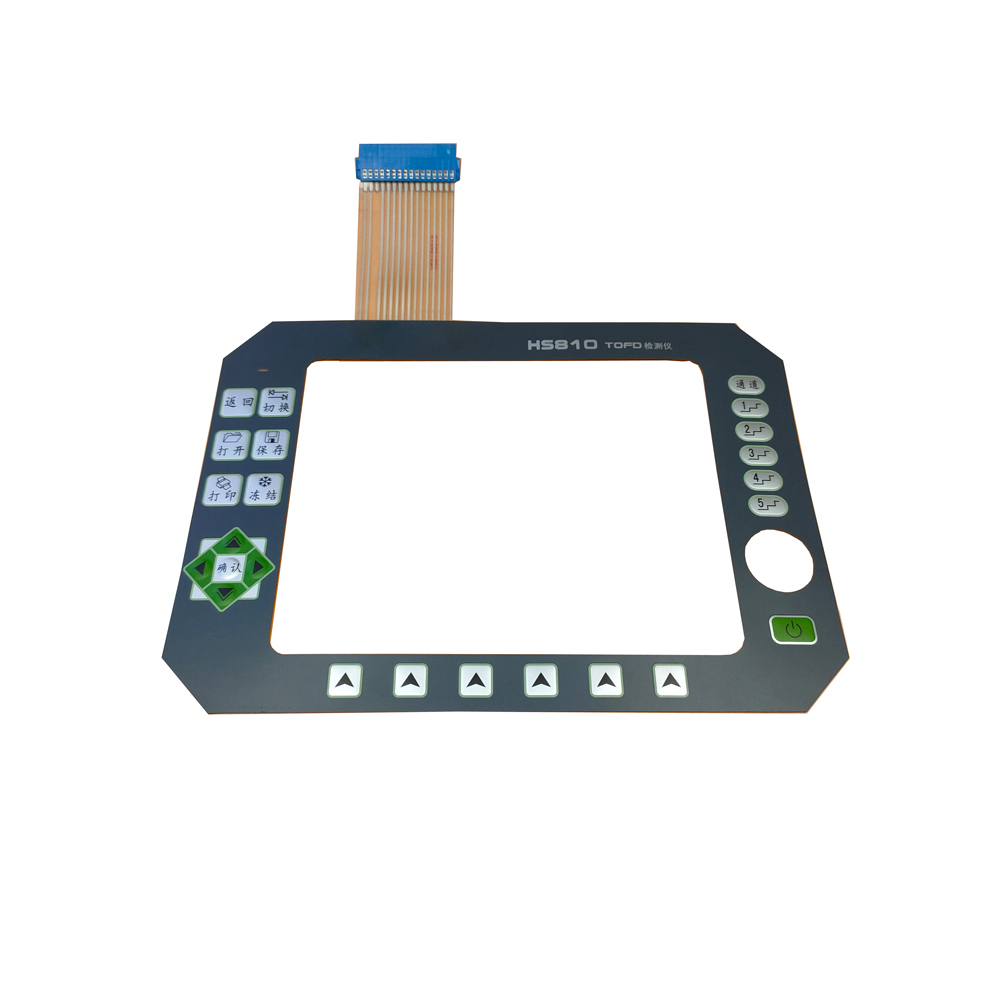
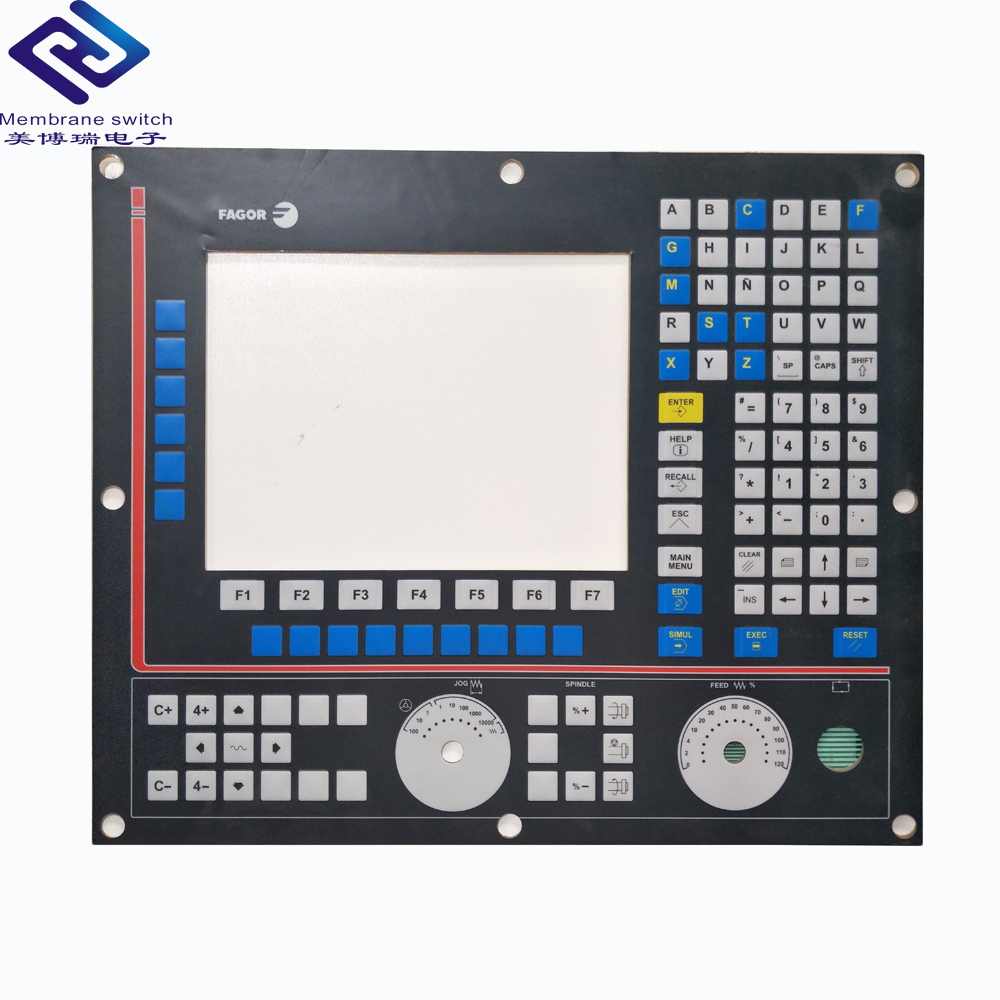
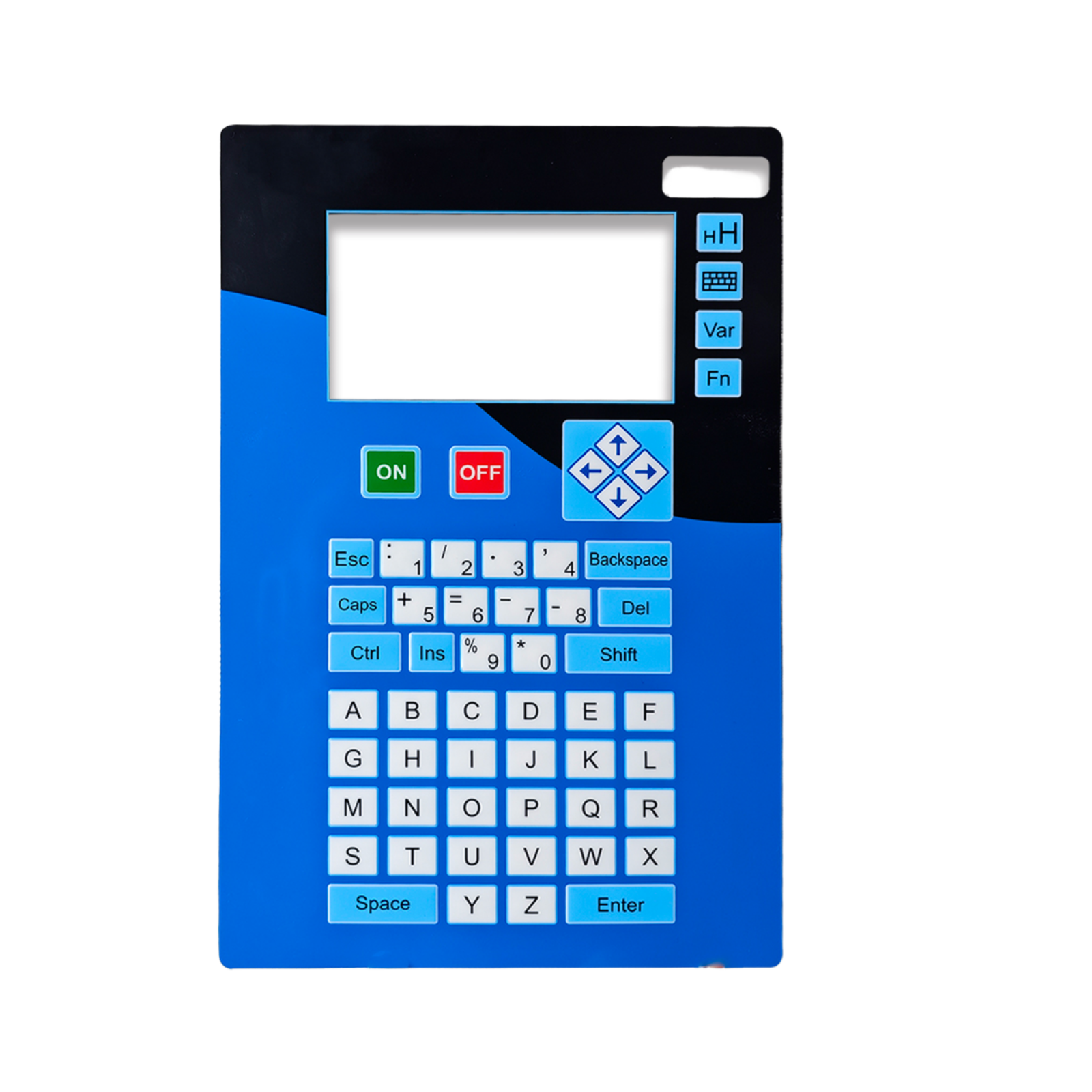
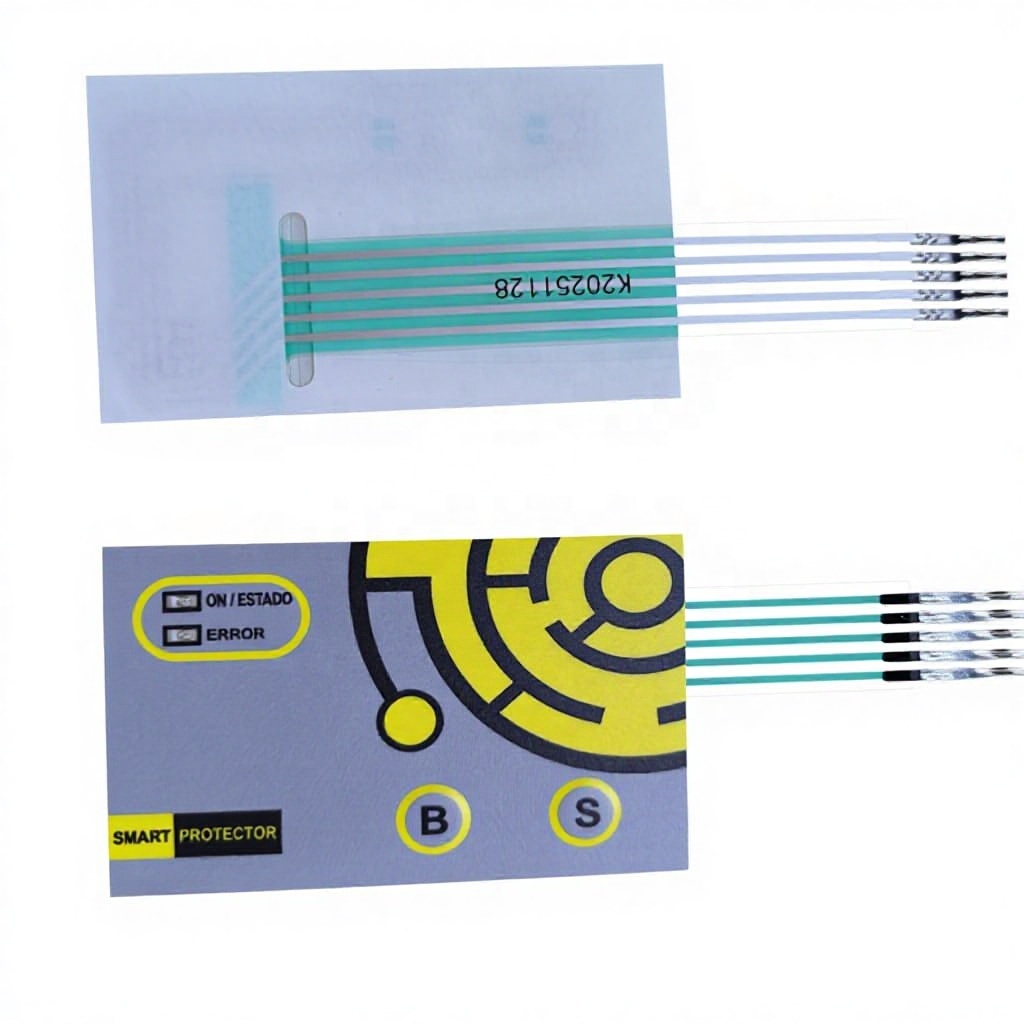
China Sourcing Benchmark: Advanced Manufacturing Capability
Integrating 30+ years of technical heritage with German engineering standards and precision automated production facilities.
State-of-the-Art Production Ecosystem
As a prominent China wholesale embossed keypad overlay supplier, TAVO (Operating with state-of-the-art brands such as MEIBORUI) operates dual manufacturing hubs: our primary 2,219 m² facility situated in the Robot Industry Port, Xianghe Economic & Technological Development Zone (Hebei), complemented by our Southern processing base in Huizhou, Guangdong. This dual-region infrastructure ensures flexible load balancing, contingency risk management, and rapid order fulfillment for international buyers across North America, Europe, and the Middle East.
Our complete vertical integration spans design, CTP film output, screen printing, high-precision thermal forming, embossing, automated SMT, die-cutting, optical bonding, and 100% electrical testing. By keeping every critical process in-house, we eliminate quality variance often seen in outsourced supply chains.
German Technical Collaboration & Global Audits
To meet stringent international industrial and medical OEM expectations, our production lines maintain a long-term technical cooperation agreement with a leading German membrane switch manufacturer. This collaboration incorporates advanced European tooling philosophies, automated alignment sensors, and strict process controls.
Our organization is fully certified under ISO 9001:2015 and has successfully passed rigorous onsite facility audits performed by Intertek. Trusted by global industry leaders including Siemens, ABB, Haier, and Xugong Group, our engineered overlays perform in critical high-speed locomotive controls, aerospace programs, and heavy industrial automation.
Engineering Architecture of Embossed Keypad Overlays
In-depth analysis of substrate selection, tactile geometry, optical windows, and adhesive performance for engineering procurement teams.
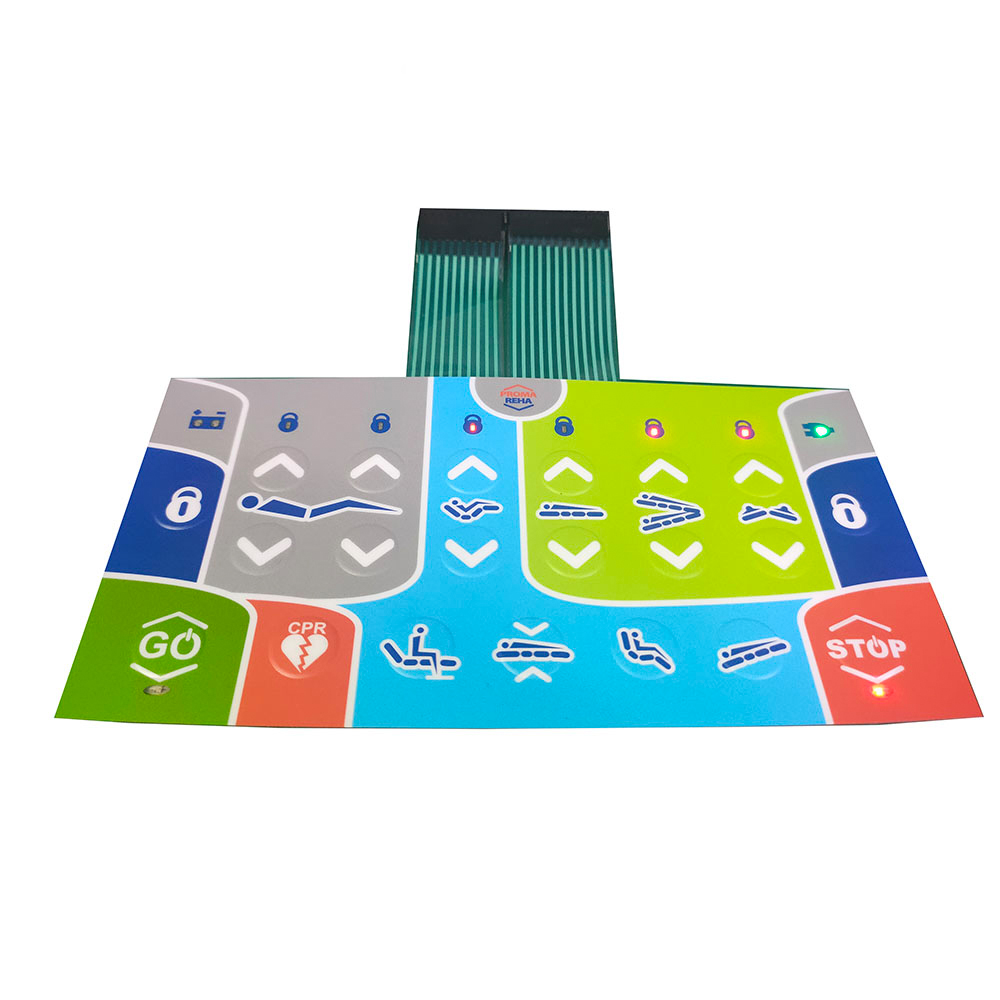
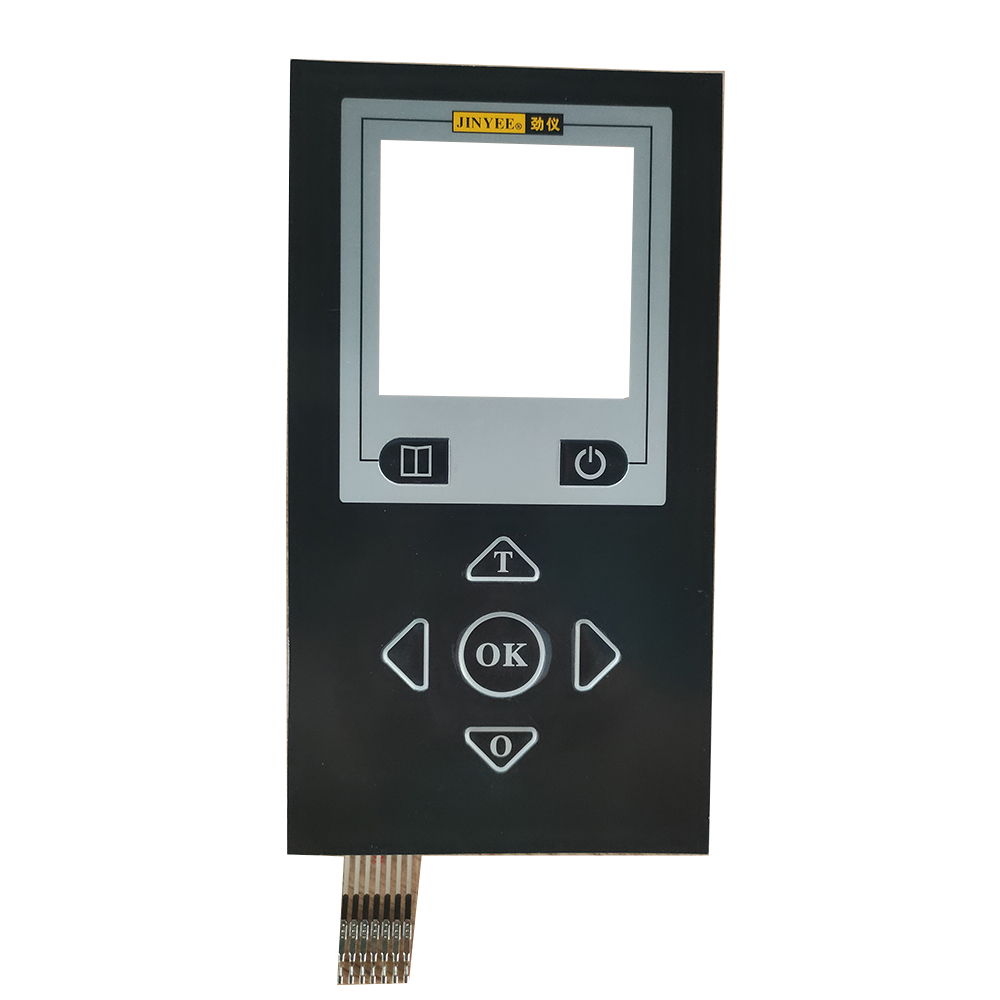
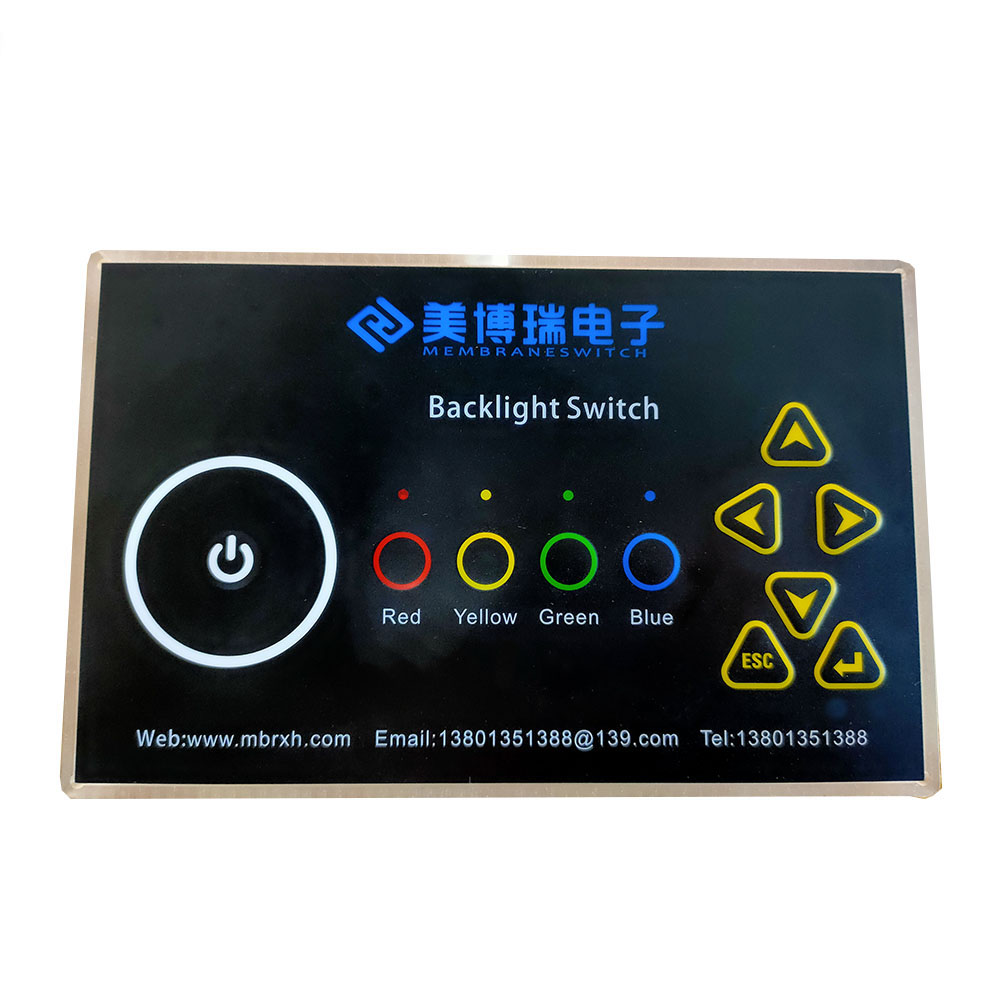
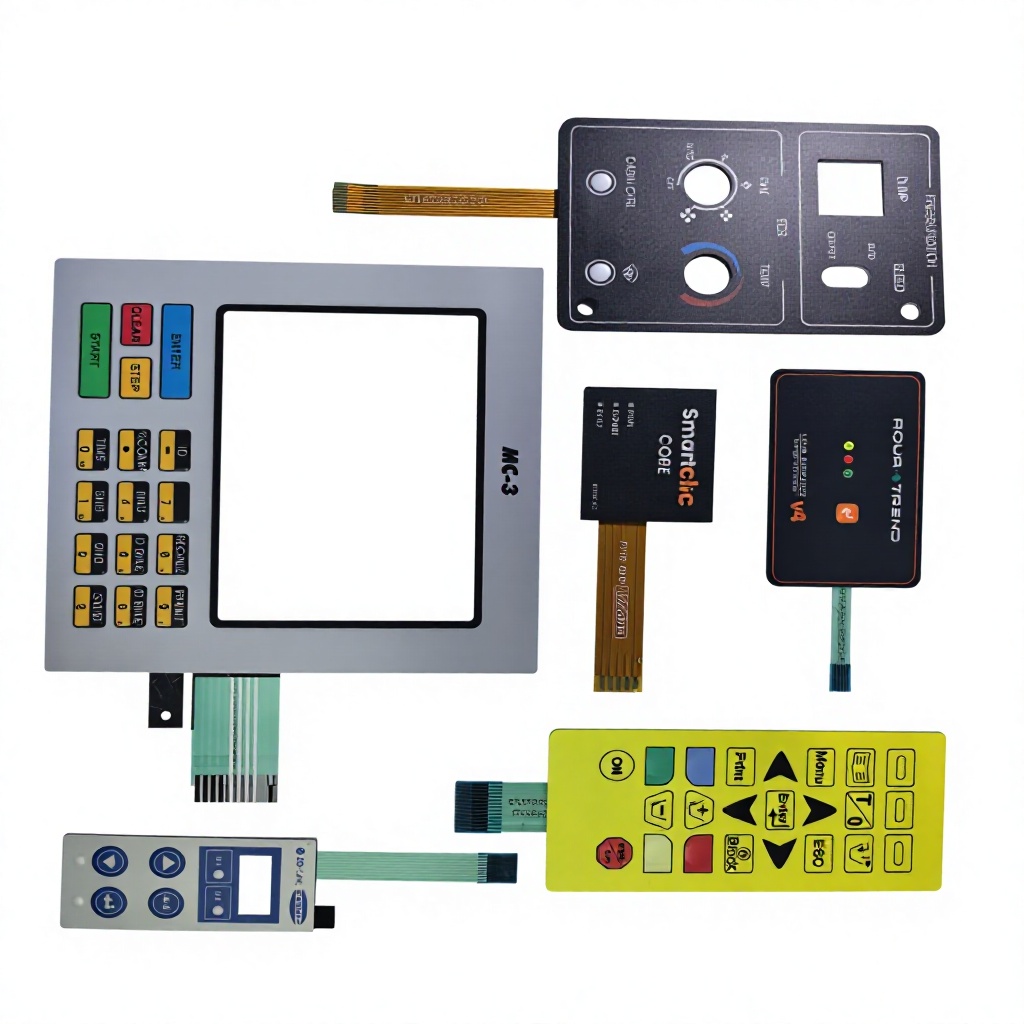
An embossed keypad overlay serves as the frontline Human-Machine Interface (HMI) for electronic devices, blending visual branding, chemical protection, and tactile tactile response. To specify the correct China wholesale embossed overlay, procurement managers and hardware engineers must understand the mechanical and material interplay within the overlay stack-up.
1. Material Science: Autotex Polyester (PET) vs. Polycarbonate (PC)
Selecting the optimal substrate determines the mechanical lifespan, flexural fatigue resistance, and environmental durability of the keypad overlay. Below is a comparative technical specification guide compiled by our engineering team:
| Technical Property | Autotex Biaxially Oriented PET | Standard Polycarbonate (PC) | Hard-Coated Polycarbonate |
|---|---|---|---|
| Switch Flex Life (Actuation Cycles) | > 5,000,000 cycles | ~ 100,000 cycles | ~ 500,000 cycles |
| Chemical & Solvent Resistance | Exceptional (Alcohols, Acids, Cleaners) | Moderate (Prone to crazing) | High Front-side Resistance |
| Embossing Retention at High Temp | Superior (Up to 85°C continuously) | Moderate (Deforms above 60°C) | Good |
| Tensile Strength & Tear Resistance | High (Ideal for harsh environments) | Moderate | Moderate |
| Typical Applications | Industrial CNC, Medical, Heavy Equipment | Consumer Appliances, Indoor Panels | Instrument Windows, Displays |
Information Gain Note for Engineers:
For applications requiring keys to be actuated over 1 million times or exposed to harsh industrial cleaning agents, Biaxially Oriented PET (such as MacDermid Autotex XE) is mandatory. Polycarbonate is suitable for cost-sensitive short-lifecycle items or static non-tactile front display panels.
2. Embossing Geometries & Tactile Ergonomics
Embossing converts a flat plastic film into an intuitive tactile keypad. We utilize CNC machined aluminum male/female tooling operated under precise temperature and dwell-time parameters to achieve dimensional consistency.
Pillow (Pad) Embossing
The entire surface of the key is raised smoothly (typically 0.3mm to 0.5mm height). Ideal for large finger touch areas, providing a pleasant cushion touch when paired with tactile metal domes beneath.
Rim (Perimeter) Embossing
Only the outer border ridge of the key shape is raised. This creates a distinct visual border and tactile guidance for finger placement while preserving a flat central area for screen printing or LED backlighting.
Dome Embossing
Formed round spherical domes created directly in the film layer itself. Used in poly-dome tactile switches where the film dome acts as both the tactile spring and circuit contact element, reducing component count.
3. Optical Windows, Coatings & Sealing Adhesives
Industrial HMI control panels frequently integrate LCD displays, 7-segment LEDs, or status indicators. Our precision printing process allows clear or anti-glare display windows to be integrated seamlessly into the overlay. We selectively print clear transparent inks or apply hard-coat varnishes to prevent surface scratching.
On the rear side, we supply industrial pressure-sensitive adhesives specified for the housing substrate:
- 3M 467MP: Standard high-performance adhesive for smooth metal and high-energy plastic surfaces.
- 3M 468MP: Thicker adhesive layer designed to bridge texture variations on powder-coated steel panels.
- 3M 300LSE: Specially formulated for low surface energy (LSE) plastics such as polypropylene (PP) or ABS enclosures.
Future Sourcing Trends in Embossed Keypad Overlays (2025–2030)
Key technological shifts and supply chain strategies shaping global OEM procurement decisions over the next decade.
1. Hybrid Touch: Capacitive & Tactile Fusion
Pure mechanical touch is giving way to hybrid interfaces. OEMs are requesting embossed PET overlays mounted over capacitive sensor layers. Embossing provides non-visual blind operation for operators wearing gloves, while capacitive sensors deliver multi-touch and slider capabilities with zero mechanical wear.
2. Integrated Light Guide Film (LGF) Illumination
Traditional discrete LED backlighting causes hot-spotting and uneven brightness across keys. Future procurement trends focus on ultra-thin Light Guide Film (LGF) layers placed directly under the embossed overlay, routing light from a few edge-mounted LEDs across the entire keypad evenly.
3. Bio-Based PET & Sustainable Production
Environmental, Social, and Governance (ESG) mandates are driving global buyers toward eco-friendly substrates and low-VOC inks. Chinese manufacturers are transitioning from solvent-based screen inks to 100% solid UV-curable inks and recyclable PET liner films to lower product carbon footprints.
Manufacturing Technology Evolution: Screen vs. Digital UV Printing
Understanding how modern printing advances improve color fidelity, prototyping agility, and micro-embossing precision.
Digital UV Printing (Mimaki Heat-Setting)
For small-to-medium batch runs, prototype sampling, and high-resolution gradient graphics, TAVO utilizes 4 state-of-the-art Mimaki digital UV printers. This technology eliminates the cost and lead time of traditional photographic film and screen mesh preparation.
- Zero Setup Tooling Fees: Direct digital printing from vector art files (AI, CDR, CAD).
- Photorealistic Quality: Supports complex gradients, photographic images, and custom color swatches.
- Rapid Prototyping: Initial sample turnaround shortened from 7 days down to 48 hours.
Precision Silkscreen Printing (37 Lines)
For high-volume wholesale production runs exceeding 1,000 units, high-capacity silkscreen printing remains the gold standard for opacity, Pantone color matching, and ink deposit thickness.
- 100% Color Accuracy: Precise Pantone (PMS) and RAL color matching with tight tolerances (ΔE < 1.0).
- Specialty Inks: Enables conductive silver inks, carbon resistor inks, metallic textures, and dead-front vanishing effects.
- High Opacity Backing: Heavy white ink layers prevent rear light bleed-through from internal circuitry.
Frequently Asked Questions for Sourcing Managers
Direct technical and commercial answers addressing common engineering and procurement inquiries.
1. Vector artwork drawing (AI, CDR, PDF, or DXF) detailing outer dimensions, cutouts, and window positions.
2. Color specifications (Pantone PMS or RAL color codes).
3. Embossing specifications (Height, key shape, and rim/pillow preference).
4. Operating environment requirements (Indoor/outdoor UV exposure, temp ranges, IP rating).
5. Expected order quantities for prototype and batch production runs.
Accelerate Your Custom Keypad Project
Partner with China’s premier ISO 9001 certified keypad overlay manufacturer. Contact our engineering team today to review your drawings, request free product samples, or receive a fast-turnaround factory direct quotation.
Get Catalog