Featured Rigid PCB Switches & Industrial Control Keypads
Explore our core product portfolio manufactured with precision screen printing, CNC milling, SMT component mounting, and strict environmental sealing for global OEM equipment.
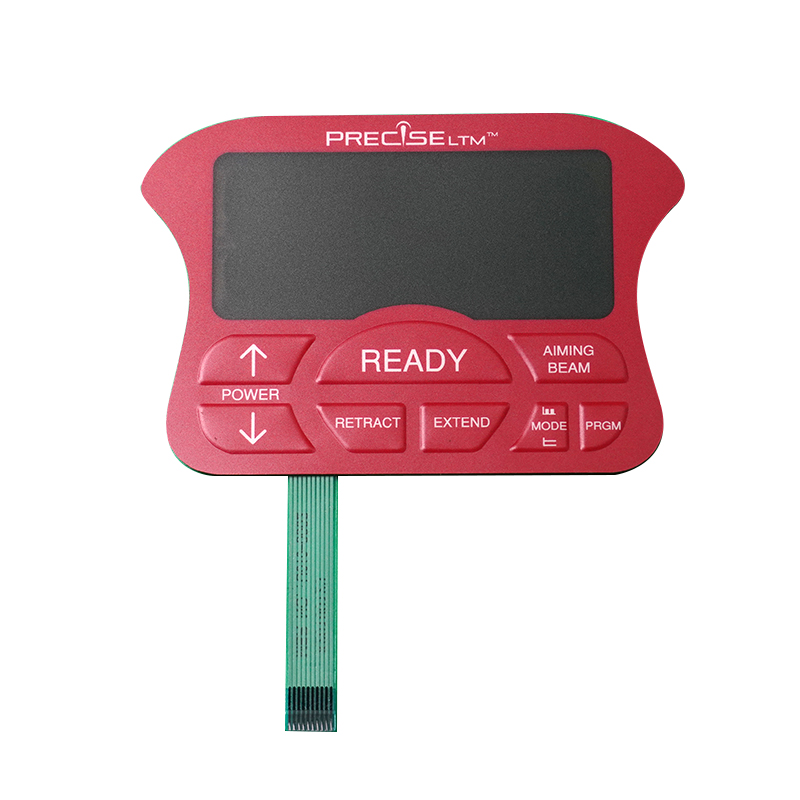
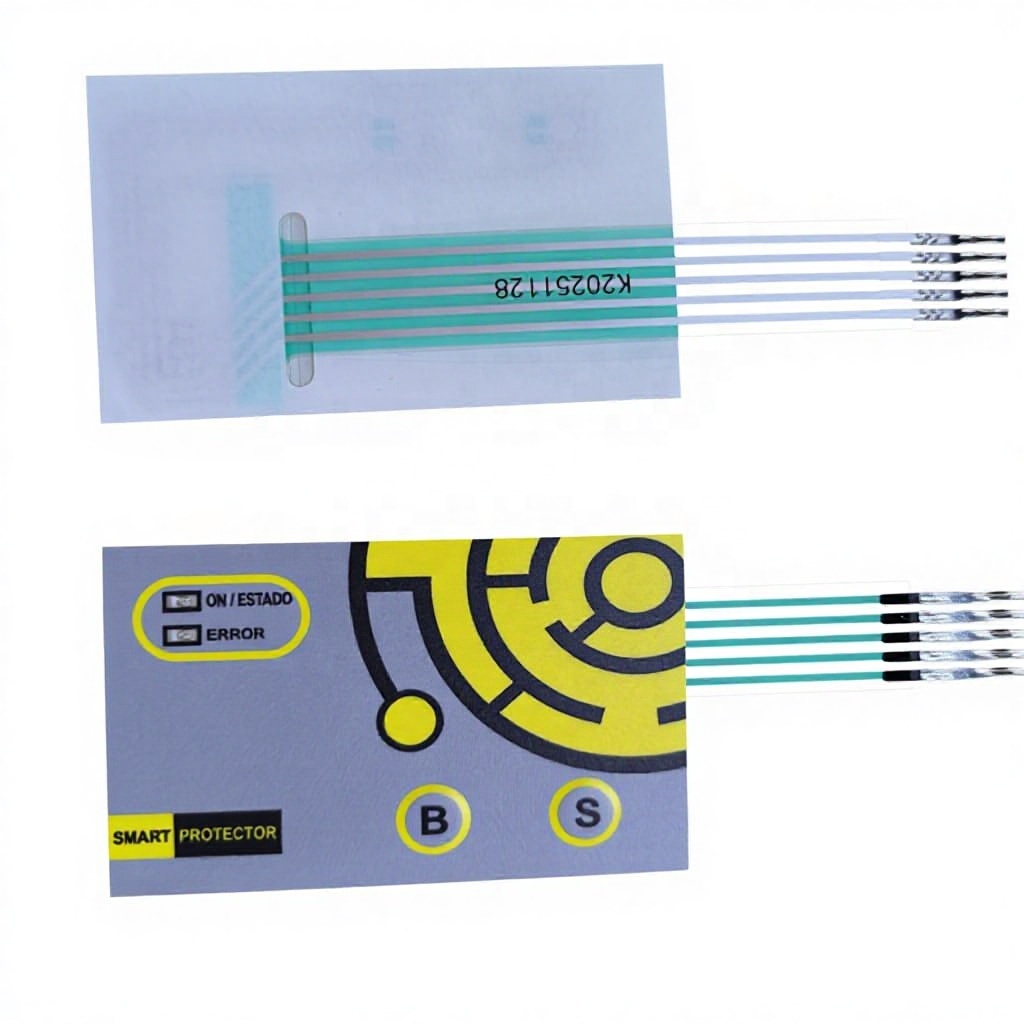
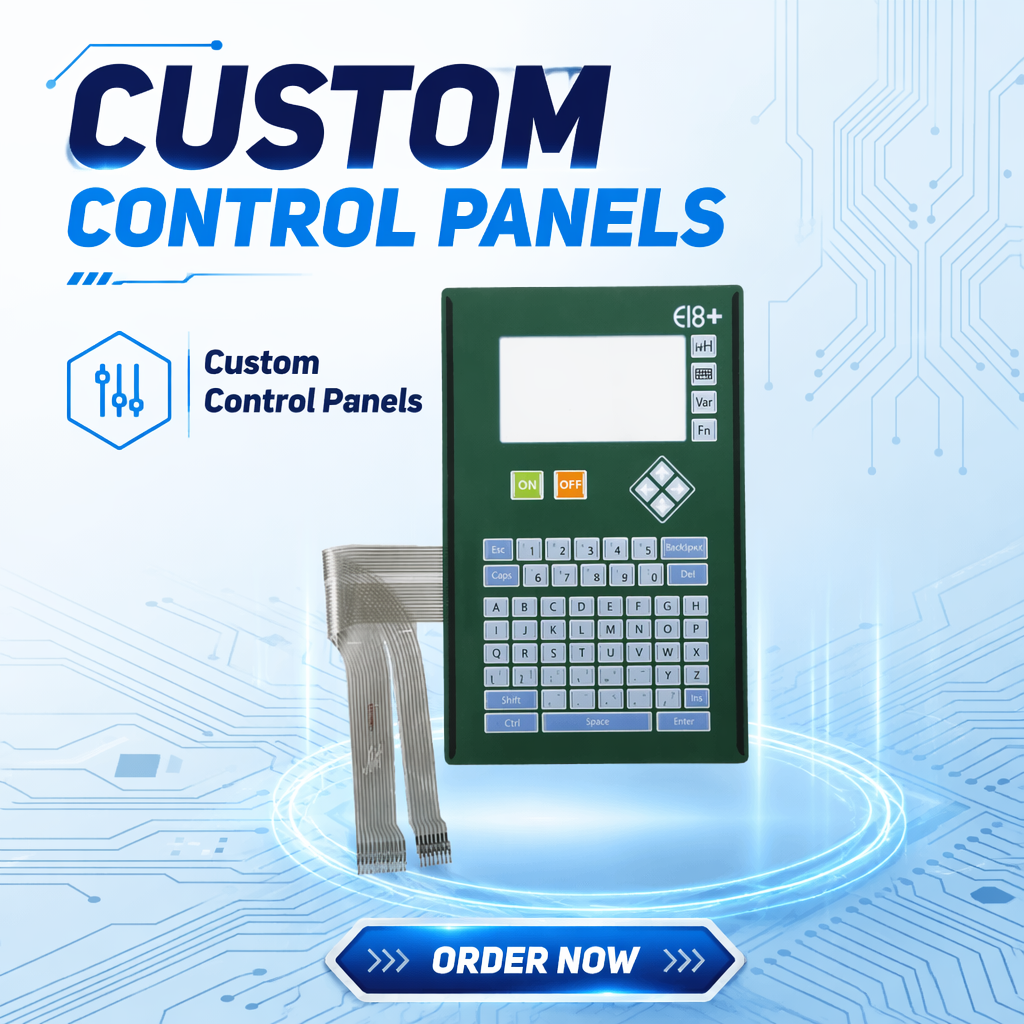
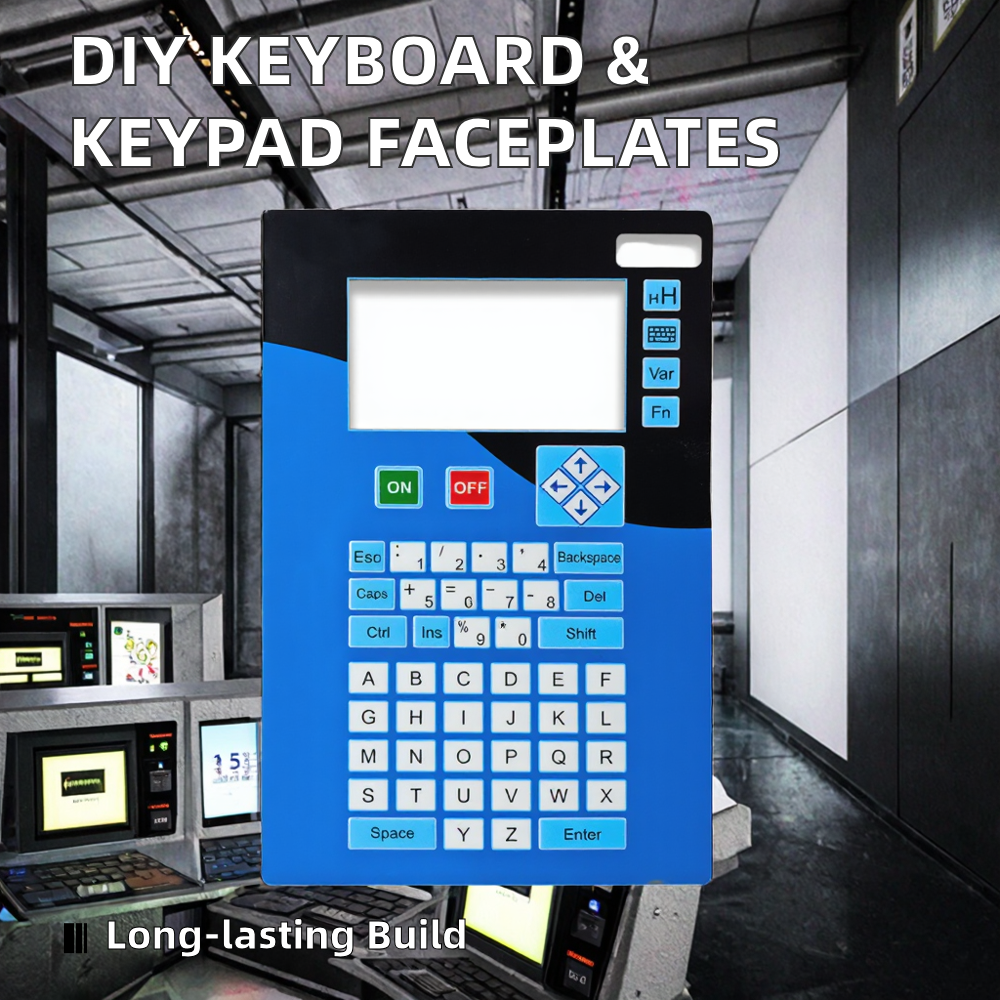
Technical Architecture of Custom Rigid PCB Backed Membrane Switches
In modern Human-Machine Interface (HMI) design, global OEM buyers and electronic engineers are increasingly replacing conventional flexible PET silver-ink membrane circuits with Rigid PCB Backed Membrane Switches (FR4 Backed Keypad Assemblies). By utilizing a rigid glass-reinforced epoxy laminate (FR4 PCB) as the primary structural and circuit foundation, this hybrid switch engineering combines the decorative versatility and moisture-proof tactile overlay of a classic membrane keypad with the structural integrity, component soldering capability, and electrical reliability of a printed circuit board.
Cross-Sectional Engineering & Layer Stack-Up Mechanics
A premium rigid PCB membrane switch designed for industrial control machinery, medical instrumentation, rail locomotives, and military-grade apparatus consists of a multi-layer stacked assembly. Each layer performs a critical mechanical or electrical function:
The inclusion of an FR4 Rigid Board Layer eliminates the need for an external metal backing plate in many applications, substantially lowering total assembly weight and reducing bill-of-materials (BOM) complexity.
- Zero Flexible Cable Wear & Tear
- Direct SMT LED & Resistor Integration
- Robust Header & Molx Connectors
- Complete EMI / RFI Shielding Option
Rigid PCB vs. Flexible PET vs. FPC Circuit Switches: Technical Comparison
Selecting the proper switch matrix architecture requires balancing mechanical operating environment, contact resistance, SMT component density, unit cost, and production tooling lead times. The comparison matrix below details the engineering performance metrics across the three major membrane switch technologies:
| Performance Specification | Rigid PCB Membrane Switch (FR4) | Flexible PET Screen-Printed Switch | Flexible Copper FPC Switch |
|---|---|---|---|
| Base Substrate Material | 0.8mm – 3.2mm Glass Epoxy FR4 | 0.125mm – 0.188mm Polyester (PET) | 0.05mm – 0.125mm Polyimide (PI) |
| Trace Conductor Material | 1 oz / 2 oz Etched Copper (ENIG / HASL) | Screen-printed Silver & Carbon Ink | 0.5 oz / 1 oz Etched Copper Foil |
| Line Trace Resistance | < 0.05 Ω per track (Ultra-low) | 10 Ω – 100 Ω (Length Dependent) | < 0.1 Ω per track |
| Operating Temperature Range | -40°C to +125°C | -20°C to +65°C | -40°C to +105°C |
| SMT Component Compatibility | Excellent (LEDs, MCUs, Connectors) | Limited (Conductive Epoxy LEDs) | High (Standard Reflow Soldering) |
| Waterproof Sealing Capability | IP67 / IP68 (Gasket Enclosure Ready) | IP65 (Permeation Risk at Tail) | IP67 (ZIF Connector Sealed) |
| Mechanical Rigidity & Flatness | Self-supporting Structural Board | Requires Flat Subpanel Mounting | Flexible, Requires Carrier Plate |
| Actuation Lifetime (Snap Domes) | > 3,000,000 Operations | 1,000,000 Operations | > 2,000,000 Operations |
Future Development & Wholesale Procurement Trends (2025–2030)
The global HMI and switch industrial market is experiencing a profound technological shift toward intelligent, tactile-responsive, and environmentally resilient interface solutions. Procurement leaders and engineering managers sourcing from China wholesale factories must align their product roadmaps with these industry trends:
Capacitive Touch & Hybrid Haptics Integration
Combining zero-pressure capacitive touch sensing with physical metal dome tactile switches on a single FR4 board. This provides emergency mechanical override protection while offering smooth glass-like gesture controls.
LGF & Mini-LED Backlighting Innovation
Light Guide Film (LGF) technology combined with ultra-thin Mini-LED arrays replaces uneven traditional EL backlighting. Delivers uniform, low-power luminance across complex key layouts with custom RGB zone color control.
Optical Bonding & Anti-Glare Glass Overlays
Direct OCA (Optically Clear Adhesive) laminating of toughened glass or anti-microbial hard-coated PET overlays onto LCD display windows. Eliminates internal air gaps, prevents condensation, and enhances outdoor sunlight readability.
Supply Chain Optimization: China Direct Manufacturing Strategy
Global B2B buyers are moving away from multi-tiered supply chains in favor of direct collaboration with primary China OEM factories. By combining direct Engineering-to-Engineering (E2E) CAD file conversion with rapid CNC prototyping, global buyers shorten design cycle times from 12 weeks down to 14 days, while securing wholesale unit cost reductions of 30% to 50%.
Why Partner with Our Factory? Enterprise Capabilities & Quality Control
With a manufacturing legacy originating in 1990, TAVO Electronic Information Technology Co., Ltd. (operating under the MEIBORUI / MBR trade brands) operates as a leading high-precision HMI enterprise in China. Spanning a 2,219 square meter state-of-the-art facility in the Robot Industry Port (Xianghe Economic & Technological Development Zone) alongside secondary manufacturing bases in Huizhou, Guangdong, we provide vertical end-to-end production under full quality control.
100% In-House Processing
Equipped with 37 automatic screen printing presses, 4 high-speed Mimaki digital UV printers, 18 laser cutting units, and 60 precision CNC mold-making machines. Zero sub-contracting ensures total quality assurance.
German Technical Collaboration
Maintaining long-term technical exchanges with German membrane switch engineering experts. Process tooling, tension measurement, and graphic printing calibration strictly adhere to European DIN tolerances.
Comprehensive Quality Lab
100% finished product electrical and tactile testing using computer-controlled circuit analyzers, button lifecycle pneumatic testers, programmable salt-fog chambers, and temperature/humidity stress chambers.
Sourcing & Technical Procurement FAQ
Answers to common engineering questions regarding CAD file handoff, material selection, waterproof ratings, and prototype delivery schedules:
What CAD or graphic design files are required to receive a formal RFQ quotation?
To generate an accurate DFM (Design for Manufacturability) report and wholesale quotation, please provide your dimensional panel drawing (PDF, DXF, or DWG format), graphic artwork vector file (AI, CDR, or EPS with Pantone color codes specified), circuit schematic/pin-out diagram, key actuation preference (metal dome vs poly dome force), and target environment conditions.
How does an FR4 Rigid PCB membrane switch achieve IP67 or IP68 waterproof ratings?
Waterproofing is achieved by applying a perimeter closed-cell acrylic foam adhesive gasket (such as 3M 300LSE or 3M VHB) between the top graphic overlay, dome layer, and the FR4 board perimeter. Additionally, venting paths for tactile metal domes are routed internally within the inner layers of the PCB rather than opening to the outer edge, preventing water ingress under immersion.
What overlay film substrate should be used: Autotex Polyester (PET) or Lexan Polycarbonate (PC)?
For applications requiring high actuation cycles (> 1 million flex cycles), chemical solvent resistance (cleaners, oils), and embossed dome keys, hard-coated Autotex Polyester (PET) is strongly recommended. For optical clarity, deep draw molding, or flame-retardant requirements (UL94-V0), Lexan Polycarbonate (PC) is preferred.
Do you support prototype orders, low volume initial production, and small batch runs?
Yes. We offer rapid prototyping services (5 to 7 business days delivery) utilizing digital UV printing and precision laser cutting without requiring costly hard tooling dies. This flexibility allows engineering teams to validate physical fit and electronic functional performance prior to mass production volume runs.
What connector types can be mounted directly on a rigid FR4 PCB switch panel?
Unlike flexible silver-ink tails that rely on pitch-constrained female housing connectors (2.54mm or 1.0mm ZIF), rigid PCB switches accommodate standard surface-mount (SMT) and through-hole connectors including Molex, Amphenol, Samtec, latching headers, screw terminals, and direct wire-to-board soldering pads.