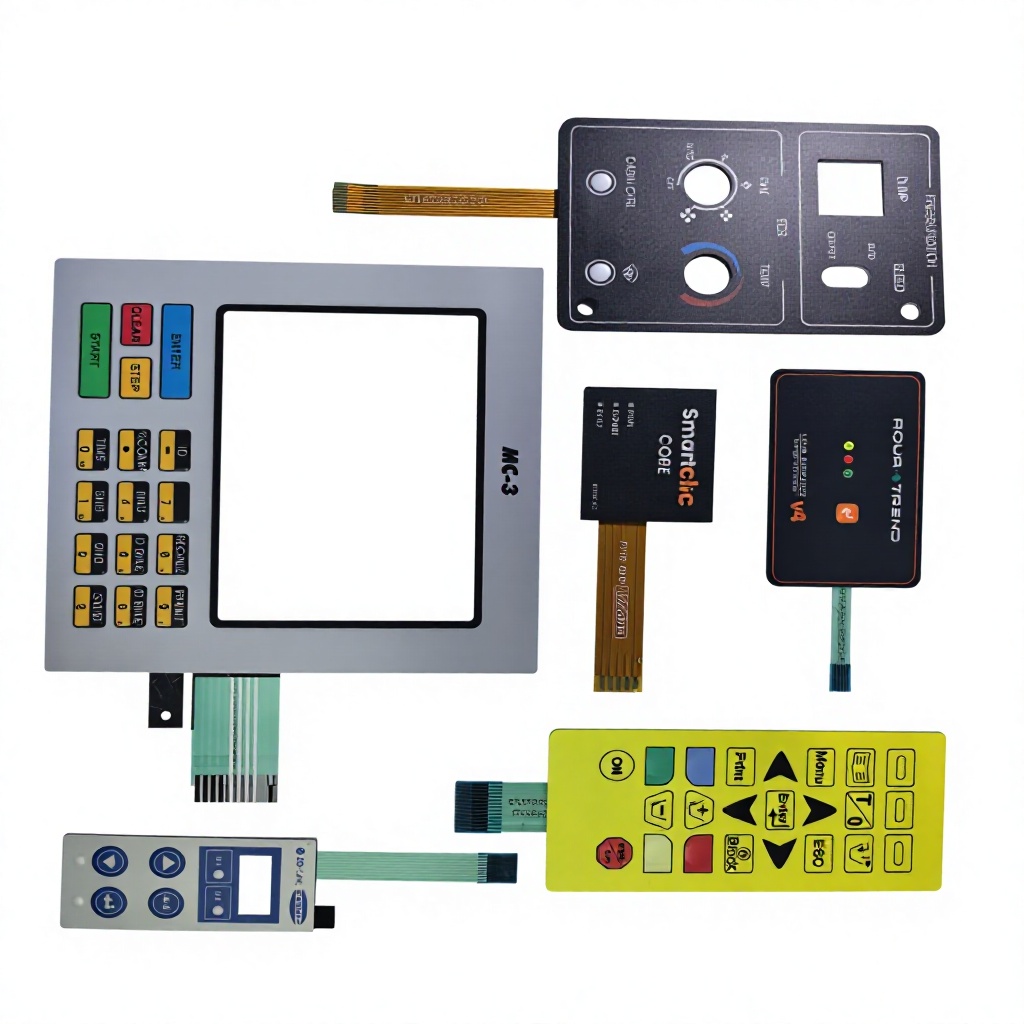
Precision Engineered HMI Modules
Featured Industrial Keypads & Control Assemblies
Explore our core product lines manufactured under rigorous quality control standards. Each keypad is customized for environmental resistance, tactile response, and seamless circuit integration.
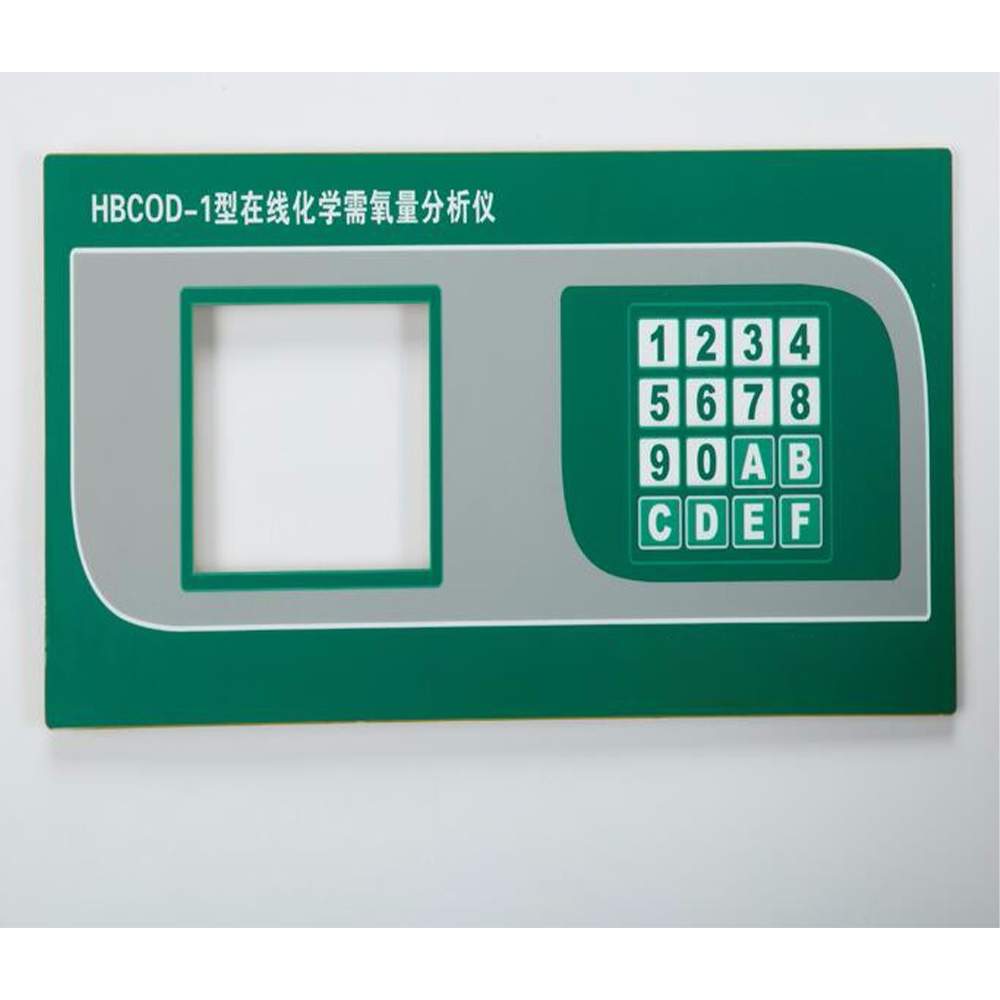
OEM Waterproof Membrane Keyboard PBT Mechanical Switch Compatible Panel
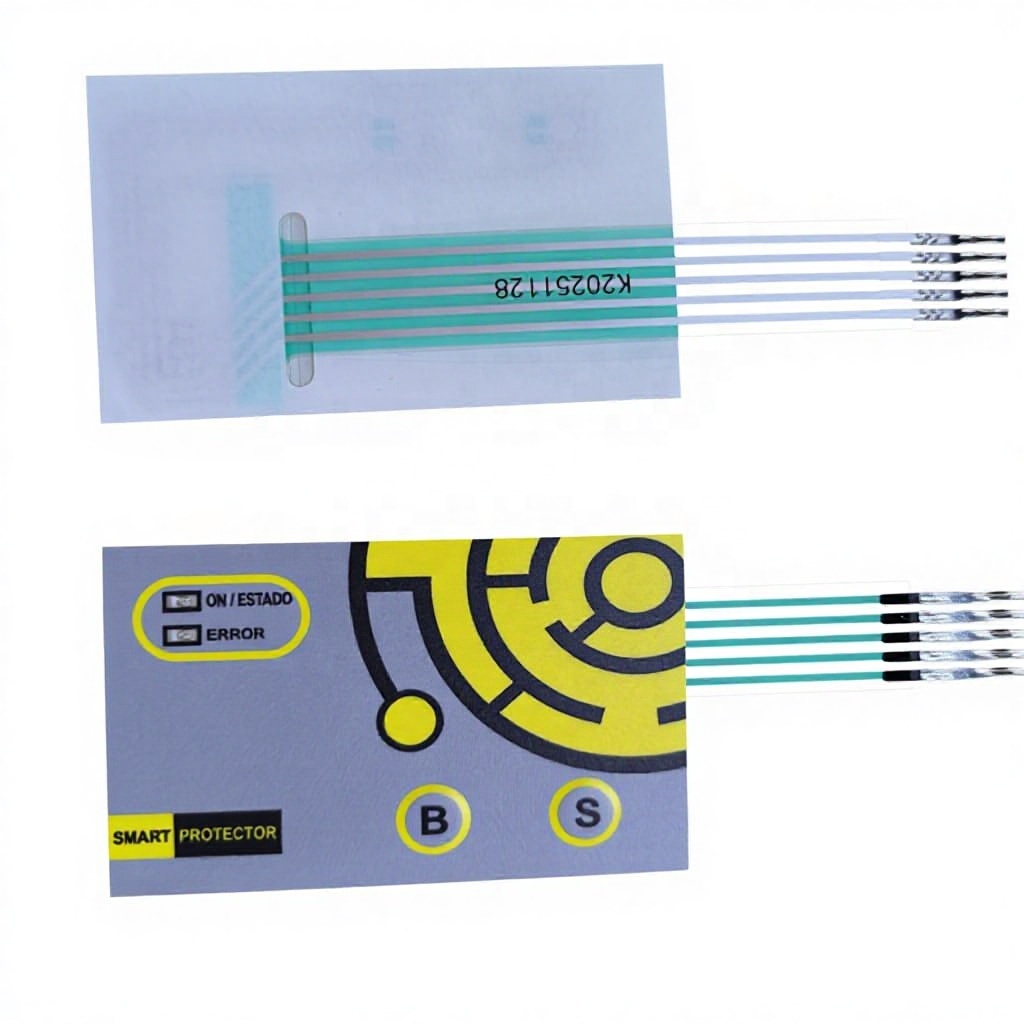
Waterproof Polyester Membrane Keypad Panel PET PC Plastic Keyboard for HMI
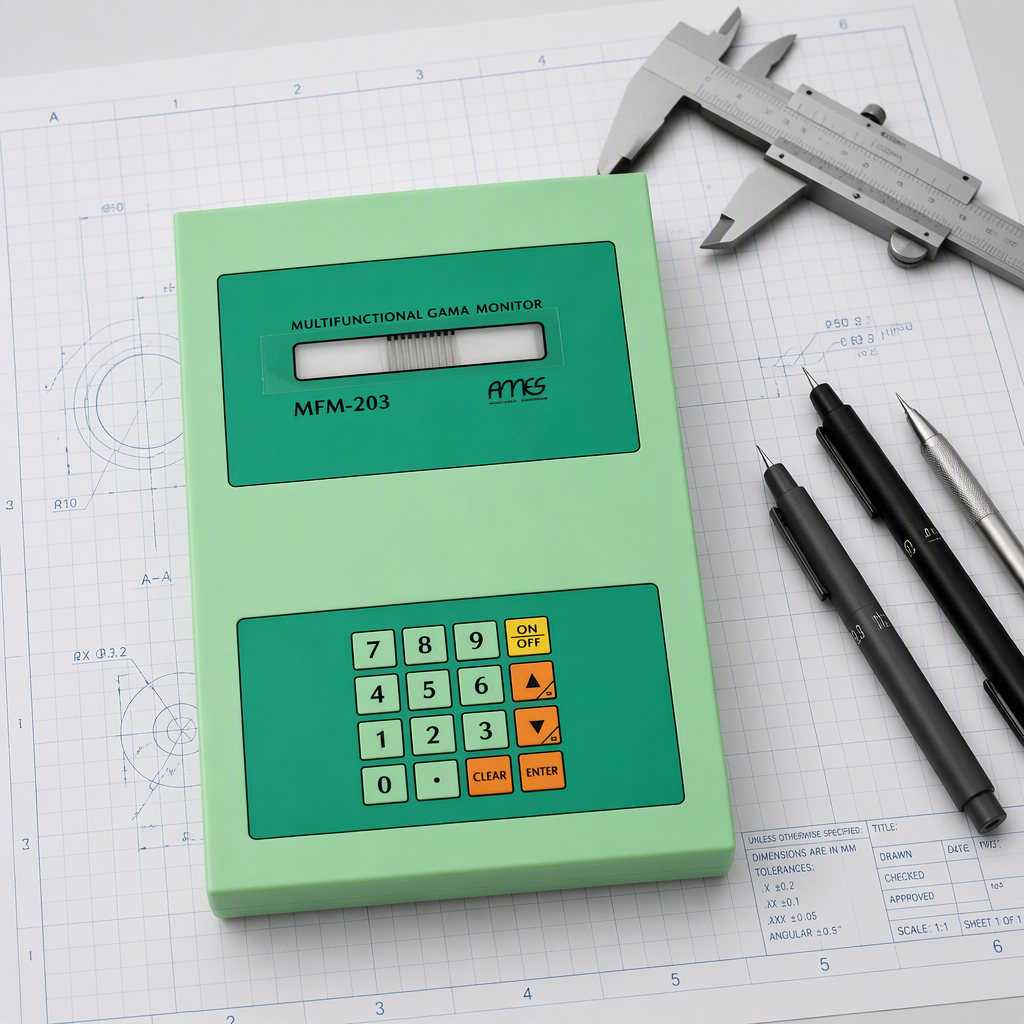
Conductive Film PET/PC Membrane Switch Board Metal Dome Tactile Key
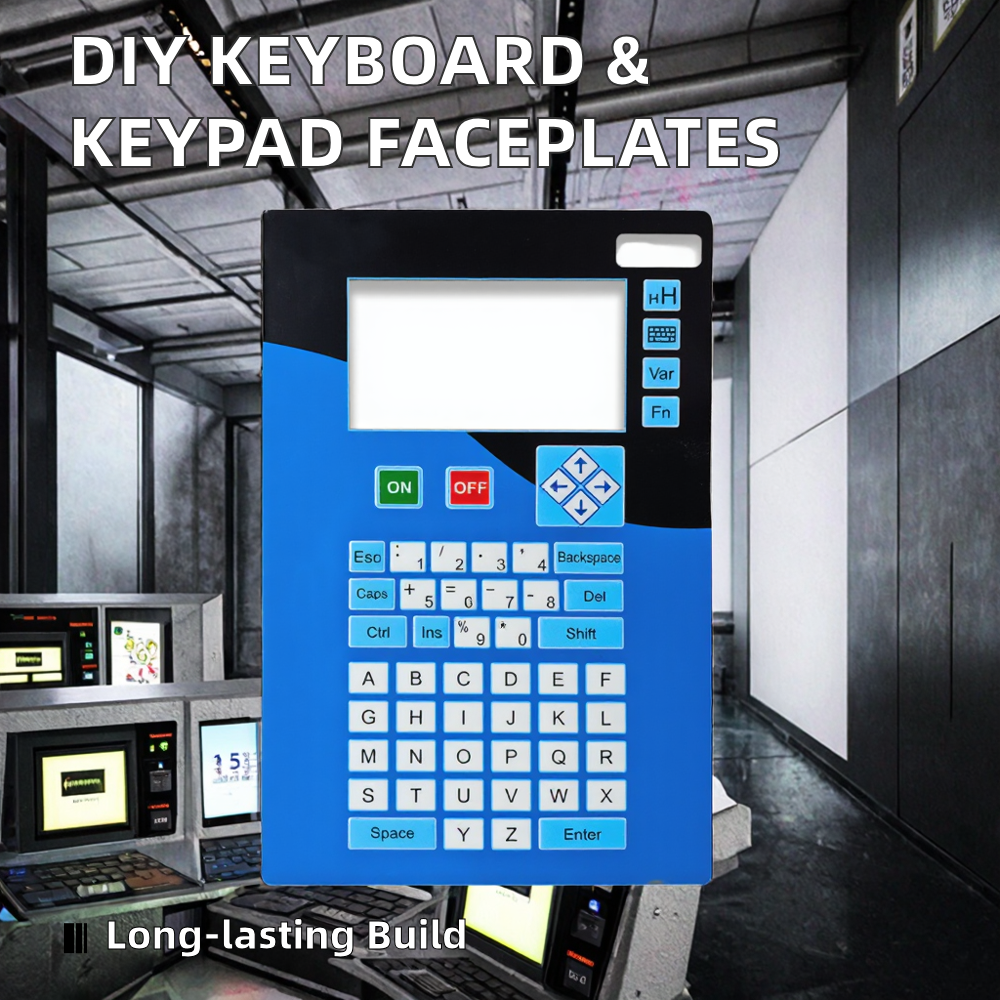
Custom Embossed Tactile Key Membrane Switch Backlight LED Water-proof Panel
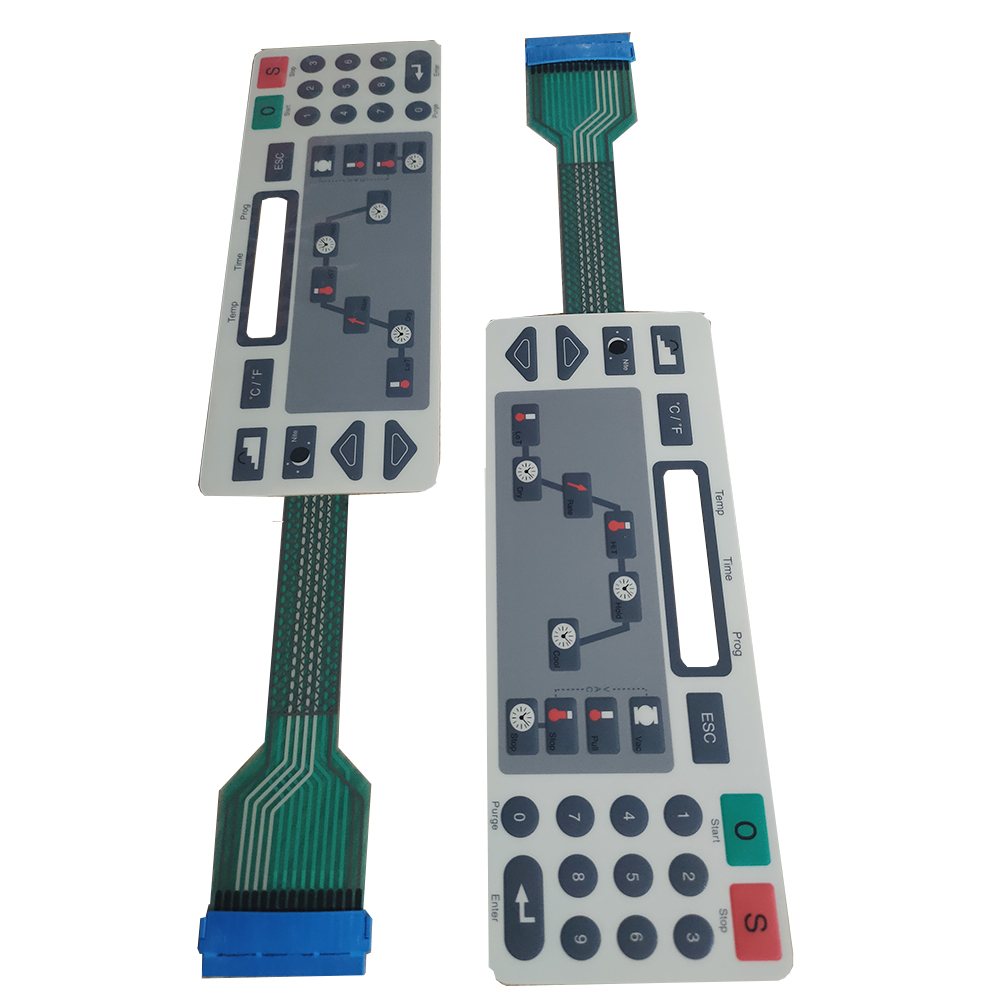
High Quality IP67 Waterproof 3M Adhesive Poly Dome LCD Membrane Switch
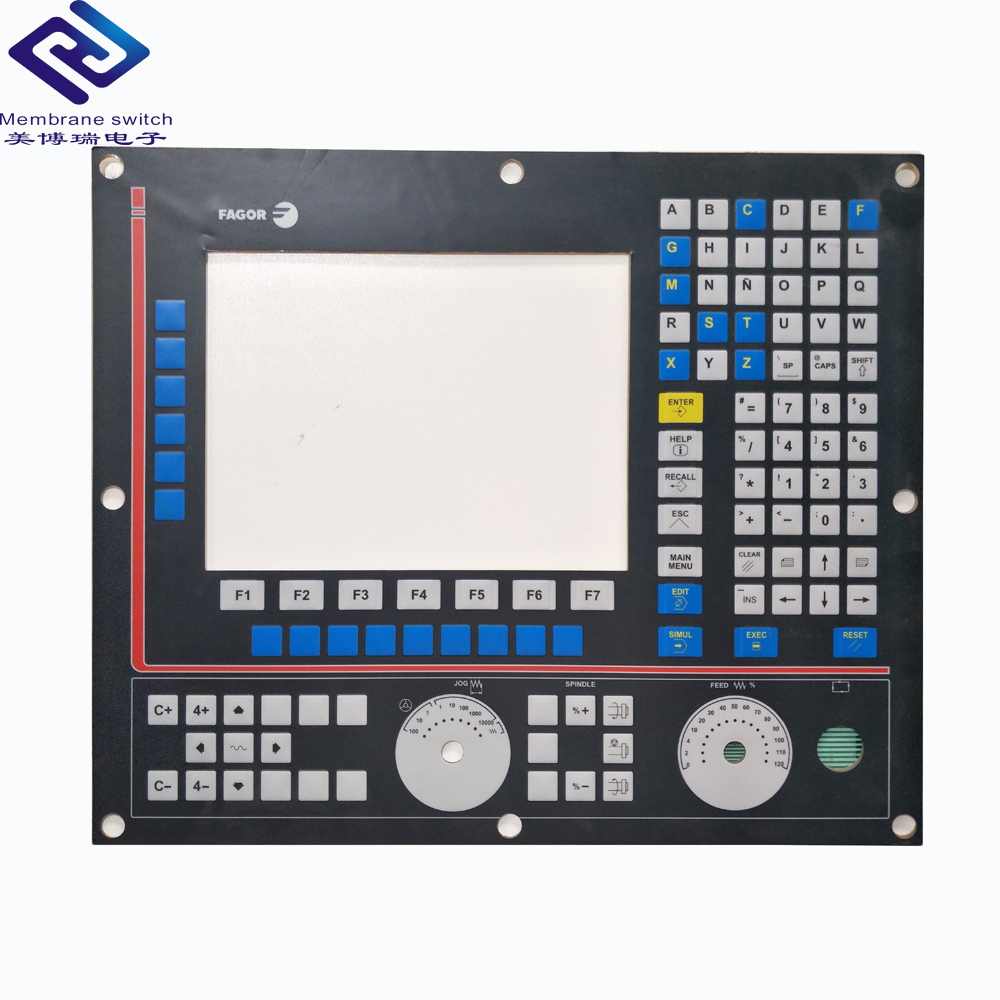
CNC Milling Machine Keypad Membrane Control Panel for Industrial CNC Systems
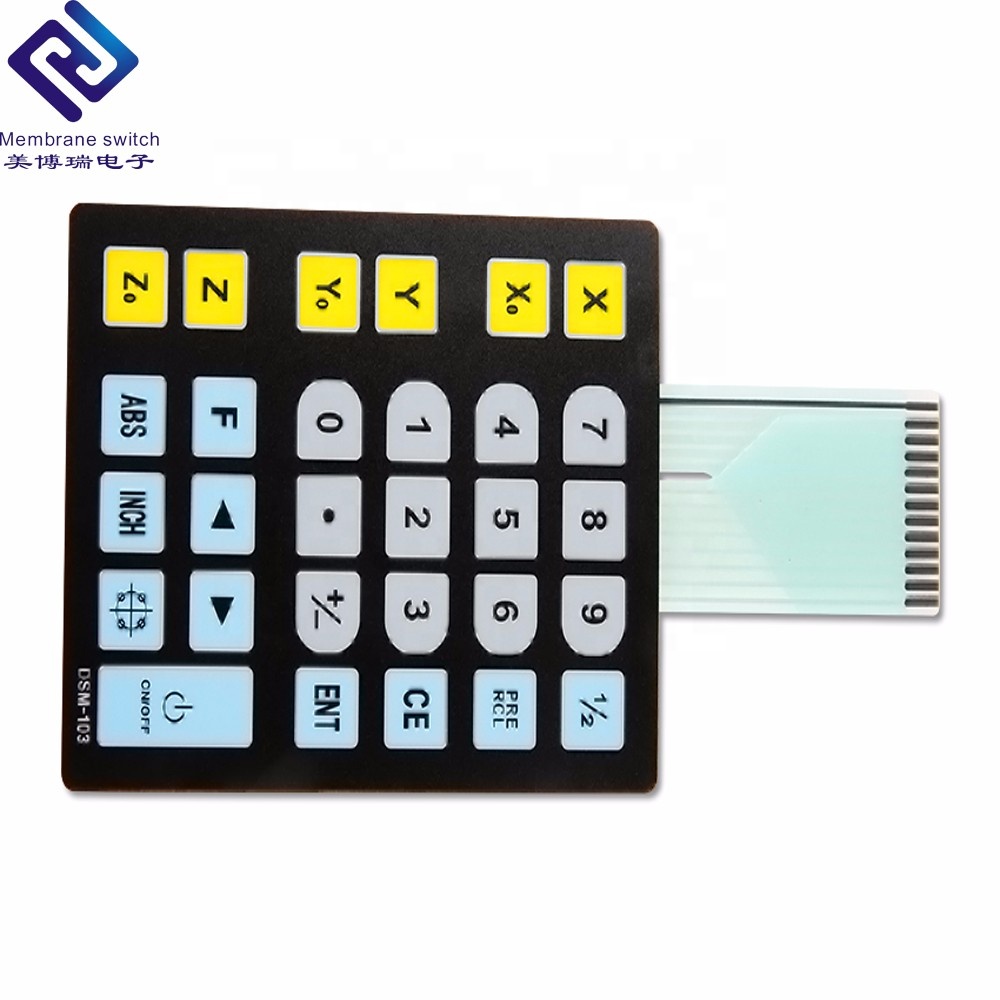
IP67 Waterproof 3M Adhesive Flexible Cable Keypad Telecommunication Buttons
Technical Whitepaper & Sourcing Guide
Engineering Architecture of Modern China Industrial Keypads
Industrial control keypads represent the critical operational interface between humans and machinery. Choosing the correct substrate materials, switch actuation mechanisms, and environmental sealing technology is paramount to preventing unscheduled equipment downtime and ensuring decades of flawless operation.
Graphic Overlay Substrates: PET vs. Polycarbonate (PC)
The graphic overlay is the outermost protective boundary. Selecting between Polyester (PET) and Polycarbonate (PC) depends on chemical exposure, flex fatigue demands, and optical clarity requirements:
- Autotex PET (Polyester): Offers superior flex fatigue resistance (>5 million actuations), high resistance to harsh industrial solvents (solvents, oils, alcohols), and structural integrity across -40°C to +85°C. Recommended for heavy industrial CNC controls and outdoor terminals.
- Polycarbonate (PC): Provides exceptional impact resistance, crystal-clear optical transparency for integrated LCD/LED displays, and easy thermal embossing. Best suited for indoor instrument panels and cost-sensitive applications.
Tactile Feedback: Stainless Metal Domes vs. Polydomes
Tactile response provides operators with positive tactile verification of key actuation, minimizing input errors in high-noise factory floors:
- Stainless Steel Metal Domes (4-Leg / Circular / Triangle): Deliver a sharp, snap-action tactile response with trip forces ranging from 250g to 500g. Rated for 1,000,000+ operations with gold or silver plating for ultra-low contact resistance.
- Thermally Formed Polyester Domes (Polydomes): Integrated directly into the overlay layer during heat embossing. Provides a softer tactile feel, quiet actuation, and lower tooling costs for high-volume consumer/commercial interfaces.
Standard 6-Layer Industrial Switch Construction Stack-up
| Layer Position | Component / Material Name | Technical Function & Specification |
|---|---|---|
| Layer 1 | Graphic Overlay (PET / PC) | Reverse-printed surface with anti-glare, textured, or hard-coated finishes. Houses text, logos, and display windows. |
| Layer 2 | Overlay Adhesive (3M 467MP / 468MP) | High-tack acrylic adhesive layer bonding the overlay to the tactile switch housing, sealing against moisture ingress. |
| Layer 3 | Dome Retainer & Spacer | Holds stainless steel metal domes in exact electrical alignment while defining switch travel distance (0.3mm - 0.6mm). |
| Layer 4 | Conductive Circuit (Silver Ink / FPC / PCB) | Screen-printed conductive silver conductive ink or etched flexible copper circuit (FPC) routing switch signals to connectors. |
| Layer 5 | Rear Isolating Spacer / Adhesive Layer | Seals the internal switch cavity against environmental contaminants and grounds ESD static discharges. |
| Layer 6 | Mounting Adhesive / Aluminum Backer | Heavy-duty 3M 300LSE adhesive or rigid 1.5mm - 3.0mm aluminum backing plate for structural mounting onto metal enclosures. |
Industry Foresight
Future Sourcing & Technological Trends in Industrial Keypads
As industrial automation transitions toward Smart Manufacturing, Industry 4.0, and IoT-connected interfaces, global procurement teams must align with emerging technological shifts in custom keypad design.
LGF Backlighting Integration
Traditional single LED point-source lighting is being replaced by Light Guide Film (LGF) and ultra-thin SMT LEDs. LGF technology redistributes light evenly across large graphic overlays, key legends, and icons while maintaining a slim sub-1.5mm switch profile.
Capacitive Touch Hybrid Panels
Combining mechanical tactile switches with capacitive touch sensing allows multi-gesture control, slider adjustments, and wear-free operation. Hybrid HMIs feature seamless glass or thick acrylic front plates for IP68/IP69K washdown resistance.
Antimicrobial & Hard-Coated Surfaces
Post-pandemic healthcare and food processing standards require keypads treated with silver-ion antimicrobial coatings. These coatings actively suppress bacterial growth while hard-coat treatments (3H-5H pencil hardness) protect against scratch damage.
1M+
Switch Actuation Cycles
IP67/68
Ingress Protection Grade
<0.5Ω
Contact Loop Resistance
100%
Computerized Functional Testing
Manufacturing Expertise & Quality Control
Why Partner with TAVO / MBR Electronic Technology
Rooted in membrane switch engineering since 1990, TAVO Electronic Information Technology Co., Ltd. operates state-of-the-art dual production bases in Xianghe Economic Development Zone (Hebei) and Huizhou (Guangdong). We offer complete in-house control over the entire keypad lifecycle.
Dual Production Ecosystem
Over 2,219 square meters of verified cleanrooms equipped with 37 precision screen printing lines, 4 Mimaki digital UV printers, 18 laser cutting machines, and 60 CNC mold-making units to handle prototype to volume production seamlessly.
German Technological Synergy
Long-standing technical cooperation with leading German membrane keypad specialists ensures our production standards, tolerances, and material processing align directly with European and North American OEM expectations.
Comprehensive Quality Testing
Every batch undergoes computer circuit testing, tactile force life-cycle verification, salt spray corrosion testing, high-low temperature thermal shock (-40°C to +85°C), and UV xenon arc aging tests in our internal QC lab.
Procurement Guidance
Frequently Asked Questions for Custom Keypad Sourcing
Get immediate technical clarity regarding design submission, prototyping timelines, batch quantities, and material choices.
What engineering files are required to start a custom keypad project?
To provide an accurate technical quotation and DFM (Design for Manufacturability) review, please provide:
1. Vector graphic artwork (Adobe Illustrator .AI, CorelDRAW .CDR, or vector .PDF) specifying Pantone color codes.
2. Mechanical enclosure drawings (.DXF, .DWG, or .STEP) showing dimensional outlines, window cutouts, and key embossing dimensions.
3. Circuit schematic or pin-out definition file including connector pitch (1.0mm, 2.54mm, ZIF, or Female Crimp Housing).
What is the standard lead time for prototypes and mass production orders?
Rapid rapid prototyping samples are typically completed within 5 to 7 business days following artwork sign-off. Full production orders generally ship within 12 to 15 business days depending on order complexity, tooling requirements, and total volume.
How do you achieve an IP67 waterproof seal on custom membrane keypads?
We achieve IP67/IP68 ingress protection by using continuous perimeter adhesive frames (such as 3M 300LSE or 200MP series), enclosing all internal circuit traces inside a sealed gasket barrier, and integrating waterproof connector boots or sealed FPC tails.
When should I choose an FPC flex circuit over traditional screen-printed silver ink?
Choose Flexible Printed Circuits (FPC) when your design requires high trace density, pitch spacing below 1.0mm, SMT component soldering (surface-mount LEDs, resistors, or microcontrollers), extremely low loop resistance (<0.1Ω), or extended vibration durability in military or aerospace HMIs.
Do you accommodate low minimum order quantities (MOQ) for pilot production?
Yes! Unlike many high-volume manufacturers, TAVO supports agile engineering teams with low minimum order quantities for pilot runs, prototype iterations, and specialized low-volume industrial equipment production.
What international trade and delivery terms do you support?
We support standard global shipping terms including FOB, CFR, CIF, EXW, and DDP via express air freight (DHL, FedEx, UPS), ocean freight, and air cargo. Payment methods include T/T, L/C, and major international trade terms in USD or EUR.
Ready to Standardize or Customize Your Industrial Keypad Interface?
Contact our senior engineering team today for technical DFM reviews, free material sample packs, or comprehensive manufacturing quotations for your next custom project.