Precision OEM Graphic Overlays & Switch Assemblies
Engineered substrate panels, tactile keypads, and sealed interface arrays manufactured under strict ISO 9001 and Intertek verified standards.
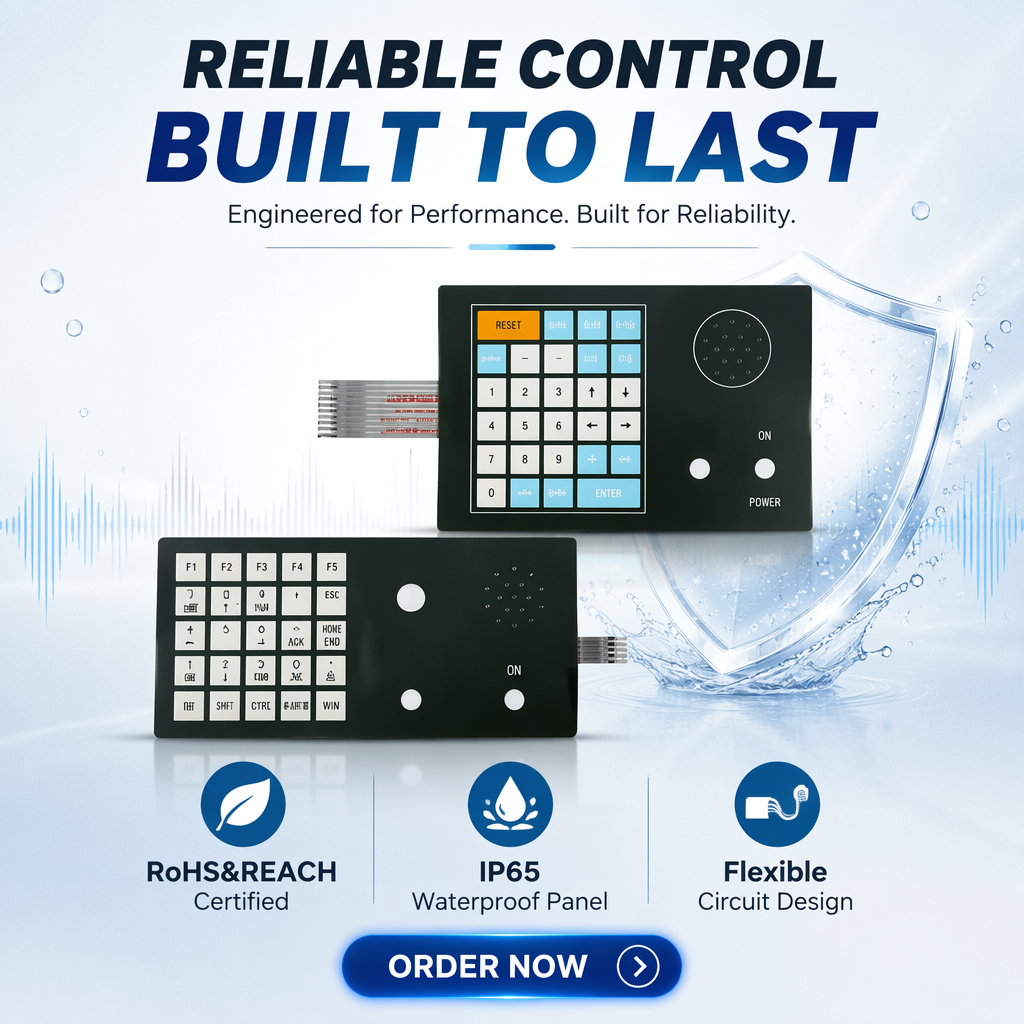
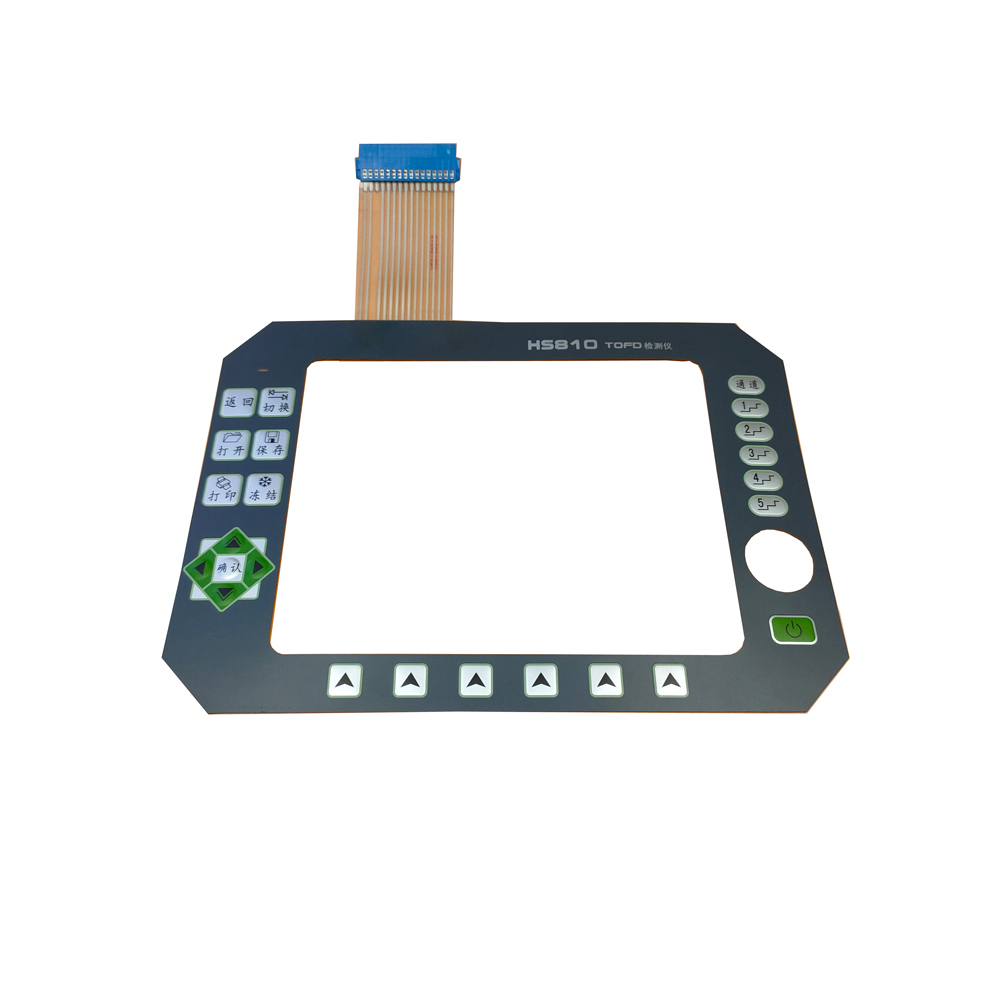
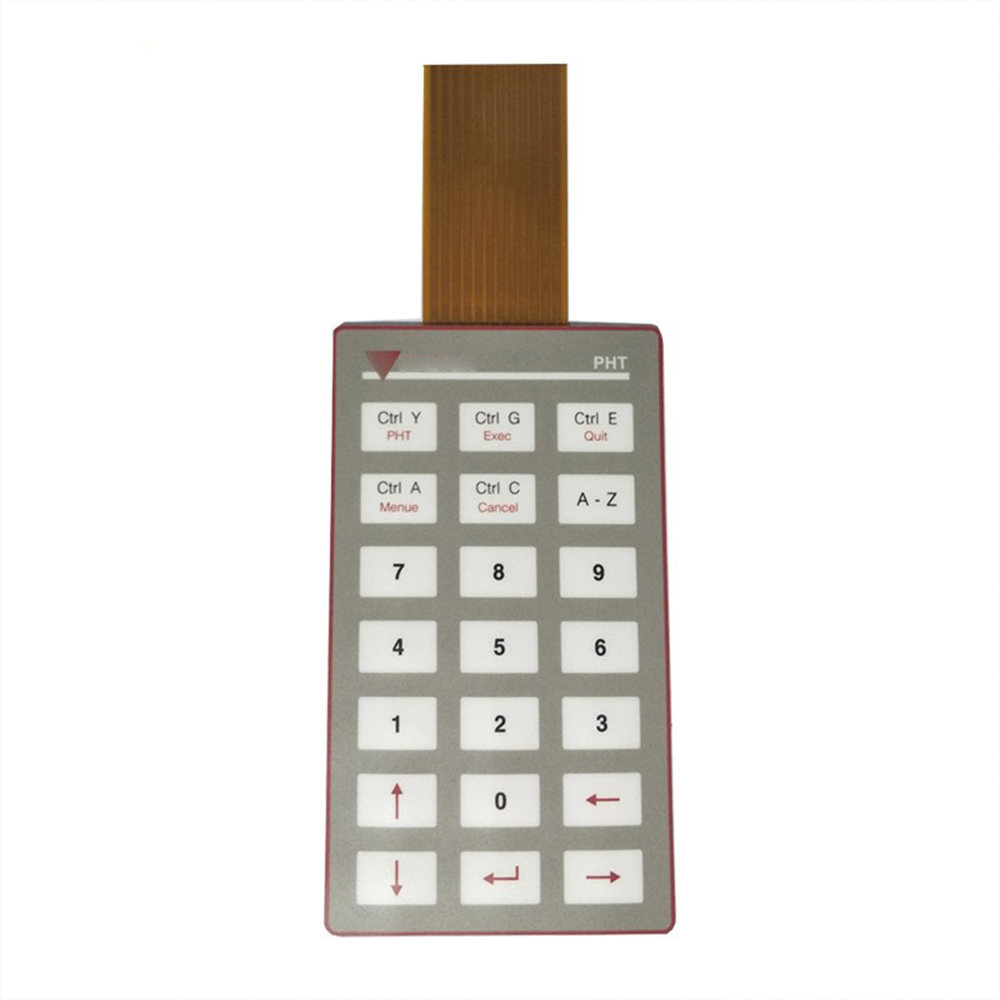
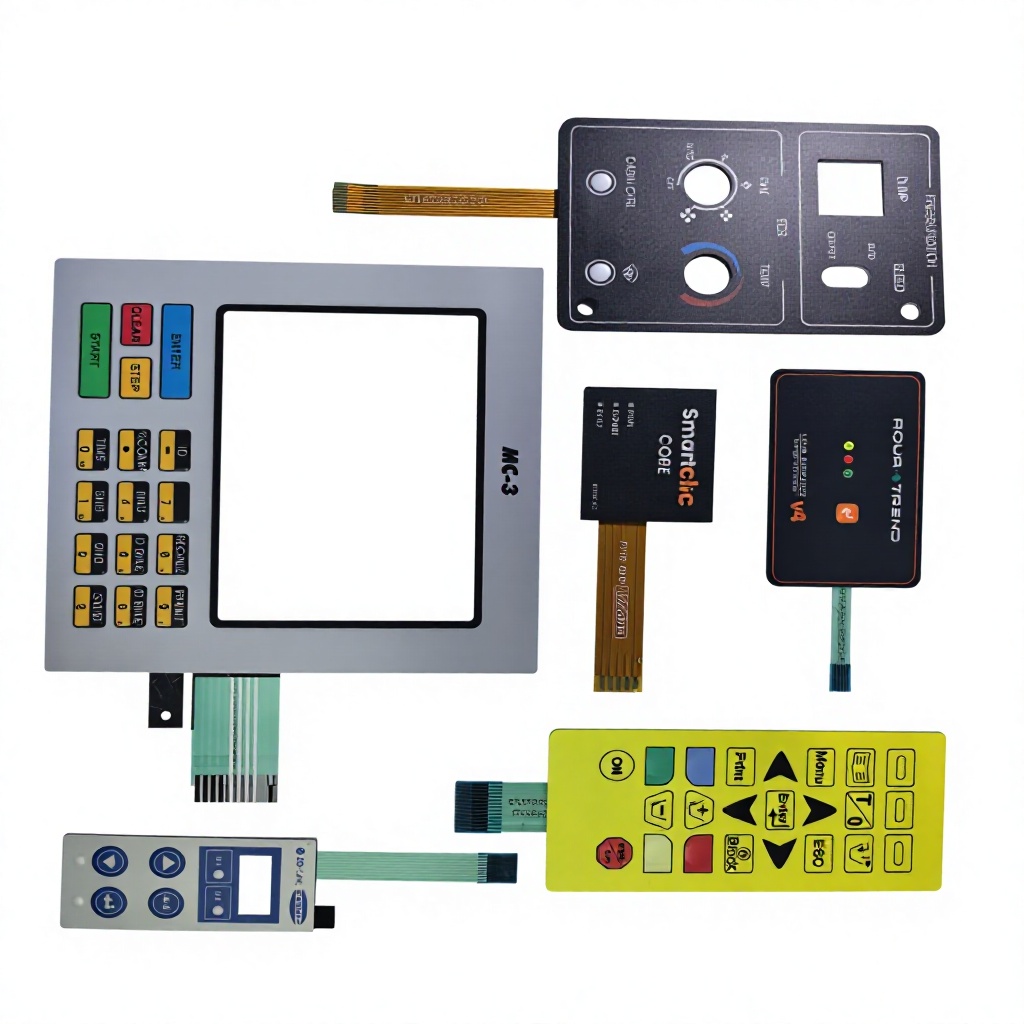
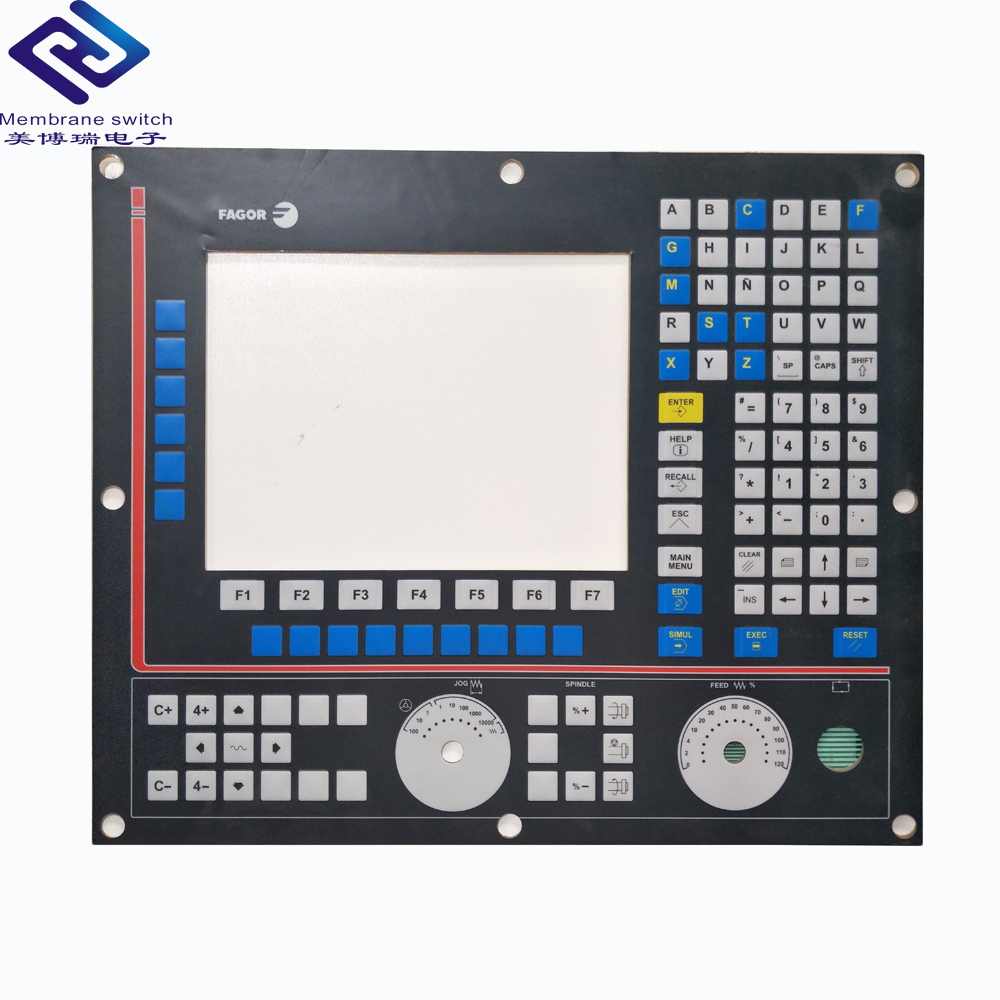
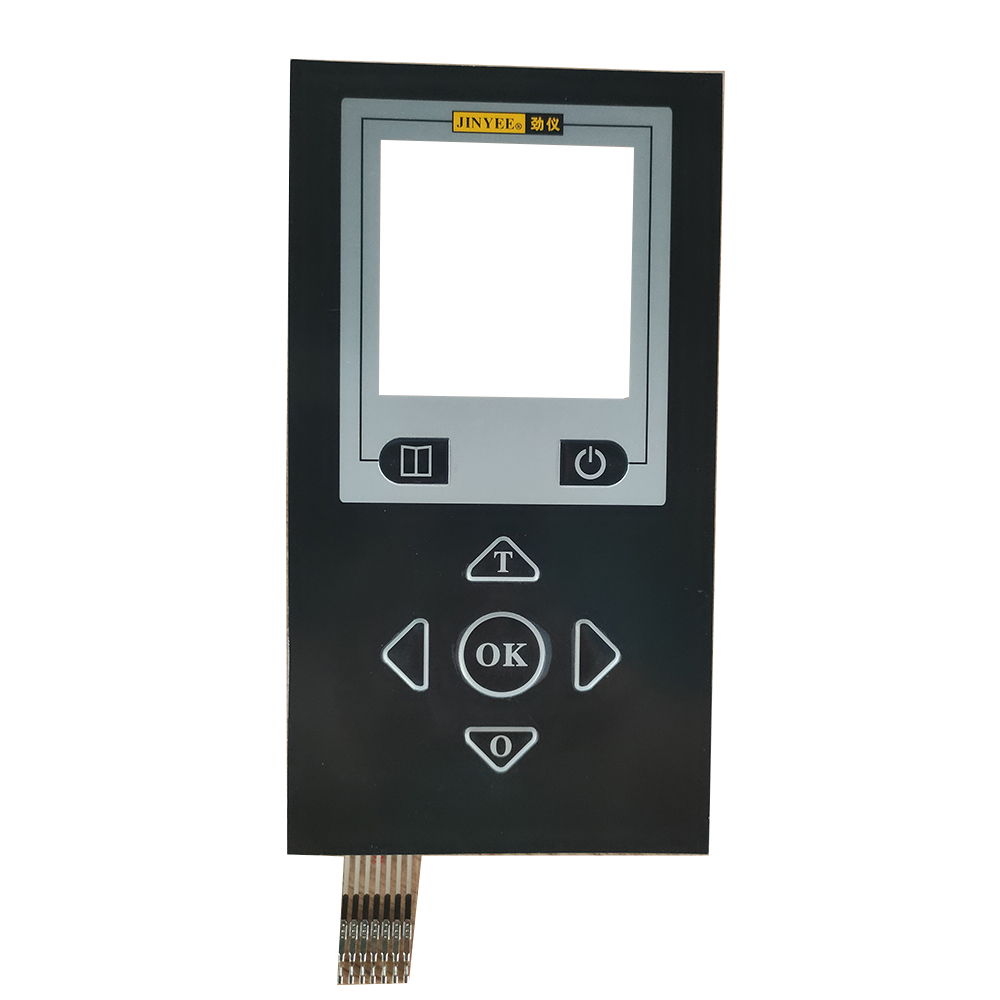
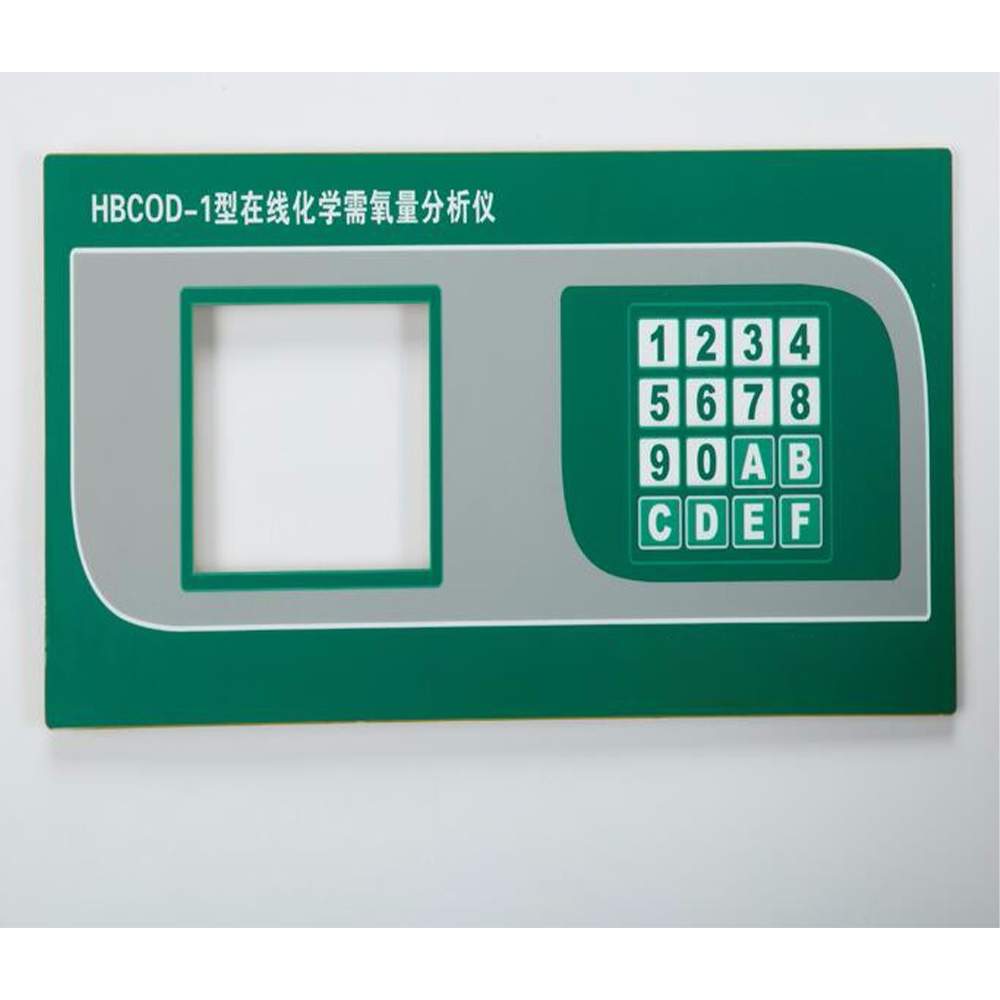
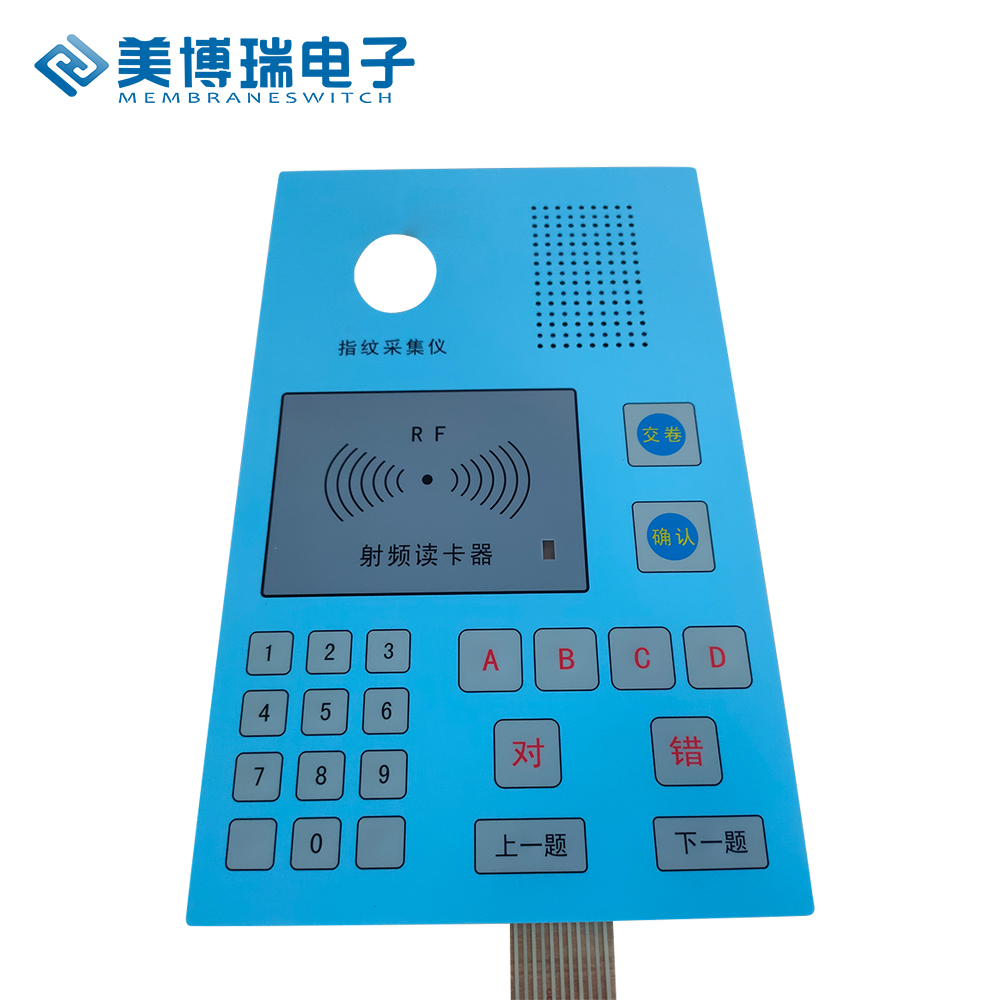
Architectural Anatomy & Substrate Selection for Custom Graphic Overlays
In modern industrial control, medical device design, and aerospace human-machine interface (HMI) architecture, the graphic overlay serves as both the primary visual branding interface and the front-line protective barrier for underlying electromechanical hardware. As a premier custom graphic overlay factory and supplier, TAVO (and product line brand Meiborui / MBR) designs overlay structures engineered to survive harsh chemical washdowns, extreme ultraviolet exposure, continuous mechanical flexing, and intense thermal cycles.
Information Gain Engineering Note: Selecting between Polycarbonate (PC), Polyester (PET), and Vinyl/PVC is not merely a cost consideration. It is a decision dictated by flexing limits (actuation life cycle requirements), chemical compatibility (exposure to solvents vs. oils), optical clarity needs for LCD/LED windows, and thermal expansion coefficients.
Below is an authoritative technical comparison matrix curated by our lead HMI materials engineers to guide global sourcing managers and hardware designers:
| Material Parameter | Autotex / Melinex PET (Polyester) | Lexan / Makrolon PC (Polycarbonate) | Rigid / Flexible PVC (Polyvinyl) |
|---|---|---|---|
| Flexural Life (Actuations) | > 5,000,000 Switch Cycles | 100,000 – 300,000 Switch Cycles | < 50,000 Cycles (Static Panels Only) |
| Chemical Resistance | Exceptional (Solvents, Alcohols, Acids) | Moderate (Susceptible to Esters, Ketones) | Poor to Moderate (Degrades under UV/Oil) |
| Embossing Durability | High Shape Retention under Heat | Excellent Tactile Crispness initially | Poor; loses shape over time |
| Optical Window Clarity | High (Requires hardcoated window areas) | Water-Clear Superior Optical Rating | Standard Clarity; prone to yellowing |
| Operating Temp Range | -40°C to +120°C (-40°F to 248°F) | -30°C to +105°C (-22°F to 221°F) | -10°C to +60°C (14°F to 140°F) |
By engineering multi-layer composite structures—utilizing sub-surface reverse silk-screen printing or state-of-the-art Mimaki UV digital printing—we ensure that graphic inks remain permanently insulated from exterior abrasion, cleaning detergents, and human sweat. Furthermore, selectively applied textured hardcoats allow for clear, non-distorted LCD or LED display windows alongside anti-glare matte control surfaces.
Strategic Sourcing & Next-Gen Manufacturing Trends (2025–2030)
The global market for custom graphic overlays and membrane switch keypads is undergoing a fundamental transformation driven by smart automation, IoT connectivity, and strict environmental compliance standards. Sourcing directors and engineering procurement teams must navigate several key emerging trends:
1. Transition to Hybrid Capacitive & Tactile Overlays
Traditional mechanical switches are increasingly integrated with capacitive touch sensors behind ultra-thin polyester overlays. This allows touch-screen-like seamless cleaning while retaining physical tactile domes for blind-key safety operation in critical medical and industrial machinery.
2. Integrated Micro-Backlighting (LGF & Mini-LEDs)
Modern equipment operators require night-vision or low-light clarity. Sourcing is shifting toward Light Guide Film (LGF) and surface-mounted Mini-LED layers integrated directly within the graphic overlay stack-up, yielding uniform illumination with minimal power consumption and thickness under 1.5mm.
3. Eco-Friendly Materials & Halogen-Free Inks
Global supply chains demand full RoHS 3.0, REACH, and California Prop 65 compliance. Forward-thinking factories are replacing halogen-based conductive silver inks and hazardous adhesives with bio-derived PET films and solvent-free UV-curable dielectric coatings.
Enterprise Manufacturing Capabilities & Quality Assurance Ecosystem
As an industry leader with a legacy stretching back to 1990, TAVO Electronic Information Technology Co., Ltd. operates as a fully integrated manufacturer rather than a simple assembly contractor. With primary production facilities situated in the Robot Industry Port of Xianghe Economic & Technological Development Zone (Langfang, Hebei) and a secondary strategic processing base in Huizhou, Guangdong, TAVO provides unmatched supply resilience and batch volume scalability.
In-House Equipment Breakdown
Quality and precision are non-negotiable. Our dual production bases house an exhaustive array of advanced automated equipment:
- 37 Silkscreen Printing Machines: Delivering pixel-perfect color fidelity matched to Pantone, RAL, and Federal Standard specifications.
- 4 Mimaki Digital UV Printers: Precision heat-setting digital printers for rapid prototyping and gradient color rendering.
- 18 Laser Cutting & 60 CNC Tooling Machines: Achieving tight tolerance contour cutting down to ±0.05mm without thermal burrs.
- 7 Digital Engraving Systems: Dedicated for custom metal backers, acrylic lenses, and backlighting guides.
German Technical Synergy & Reliability Lab
TAVO maintains a long-term technical cooperation with prominent German membrane switch manufacturers, exchanging technicians, equipment standards, and process controls. Every single product lot undergoes stringent validation in our onsite environmental test lab:
- Computerized circuit continuity & insulation resistance analysis.
- High-frequency button actuation life-cycle testers.
- Programmable temperature and humidity climate chambers (-40°C to +150°C).
- Xenon lamp accelerated weathering aging chambers.
- Automatic salt-spray corrosion fog testing for marine environments.
Proven Global OEM Supply Record: Our customized membrane panels, overlays, and FPC switch arrays are trusted by international blue-chip brands such as Siemens, ABB, and Haier, and are actively deployed in high-speed rail control systems, aerospace programs, and large-scale hydro-electric control infrastructures.
Frequently Asked Sourcing & Technical Questions (Procurement FAQ)
What technical design files are required to request a custom graphic overlay quote?
1. Vector artwork files containing all graphic layers, text, and Pantone/RAL color callouts (Vector PDF, Adobe Illustrator .AI, or CorelDraw .CDR format).
2. 2D mechanical dimension drawings indicating key dimensions, window locations, tolerances, and overall cut-outs (DXF, DWG, or PDF).
3. Specifications for material preference (Polycarbonate vs Polyester, thickness e.g., 0.125mm, 0.175mm, 0.25mm), surface finish (Matte, Gloss, Fine-line), adhesive requirements (e.g., 3M 467MP, 3M 468MP, or 3M 300LSE for low surface energy plastics), and key embossing details (Rim emboss, Pillow emboss).
How do you ensure color consistency across high-volume production batches?
What options exist for sealing graphic overlays against moisture and harsh cleaning chemicals?
Can TAVO integrate rigid back plates, PCBs, or display lenses with the graphic overlay?
What is the typical prototype lead time and minimum order quantity (MOQ)?
What certification credentials does your factory possess for global exporting?
Request an Engineering Review & Custom Quote Today
Consult directly with our senior technical HMI design team. Send us your project drawings, material specifications, or operational requirements, and receive a complete feasibility evaluation and factory-direct quote within 24 hours.
Get a Quote