Precision Engineered Membrane Control Panels & Keypads
Explore our certified product line manufactured under rigorous ISO 9001 standards, engineered for extreme reliability across industrial, medical, railway, and automotive control systems.
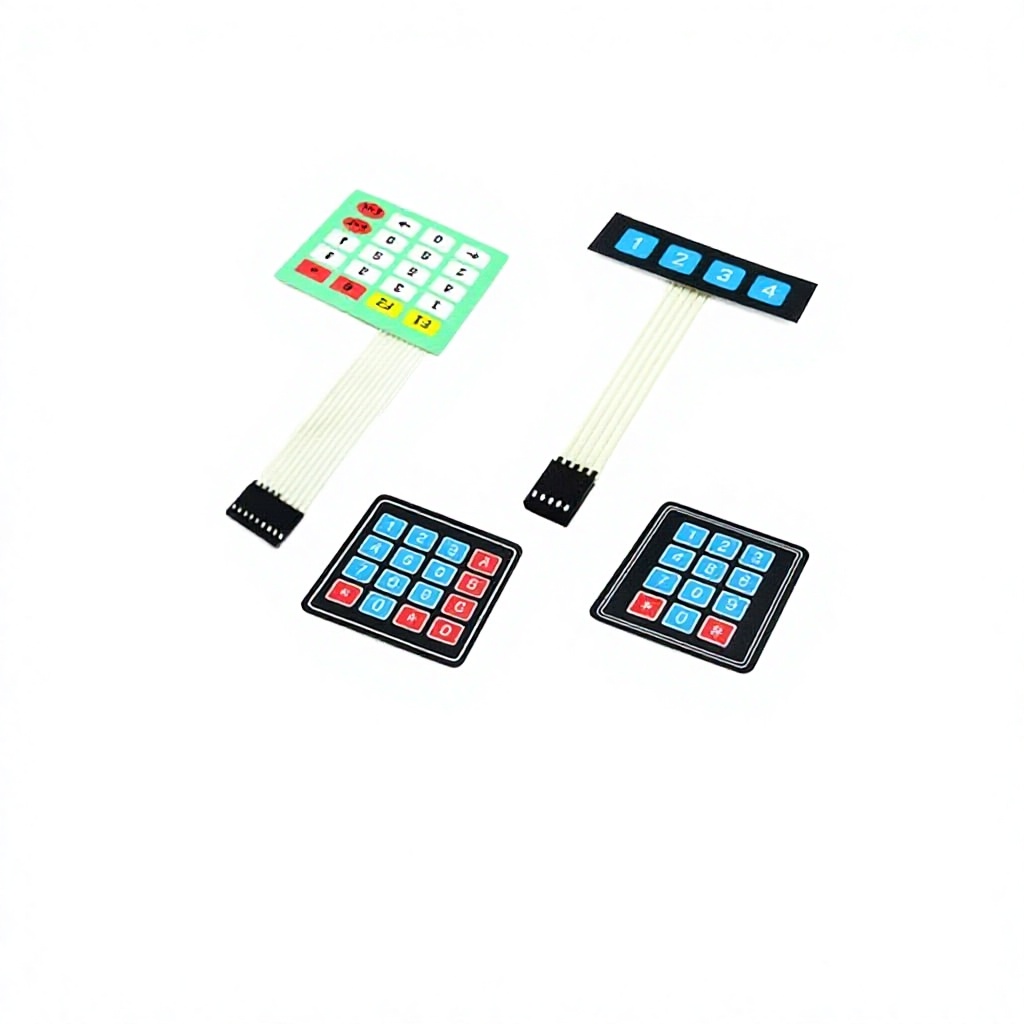
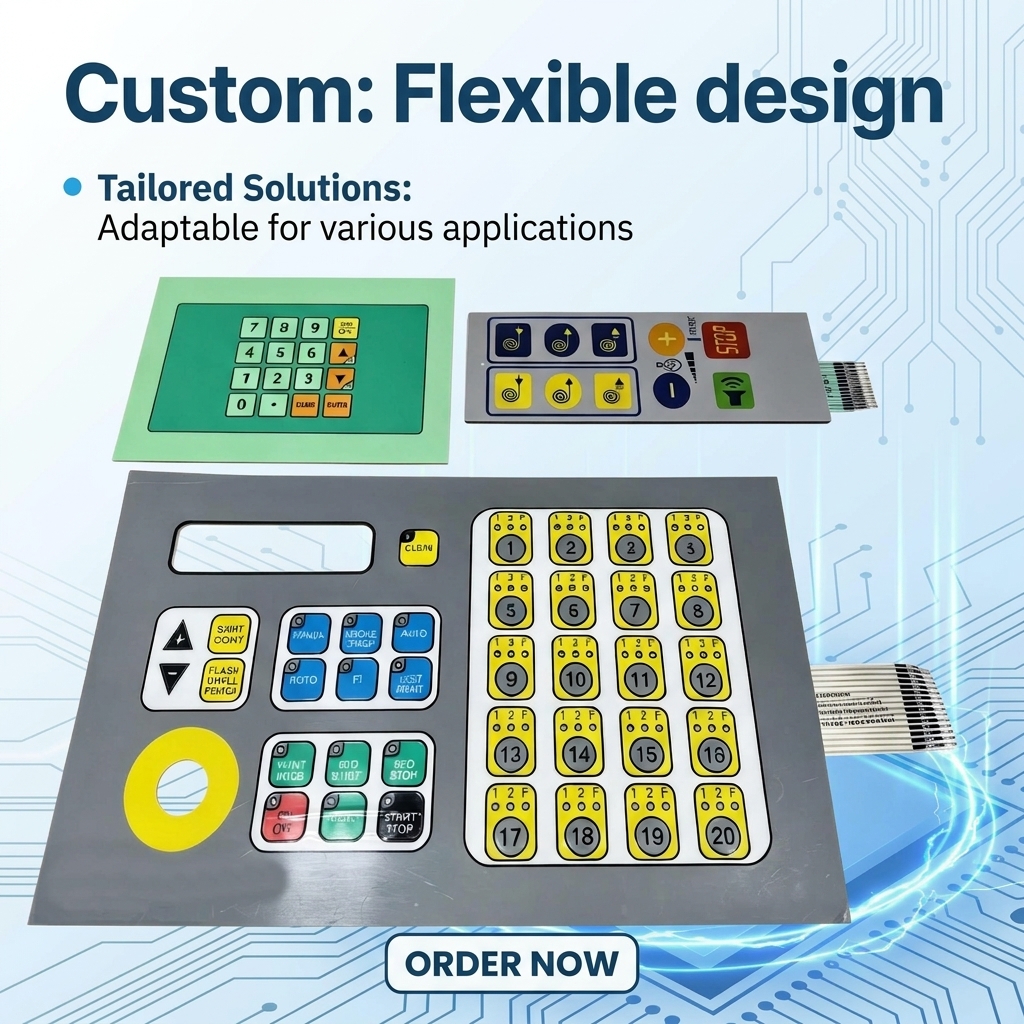
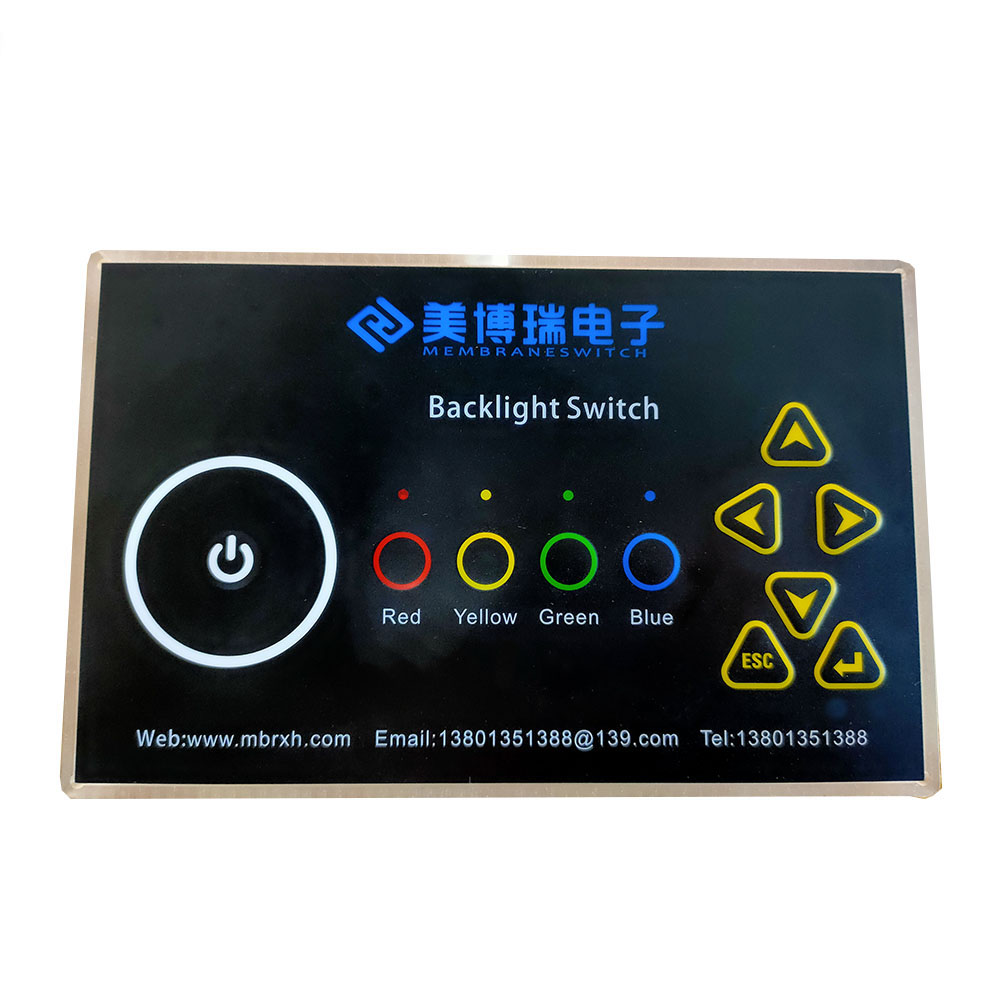
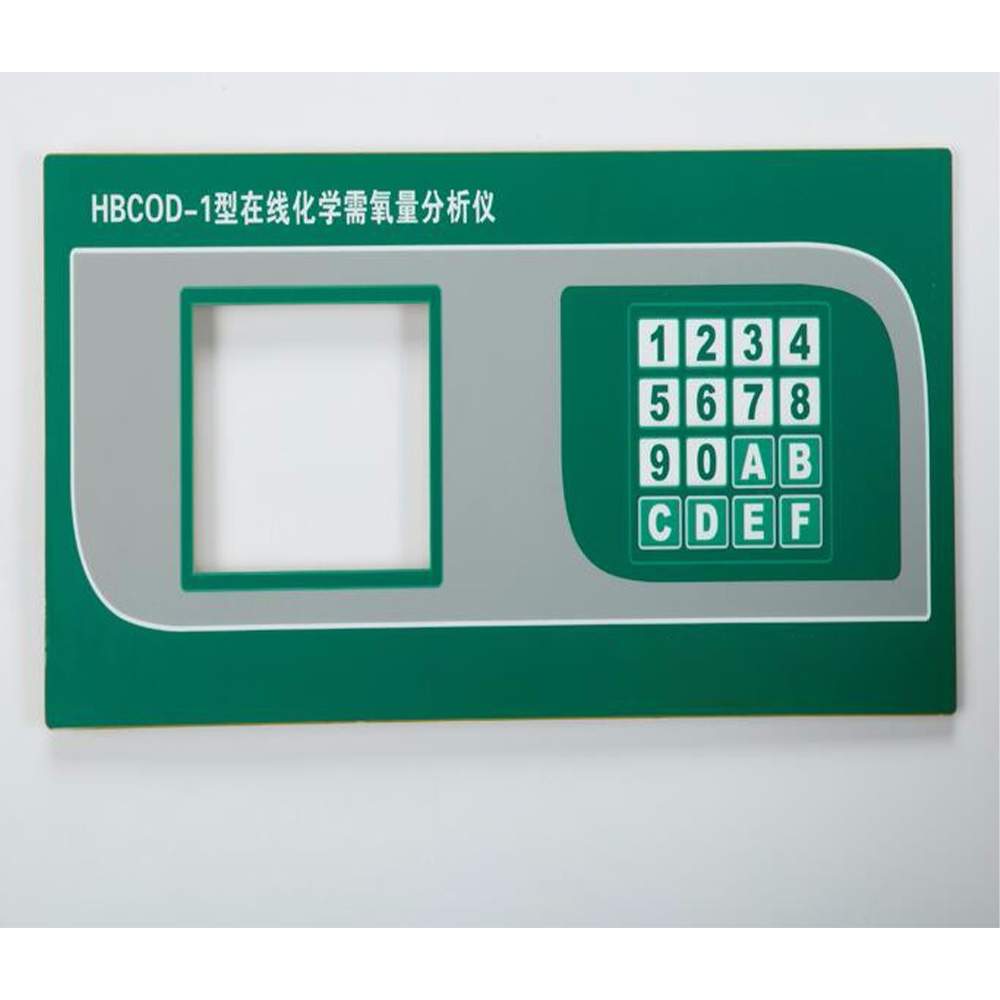
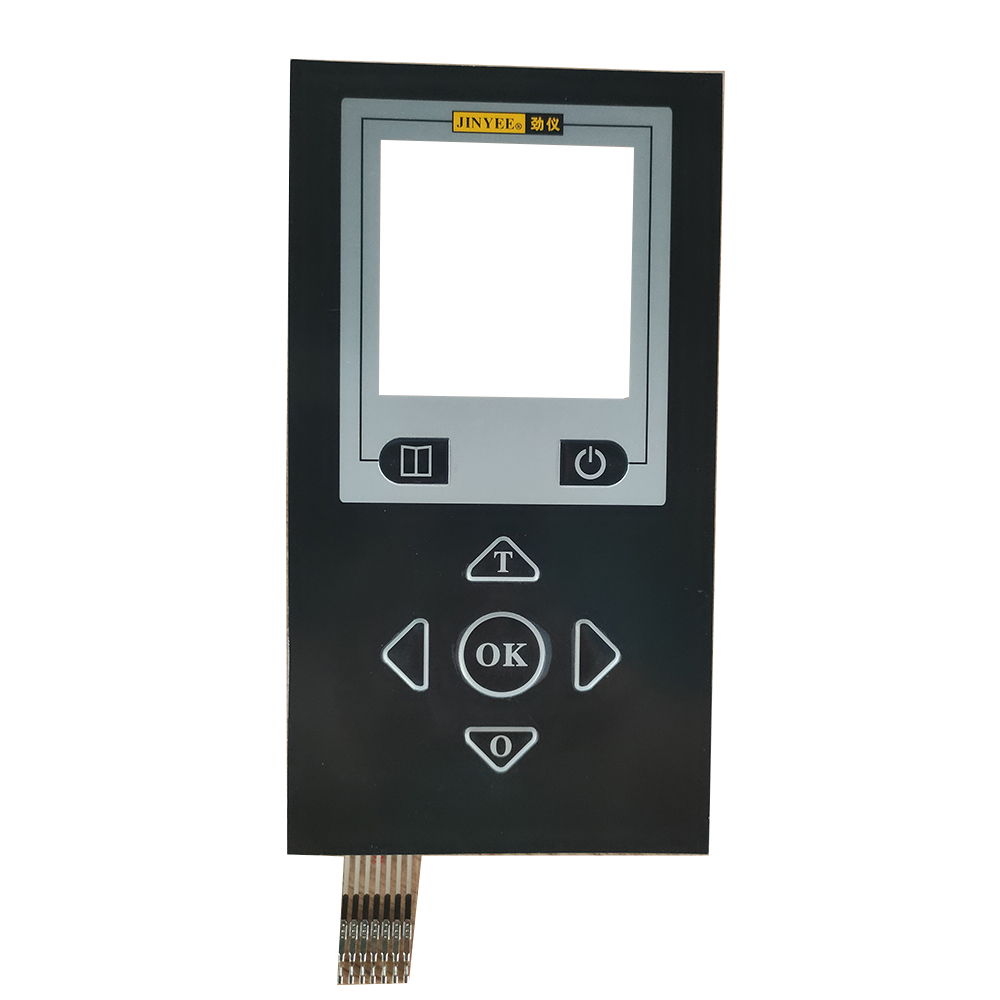
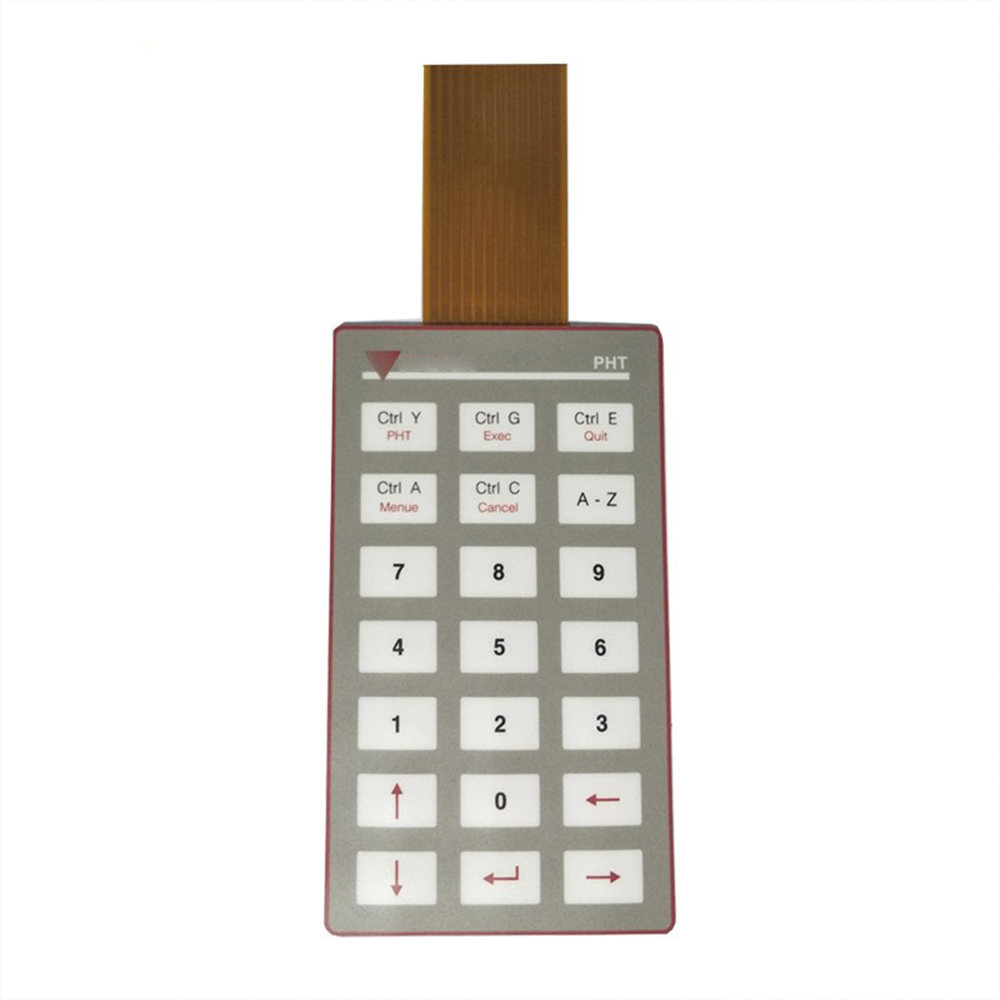
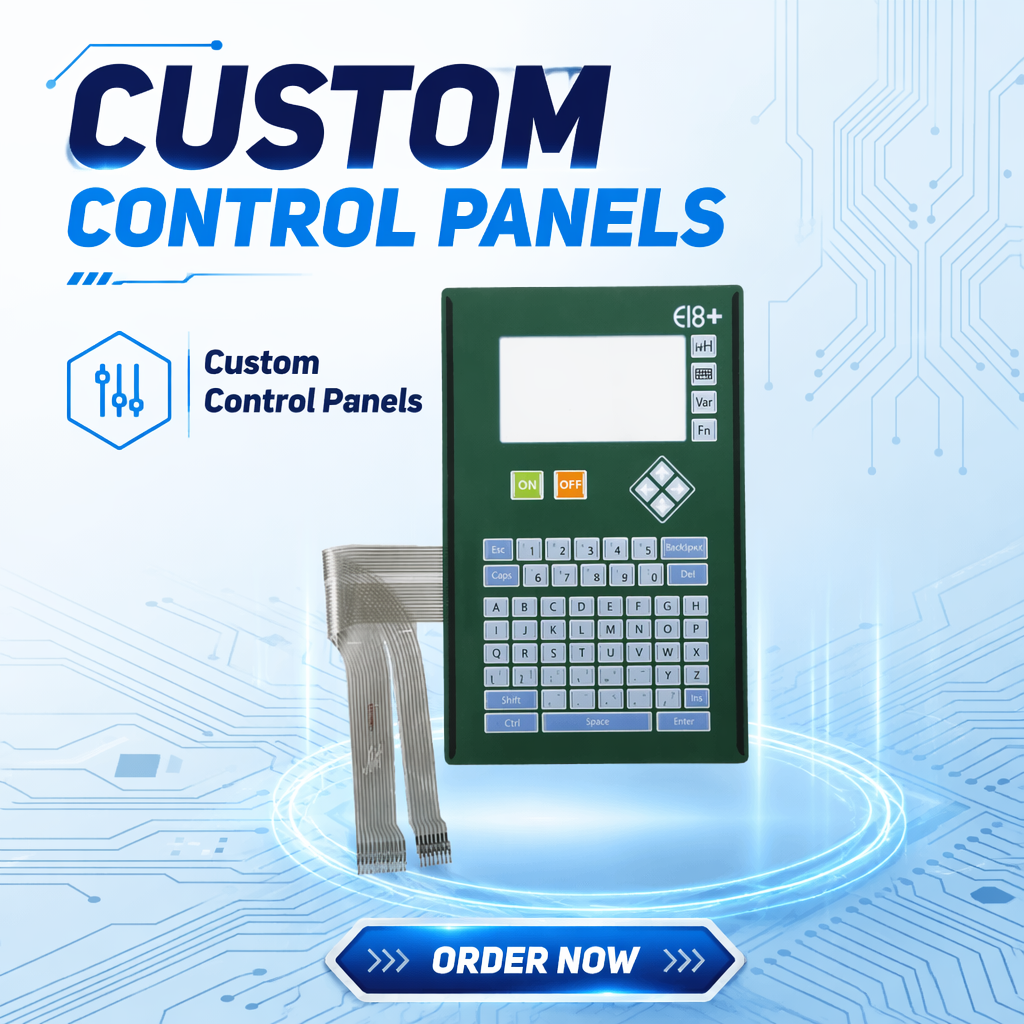
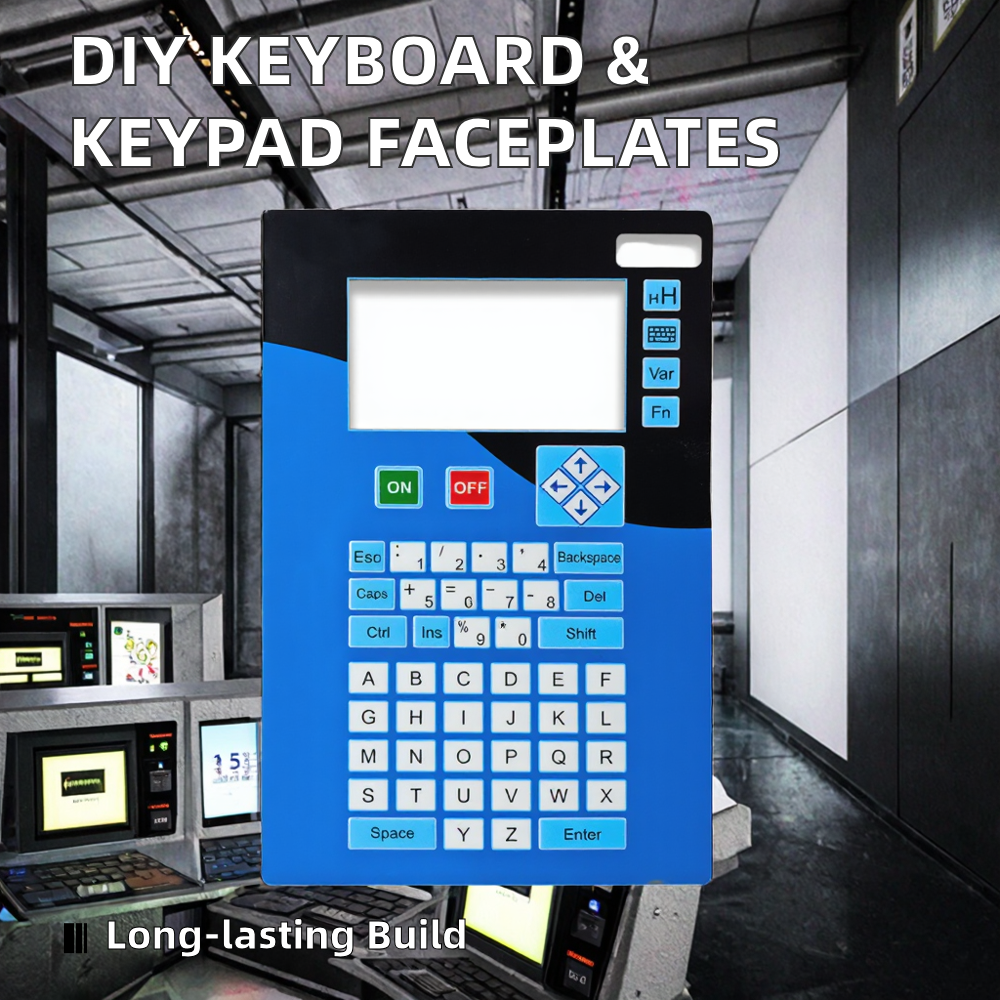
Anatomy of a High-Reliability Membrane Control Panel
Understanding multi-layer physical construction, dielectric isolators, tactile feedback mechanics, and material degradation factors for mission-critical applications.
Multi-Layer Functional Stack-Up
Modern membrane switches are sophisticated micro-engineered HMI structures. Rather than mere printed graphic skins, they integrate electrical conductors, physical feedback springs, optical light guides, and environmental sealing adhesives into a compact profile ranging from 0.8mm to 3.5mm in thickness.
- Graphic Overlay Layer: High-grade Polyester (PET) or Polycarbonate (PC) with sub-surface printing to protect inks from chemical abrasion, cleaning agents, and UV light degradation.
- Top Graphic Adhesive: Pressure-sensitive adhesives (e.g., 3M 467MP, 3M 468MP) engineered to prevent delamination across operating temperatures from -40°C to +85°C.
- Tactile Metal Snap Domes: Stainless steel domes (typically 200g to 350g force rating, nickel or gold-plated) delivering tactile snap feedback and rated for up to 5,000,000 actuation cycles.
- Circuit Substrate Layer: Screen-printed conductive silver/carbon traces on heat-stabilized PET film or high-density copper-clad Flexible Printed Circuits (FPC Polyimide).
- Rear Support / Metal Backer: Rigid aluminum (1.0mm-3.0mm AL5052/AL6061) or FR4 PCB backers providing structural rigidity for panel mounting and mounting studs.
Material Selection Matrix: PET vs. PC vs. PBT
Selecting the optimal substrate material directly influences flexing life, chemical resistance, clarity, and cost efficiency. Below is a comparative technical analysis based on laboratory tensile and environmental testing:
| Material Property | Polyester (PET) | Polycarbonate (PC) | Polybutylene (PBT) |
|---|---|---|---|
| Flexural Fatigue Life | > 5,000,000 cycles | ~ 100,000 cycles | > 1,000,000 cycles |
| Chemical Resistance | Outstanding (Alcohols, Solvents) | Moderate (Vulnerable to Esters) | High Industrial Grade |
| Optical Clarity | Very High (Translucent/Transparent) | Exceptional Crystal Clear | Opaque / Matte Finish |
| Embosing Quality | Requires Heat-Setting | Excellent Cold Embossing | High Molding Precision |
| Target Applications | Medical & Industrial Keypads | Appliance & Display Panels | Heavy Mechanical Switch Caps |
Future Procurement Trends & HMI Technological Evolution
Global sourcing managers are moving away from legacy mechanical switches toward integrated smart interface solutions. Discover key technology shifts shaping the future of industrial control panel sourcing.
1. Transition to Polyimide FPC Circuits
While screen-printed silver ink on PET remains cost-effective for static layouts, high-reliability OEMs in aerospace, railway, and automotive sectors are shifting to Polyimide Flexible Printed Circuits (FPC). FPC eliminates silver migration risks under high ambient humidity and allows high-density SMT soldering of fine-pitch components like microcontrollers, LEDs, and ZIF connectors directly onto the flex layer.
2. Uniform Light Guide Film (LGF) Illumination
Legacy backlit panels suffered from hot-spotting caused by point-source LEDs. Modern procurement specifications increasingly require LGF (Light Guide Film) technology. By deploying ultra-thin side-emitting SMT LEDs combined with laser-etched micro-dot matrix refraction films, illumination is distributed uniformly across complex key icons with minimal power consumption and reduced stack thickness.
3. Optical Bonding (OCA) & Anti-Glare Displays
Integrating LCD display windows with membrane graphic overlays now demands Optically Clear Adhesive (OCA) full-lamination. OCA bonding removes air gaps between the display surface and overlay window, eliminating optical refraction, glare, condensation formation, and parallax distortion, resulting in sunlight-readable outdoor control interfaces.
4. Hybrid Capacitive Touch Integration
Procurement teams are merging physical tactile keypads with capacitive touch slider pads and glass/PET touch panels. Hybrid switches provide zero-force actuation for seamless navigation while preserving tactile snap domes for critical "Emergency Stop" or physical confirmation buttons.
5. IP67/IP68 Environmental Enclosure Sealing
Demands for harsh environment protection (petrochemical, outdoor telecom, subsea equipment) have accelerated adoption of closed-loop perimeter sealing gaskets. Using custom die-cut silicone or acrylic foam adhesives, modern membrane control panels act as front-bezel water gaskets rated to IP67/IP68 ingress standards.
6. Hybrid Digital UV & Precision Screen Printing
Factories equipped with both digital UV printers (e.g., Mimaki series) and high-speed automatic silkscreen lines can deliver multi-color photo-realistic gradients alongside pin-point Pantone color matching (within ΔE<1.0), enabling fast prototyping without massive tooling fees.
Why TAVO is the Industry Choice for Global OEMs
Combining over 30 years of specialized manufacturing history with dual production sites, German technical collaboration, and fully integrated in-house processing.
State-of-the-Art Production Facility & Machinery
Unlike trading companies or outsourced assemblers, TAVO Electronic Information Technology Co., Ltd. operates two dedicated manufacturing hubs located in the Robot Industry Port of Xianghe Economic Development Zone (Langfang, Hebei) and Huizhou (Guangdong). Every process is managed in-house under strict ISO 9001 quality management protocols.
-
37 Units
Silkscreen Printing Machines -
4 Units
Mimaki Digital UV Printers -
18 Units
Precision Laser Cutting Equipment -
60 Units
CNC Mold Machining Centers
Our dual-factory capacity model guarantees risk mitigation for global supply chains. If one regional site faces local logistics bottlenecks or power restrictions, orders seamlessly balance to the secondary processing facility without tooling delays.
Comprehensive Quality Assurance & In-House Reliability Testing Laboratory
Zero-defect production requires rigorous testing under simulated real-world stress conditions. TAVO maintains an onsite Intertek-assessed reliability testing center equipped with automated diagnostic machinery:
Frequently Asked Questions for Custom Membrane Panel Sourcing
Essential guidance for engineering leads, procurement directors, and contract manufacturers preparing custom HMI project specifications.
Request a Custom Engineering Review & RFQ
Collaborate with TAVO’s 30+ senior HMI engineers. Send us your design specifications, CAD drawings, or project parameters, and receive a comprehensive manufacturability assessment and competitive quotation within 24 hours.