34+
Years Heritage (Since 1990)
7Hpencil
Hardcoated Surface Durability
2,219m²
Verified Production Floorspace
100%
USMCA & ISO 9001 Compliant QMS
Engineered Interfaces
Precision Overlay & Membrane Solutions
High-yield industrial graphic overlays, tactile switch arrays, and flexible circuit integration manufactured to withstand harsh mechanical abrasions, chemical spills, and relentless actuation cycles.
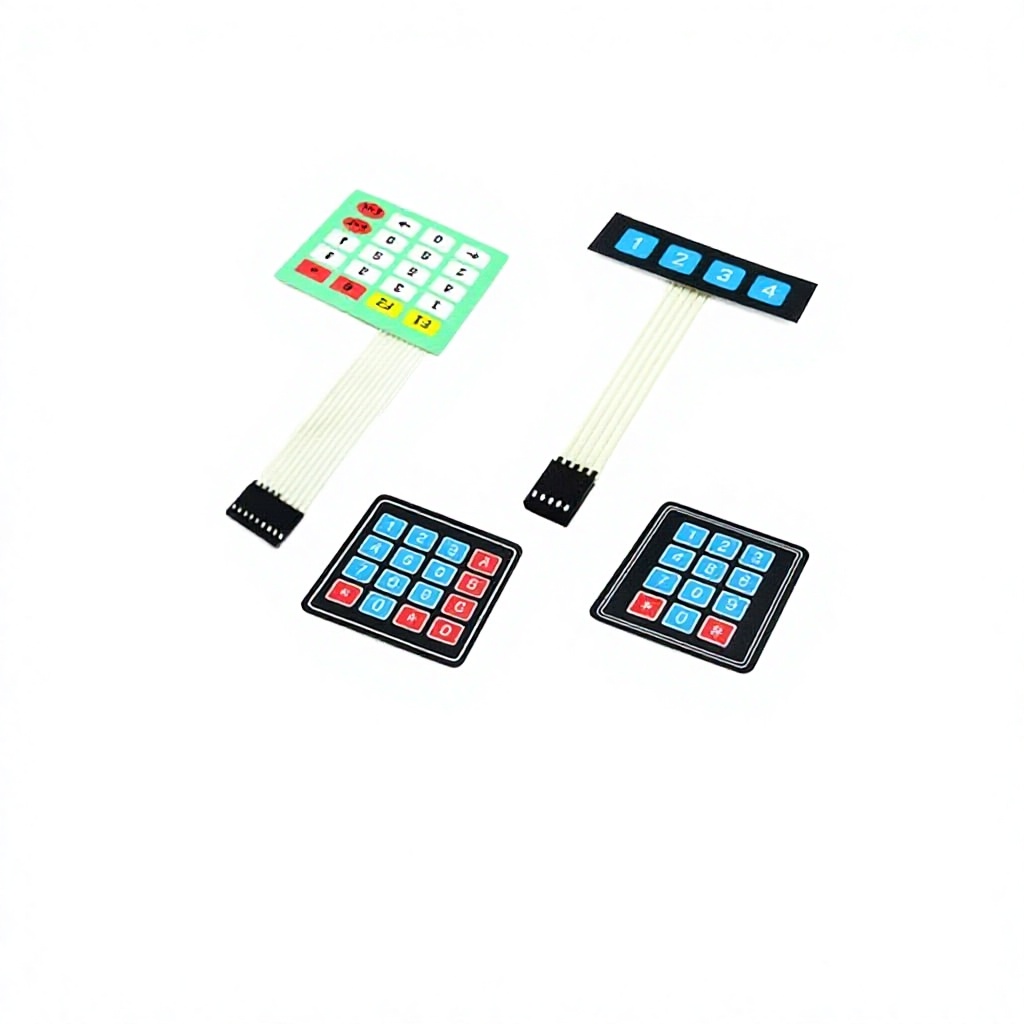
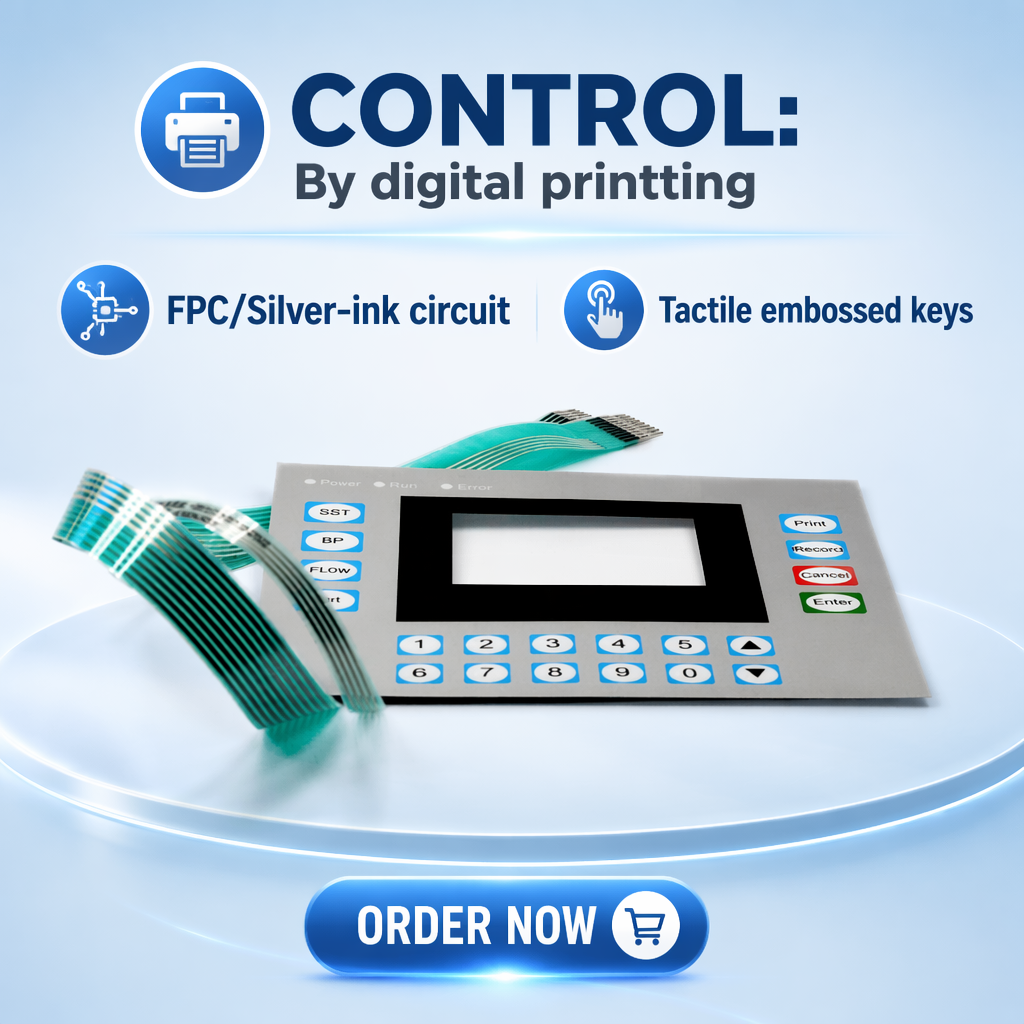
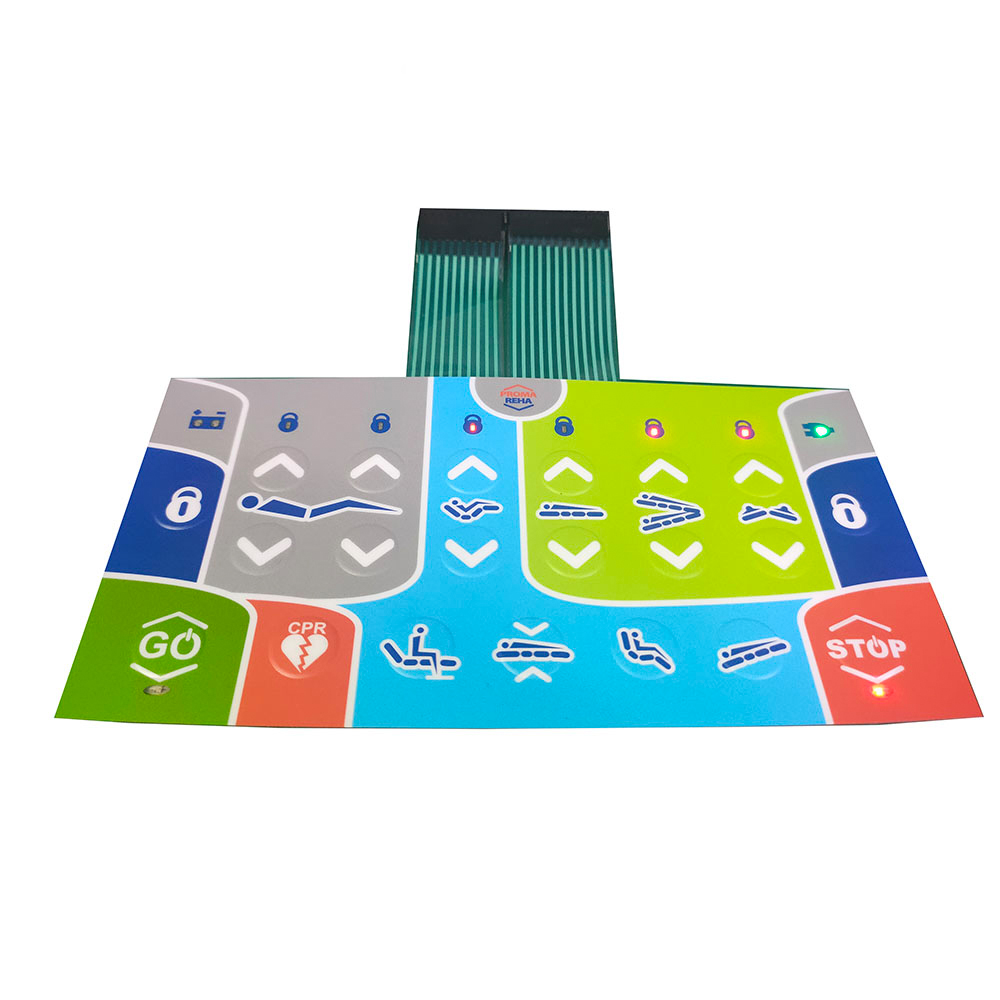
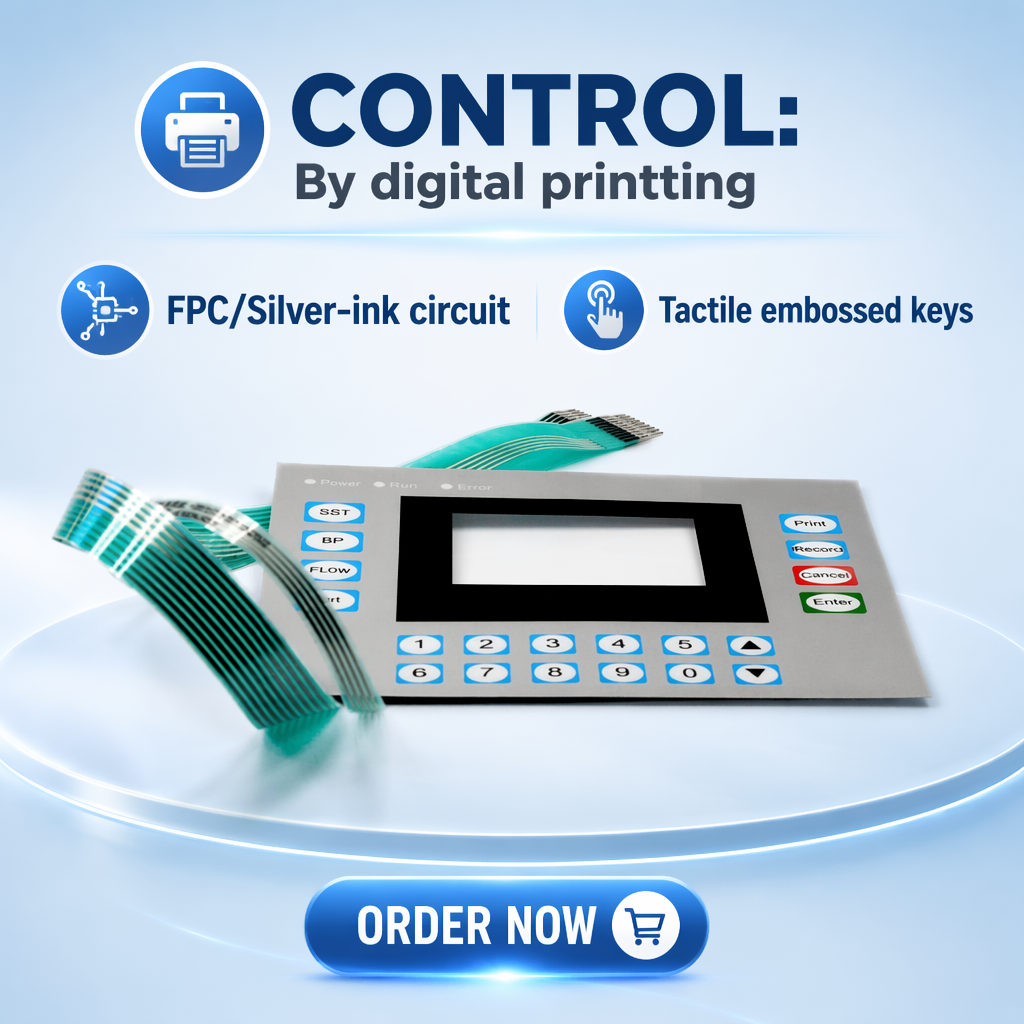
Technical White Paper
The Engineering Science of Scratch-Resistant Graphic Overlays
Decoding polymeric surface chemistry, UV-cured nanocomposite hardcoats, and sub-surface screen-printing protocols for heavy industrial and automotive environments.
Polymeric Substrate Mechanics: PET vs. Polycarbonate
In contemporary human-machine interface (HMI) engineering, graphic overlays serve as the first line of defense against mechanical abrasions, chemical contamination, and optical distortion. Sourcing engineers in Puebla and the broader Bajío industrial corridor frequently grapple with the material tradeoff between Biaxially Oriented Polyethylene Terephthalate (BOPET) and Polycarbonate (PC).
While standard untreated polycarbonate offers remarkable impact resistance and heat tolerance (heat deflection up to 135°C), its raw polymer matrix possesses an intrinsic pencil hardness of only B to HB. This softness makes untreated PC exceptionally vulnerable to marring, micro-scratches from dust particles, and crazing under exposure to hydrocarbons, brake fluid, and synthetic industrial degreasers.
Conversely, high-performance films such as Autotex® hardcoated PET integrate an advanced silica-nanoparticle cross-linked polyurethane lacquer directly bonded onto an optical-grade biaxially stretched polyester base. This structure elevates the pencil surface hardness to 3H to 7H (tested under ASTM D3363 at 750g load) without compromising the flexural fatigue resistance essential for embossed keys requiring millions of switch actuations.
Key Engineering Performance Metrics
Taber Abrasion Resistance (ASTM D1044): Post-500 cycles using CS-10F wheels under 500g load, hardcoated PET displays haze increases under Δ2.5%, compared to standard PC which exceeds Δ28.0% haze degradation.
Chemical Immersion Tolerance (DIN 42 115): Unyielding structural resistance against unleaded automotive fuels, acetone, isopropyl alcohol (IPA 99%), methylene chloride, brake fluids, and sodium hydroxide solutions.
Actuation Fatigue Life: Key switches embossed on engineered hardcoated PET retain dynamic tactile rebound and structural integrity past 5,000,000 operations without perimeter stress micro-fracturing.
| Performance Characteristic | Standard Polycarbonate (PC) | Hardcoated Polycarbonate | Standard Untreated PET | Engineered Hardcoated PET (TAVO-Spec) |
|---|---|---|---|---|
| Pencil Hardness (ASTM D3363) | B – HB | 2H – 3H | HB – F | 3H – 7H (Nanocomposite Lacquer) |
| Taber Abrasion (500 cycles, Haze Δ%) | > 25.0% (Severely marred) | < 6.5% (Slight hazing) | > 18.0% | < 1.8% (Pristine Clarity) |
| Chemical Resistance (MEK, Acetone, Diesel) | Poor (Rapid crazing & haze) | Moderate (Surface intact, edge risk) | Good | Exceptional (DIN 42 115 Part 2) |
| Flexural Switch Life (Embossed Keys) | < 100,000 cycles (Prone to cracking) | < 250,000 cycles | > 2,000,000 cycles | > 5,000,000 actuations |
| Optical Clarity / Transmission | 89% – 91% | 88% – 90% | 86% – 88% | 91.5% (Anti-Glare / Gloss options) |
| Sub-Surface Silkscreen Ink Adhesion | Excellent (Direct solvent / UV ink) | Requires primer on coated face | Requires corona treatment | Treated reverse-side print layer (5B pass) |
Second-Surface Graphic Shielding
All decorative typography, brand iconography, and custom colorways are printed on the reverse (sub-surface) side of the transparent film. The tough, hardcoated polymer thickness shields all inks from fingernails, cleaning agents, and aggressive scraping.
Dual-Texture Selective Varnishing
We apply specialized UV-curable screen-printed varnishes to create anti-glare fine matte finishes across the bezel background while preserving crystal-clear optical display windows for TFT, OLED, and segment LCD readouts without moiré interference.
Adhesive Gasketing Integration
Precision rotary and digital laser cutting mates the overlay to high-cohesion 3M acrylic transfer adhesives (such as 3M 467MP, 468MP, or VHB 4910). This creates an airtight, hermetically sealed perimeter rated up to IP67 against high-pressure washdowns.
Puebla Industrial Applications
High-Reliability HMI Implementations across Puebla & Central Mexico
Puebla stands as one of the world's most critical automotive assembly and industrial manufacturing epicenters. Here is how our engineered scratch-resistant overlays empower local manufacturing ecosystems.
Automotive Interior & Central Consoles
Tier-1 automotive suppliers in San José Chiapa and Cuautlancingo demand scratch-proof center stack bezels, climate control switch interfaces, and steering column selectors that resist sun exposure, high interior cabin temperatures, and abrasive ring/nail contact.
Robotic Welding & Stamping HMIs
Automated stamping and robotic body-assembly facilities in Puebla require touch panels and teach pendants impervious to flying metal sparks, industrial lubricants, hydraulic mist, and repetitive heavy-glove tactile inputs.
Diagnostic & Clinical Equipment
Medical and analytical testing device makers in central Mexico utilize our antimicrobial and scratch-resistant Autotex AM film overlays, designed to withstand daily sterilizations via alcohol, bleach, and quaternary ammonium biocides without clouding.
Food & Beverage Packaging Lines
Major agro-industrial and beverage bottling plants across Puebla utilize our hermetically sealed IP67-rated graphic switch panels, capable of enduring 80°C hot-water washdown cycles, citric acid splashes, and continuous 24/7 operator shift usage.
Market Dynamics & Nearshoring
The Nearshoring Revolution: Sourcing Synergy Between China & Puebla
Navigating USMCA rules of origin, supply chain resilience, and rapid engineering iterations for multinational original equipment manufacturers.
The Hybrid Dual-Supply Model for Mexican Manufacturing
The rapid relocation of electronics manufacturing, automotive sub-assembly, and electro-mechanical system integration to Mexico under the USMCA (T-MEC) trade framework has redefined the procurement landscape in Puebla. OEM engineering teams in Puebla must meet rigorous North American content requirements while simultaneously controlling tooling amortization, production yield costs, and technical turnaround times.
While final box-build assembly takes place locally within Puebla's modern industrial parks, sourcing highly engineered, custom-molded, and micro-printed graphic switch assemblies locally in Latin America often encounters substantial hurdles: limited local film hardcoating lines, steep custom tooling costs, and prolonged lead times for multi-layer silkscreen and laser die-cutting tooling.
Our dual-engine model bridges this gap. By utilizing our fully integrated mega-plants in Hebei (Xianghe Robot Port) and Huizhou (Guangdong), Mexican manufacturers leverage 60 CNC precision mold-making machines, 37 fully automated silkscreen printing presses, and Class 10,000 cleanroom assembly. We supply finished, 100% pre-tested, adhesive-backed overlay modules and FPC assemblies delivered directly via expedited air freight (5–7 business days door-to-door to Puebla/Mexico City customs) or sea freight container consolidation to the Port of Veracruz.
Total Cost of Ownership (TCO) Advantages
Eliminate Prohibitive Tooling Surcharges: In-house mold design and direct laser die-cutting enable rapid prototype iterations without the typical $3,000–$8,000 NRE tooling fees common among regional domestic suppliers.
Tariff & HS Code Classification Optimization: Structured component exports categorized under exact tariff lines (HS 8537.10 / 3919.90) with complete Certificate of Origin (COO) and material safety data sheet (MSDS) documentation for seamless Mexican customs clearance.
Agile Safety Stock Warehousing: We partner with forward logistics providers in Puebla and CDMX to offer localized buffer inventory programs, safeguarding your assembly plant against unexpected demand surges.
Manufacturing Infrastructure
Why TAVO Is the Preferred Global Engineering Partner
Uncompromised manufacturing rigor, closed-loop in-house processing, and deep technological synergy with German membrane switch institutions.
01 / DUAL INDUSTRIAL BASES
Integrated Production Footprint
Operating from our verified 2,219 m² facility in the Robot Industry Port of Xianghe (Hebei) alongside our southern processing center in Huizhou (Guangdong). Workloads are dynamically load-balanced to guarantee zero production bottlenecks.
02 / GERMAN TECHNICAL ALLIANCE
European Quality Rigor
Formally aligned with a premier German membrane switch partner through technology sharing, imported precision automated machinery, and rigorous technical training, ensuring every shipment fulfills DIN and VDE standards.
03 / END-TO-END IN-HOUSE STACK
Zero Subcontractor Risk
From CAD layout, film negative mastering, cleanroom silkscreening, and digital UV printing to CNC embossing, laser cutting, and final SMT LED circuit population—every single process is executed under our own roof.
04 / ADVANCED LABORATORY QC
Measured, Verified Reliability
Every production batch undergoes automated computerized circuit testing, 5,000,000-cycle button actuation life testing, programmable temperature/humidity stress, xenon arc UV weathering, and 48-hour salt fog corrosion chambers.
05 / CERTIFIED BY INTERTEK
Third-Party Factory Audit
Our management system, workshop safety protocols, and manufacturing processes have been audited and verified onsite by Intertek, in full compliance with ISO 9001:2015 quality management benchmarks.
06 / GLOBAL BRAND VALIDATION
Trusted by Global Giants
Our components are qualified and integrated into equipment by industry leaders including Siemens, ABB, and Haier, as well as high-speed railway locomotives, aerospace systems, and heavy construction equipment.
Purchasing Intelligence
Frequently Asked Questions by Sourcing Teams in Puebla
Direct, practical engineering and commercial answers to simplify your graphic overlay and membrane switch procurement cycle.
How does hardcoated PET perform against Puebla’s volcanic ash and industrial abrasive dust?
Puebla’s proximity to Popocatépetl and surrounding industrial parks exposes outdoor and factory equipment to fine volcanic silicate ash, which measures 5–6 on the Mohs hardness scale. Standard acrylics or unhardened PC will quickly develop severe abrasive haze. Our specialized 7H pencil hardness Autotex PET features an ultra-dense, cross-linked polyurethane network that resists micro-scratching from dry wiping and dust abrasion, maintaining pristine optical clarity for years.
What is the standard production and shipping lead time to Puebla or Mexico City (AICM/NLU)?
Prototypes and pilot evaluation samples are engineered, laser-cut, and dispatched within 5 to 7 working days upon CAD drawing approval. Full production batches generally ship within 12 to 18 days. Via priority air express (DHL/FedEx/UPS), shipments land at Mexico City International Airport (AICM/NLU) within 4 to 6 business days for customs clearance and prompt ground transit to your dock in Puebla.
How are import tariffs and Mexican customs handled for custom overlays?
We export under internationally standardized Harmonized System (HS) codes, typically HS 3919.90.00 (Self-adhesive plastic plates/sheets) or HS 8537.10.90 (Electrical switch boards/consoles). We furnish full commercial documentation including certified Commercial Invoices, Packing Lists, Certificates of Conformity (COC), and non-asbestos declarations to facilitate expedited clearance through your Mexican customs broker (Agente Aduanal).
Can you color-match custom automotive brand standards such as Pantone, RAL, or Federal Standard?
Yes. Our color-matching laboratory utilizes spectrophotometers to maintain delta-E tolerances of ΔE < 0.8 against Pantone, RAL, or customer-provided physical automotive master swatches. We print using high-opacity solvent and UV-cured inks, guaranteeing absolute color consistency across disparate production batches under varying D65 and automotive interior lighting conditions.
Which backing adhesive is recommended for powder-coated cast aluminum enclosures?
Powder-coated aluminum features low surface energy (LSE) characteristics that can cause standard adhesives to lift or bubble over time. We engineer these overlays using 3M 300LSE or 3M 200MP (such as 3M 468MP) high-tack acrylic adhesives. For textured or stippled castings, we specify thicker transfer adhesives (0.13mm to 0.20mm) to ensure 100% surface wet-out and permanent IP65/IP67 perimeter sealing.
Do you support small pilot runs for OEM clinical or prototype testing in Mexico?
Yes. Unlike domestic processors who mandate minimum batch commitments of several thousand units, TAVO supports high-mix, low-volume (HMLV) sourcing. We regularly manufacture initial pilot builds of 50 to 500 units via digital laser cutting and high-definition Mimaki digital UV flatbed printing, eliminating hard tooling costs while enabling your R&D engineering team to conduct real-world validation trials.
Engineering Collaboration
Initiate Your Custom Overlay & HMI Design Review
Upload your CAD drawings (DWG, DXF, STP, or AI vector files) and electrical pinout schematics. Our application engineering team will review your file tolerances, material stack-up, and environmental parameters to deliver a comprehensive DFM (Design for Manufacturability) assessment and competitive quote within 12 hours.
ISO 9001:2015
Intertek Verified
ASTM D3363 7H Certified
IP67 Sealing Protocols
NDA Protected
Speak Directly With An Engineer
Immediate technical feedback on tooling, surface textures, and volume delivery schedules to Puebla.
Send an Inquiry