Precision FPC Circuit Boards & Integrated HMI Membrane Assemblies
Explore our high-reliability flexible printed circuits and membrane keypad assemblies, engineered with advanced polyimide substrates, surface-mount components, IP67 environmental sealing, and tactile snap feedback calibrated for demanding Central European industrial environments.
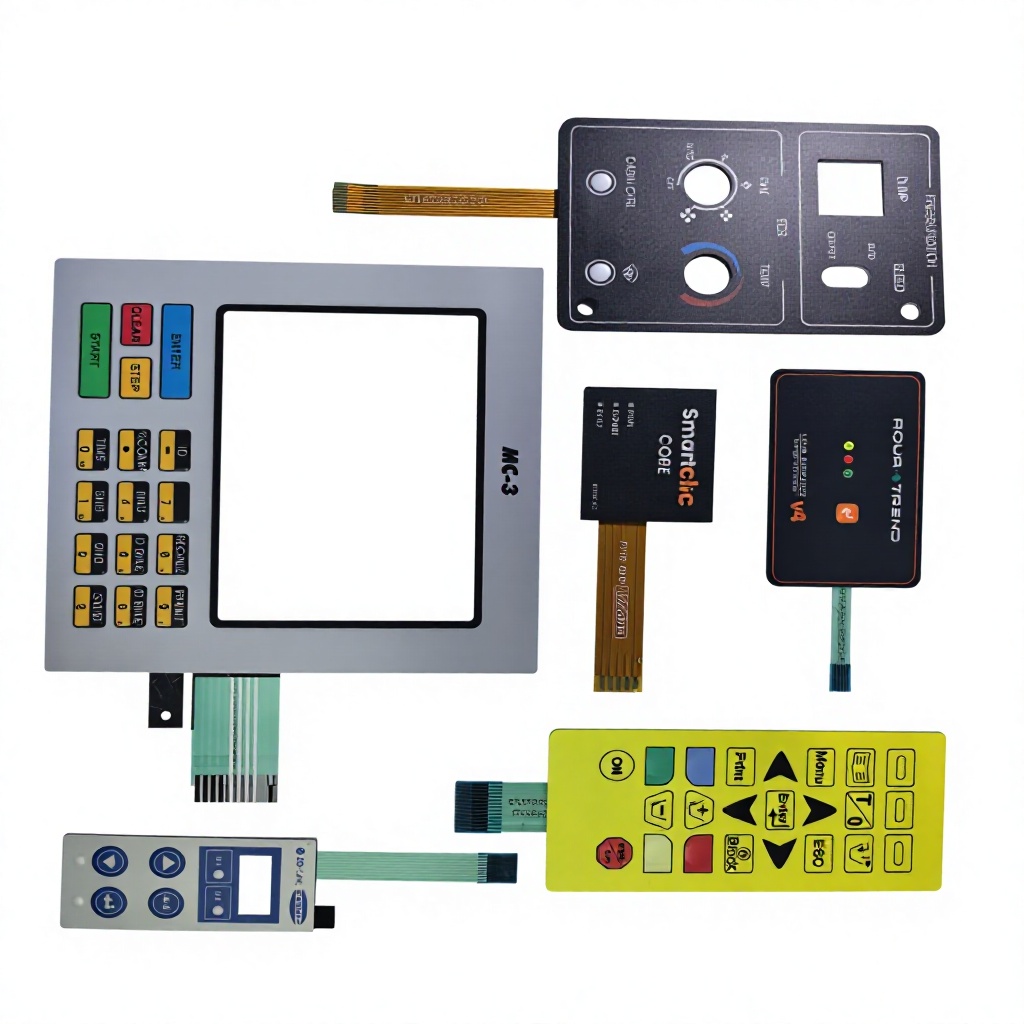
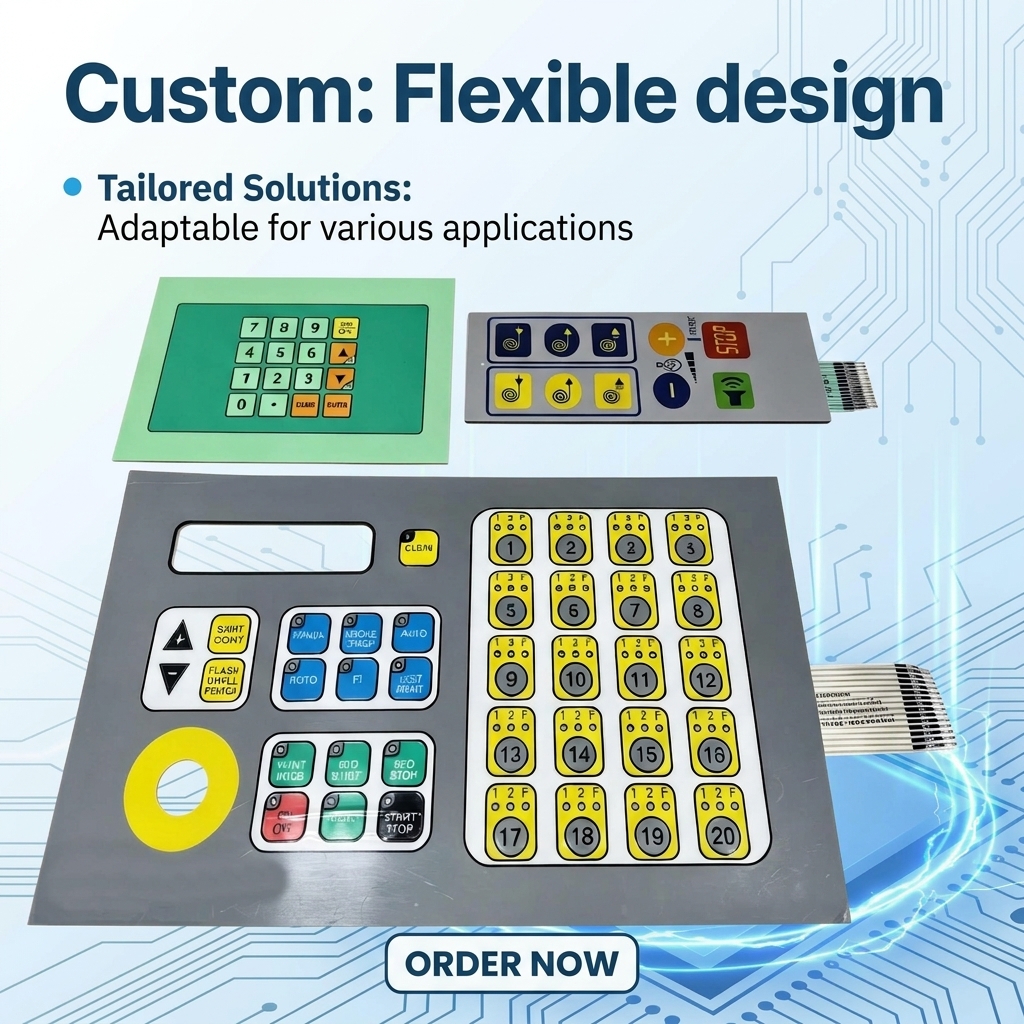
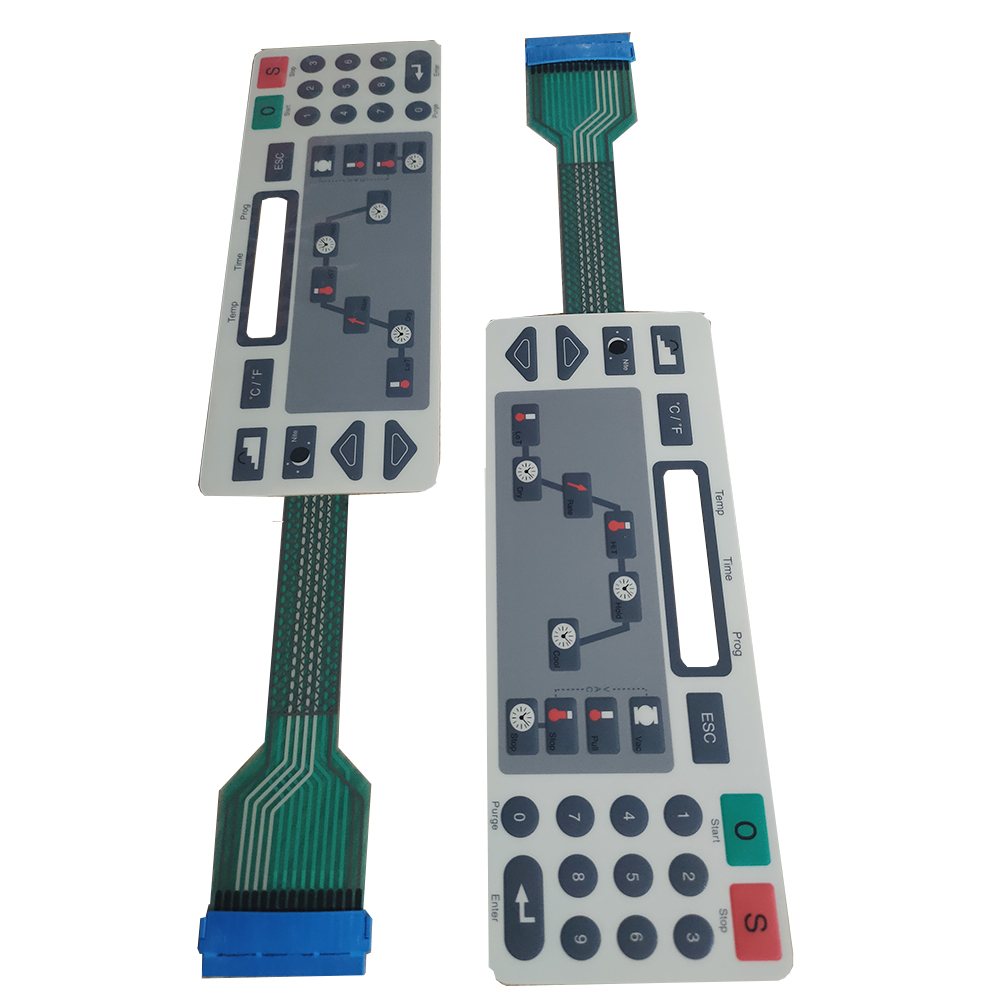
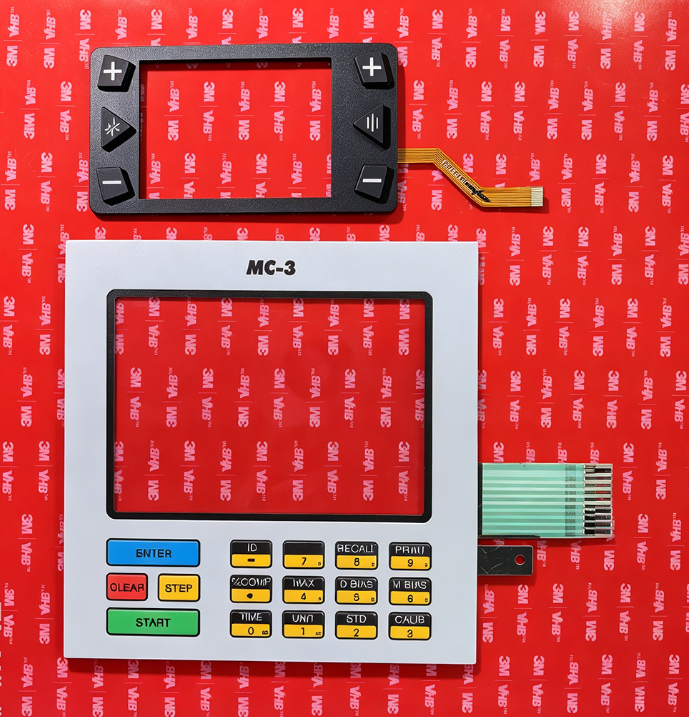
Advanced FPC Circuit Board Fabrication & Substrate Physics
A comparative evaluation between conventional rigid PCBs, printed silver ink polyester (PET) switches, and etched polyimide (PI) flexible copper printed circuits for dynamic industrial stress environments.
In contemporary mechatronics, modern industrial human-machine interfaces (HMI), and high-vibration automotive control modules, the mechanical limitations of traditional rigid FR4 printed circuit boards have driven substantial adoption of Flexible Printed Circuits (FPCs). Unlike rigid multi-layer stacks that require complex, failure-prone wire harnesses and manual solder points, an engineered FPC functions simultaneously as a multi-conductor harness, an SMT component carrier, and a hermetically sealed interconnect. For manufacturing hubs across Košice and Eastern Slovakia, adopting FPCs enables unprecedented volumetric optimization, weight reduction of up to 75%, and continuous dynamic flexing endurance exceeding 5 million bend cycles under IPC-6013 Class 3 criteria.
At TAVO Electronic Information Technology Co., Ltd., flexible circuit engineering begins with high-performance copper-clad polyimide laminates (FCCL). Depending on whether the application demands static bend-to-install geometry (such as an internal instrument cluster casing) or continuous dynamic flexing (such as a robotic actuator arm or high-speed locomotive door sensor), our metallurgical team specifies either Electro-Deposited (ED) Copper or Rolled Annealed (RA) Copper. RA copper features elongated, horizontal crystal grain boundaries created through heavy mechanical calendaring, which drastically mitigates micro-crack propagation under repeated dynamic bending fatigue.
Technical Specification Matrix: Industrial Flexible Printed Circuit Boards (FPC)
Verified laboratory performance indicators according to IPC-TM-650, ISO 9001:2015, and RoHS/REACH compliance standards.
| Engineering Parameter | Standard Capability (Proto & Fast-Turn) | High-Precision Production Capability | Košice Application Benchmark |
|---|---|---|---|
| Base Dielectric Film | Polyimide (Kapton/UPILEX) 12.5µm to 50µm | Adhesiveless Polyimide (25µm - 125µm) | Thermal stability up to 260°C peak reflow |
| Conductor Foil & Weight | 1/3 oz (12µm), 1/2 oz (18µm), 1 oz (35µm) | 2 oz (70µm) High-Power Copper | High-current rail locomotive switching & battery interconnects |
| Minimum Line / Spacing | 0.075 mm / 0.075 mm (3.0 mil / 3.0 mil) | 0.050 mm / 0.050 mm (2.0 mil / 2.0 mil) | Dense SMT pitch for microcontrollers and status LEDs |
| Dielectric Strength (Hipot) | ≥ 1,000 V AC / 60 seconds | ≥ 2,500 V AC continuous isolation | Immunity to inductive noise in steel mills & heavy drives |
| Surface Finish Options | Immersion Gold (ENIG 1-3µ" Au), OSP | Electrolytic Hard Gold (up to 30µ" Au) | Zero-Insertion-Force (ZIF) connectors & metal dome switch pads |
| Stiffener Reinforcement | FR4 (0.2mm - 3.2mm), Polyimide (PI) | Stainless Steel (304), Anodized Aluminum | Rigid backing for connector solder joint strain relief |
| Operating Temperature | -40°C to +85°C standard industrial | -50°C to +125°C extended aerospace grade | Slovak winter exterior operations & engine compartment thermal cycles |
Localized Application Scenarios in the Košice Industrial Cluster
Košice represents the economic and technological heart of Eastern Slovakia, characterized by a rapid transition toward advanced automotive electromobility, metallurgical automation, heavy rail locomotive refurbishment, and medical instrument engineering.
E-Mobility & Tier-1 Automotive (Valaliky Park)
With the rapid construction of modern EV mega-facilities in Valaliky near Košice, Tier-1 and Tier-2 automotive component suppliers demand high-reliability FPC assemblies for Battery Management Systems (BMS), cell contacting systems, and compact steering column controls. Our copper flex circuits replace bulky wire harnesses, offering flame-retardant UL 94 V-0 ratings and multi-channel temperature sensor integration.
Heavy Metallurgy & Smelting Automation
In harsh operating environments such as integrated steelworks and heavy fabrication plants throughout Košický kraj, HMI control panels suffer from pervasive metallic dust, oil mists, and severe mechanical vibration. TAVO’s IP67-rated, chemically inert polyester front overlays combined with thick FPC copper circuits deliver uninterrupted actuation life exceeding 3 million switch cycles without trace micro-fractures.
Railway Locomotive Modernization & Transit Hubs
Serving as the primary rail transport artery connecting Central Europe to Ukraine and the Balkans, the Košice railway interchange relies on heavy locomotive retrofits and cabin control upgrades. Our locomotive-grade FPC switches feature high-luminosity surface-mount LED backlighting, tactile stainless-steel snap domes, and thick 3M 300LSE acrylic adhesives, meeting strict shock and vibration resistance standards.
Medical & Laboratory Diagnostic Instrumentation
Eastern Slovak biomedical engineering firms and diagnostic laboratories require hermetically sealed touch keypads capable of withstanding daily sterilization using hospital-grade disinfectants (isopropanol, chlorine bleach, quaternary ammonium compounds). Our anti-microbial hard-coated polycarbonate graphic overlays with embedded FPC sensor traces maintain optical clarity and tactile responsiveness through years of sanitation.
Academic R&D (TUKE University Science Park)
Collaborating with innovation spin-offs and robotics research labs at the Technical University of Košice (TUKE) and TECHNICOM science park, we provide quick-turn FPC prototyping with zero minimum order quantity bottlenecks. From multi-branch flex cables for robotic grippers to capacitive sensor arrays, we empower local researchers with prototype batches shipped within 5 to 7 working days.
Cold-Chain Logistics & Industrial Warehousing
Logistics terminals in Eastern Slovakia experience broad ambient thermal swings, dropping as low as -25°C during continental winters. Our FPC circuits utilize low-temperature specialized adhesives and non-brittle polyimide core films, guaranteeing that membrane keys and embedded LED indicators operate flawlessly without adhesive delamination or silver ink embrittlement.
Technological & Sourcing Trends Shaping Košice’s Hardware Industry
Understanding the convergence of EU green initiatives, Industry 4.0 automation, and nearshore-friendly direct manufacturer procurement strategies.
The manufacturing ecosystem of Košice and the broader Košický and Prešovský regions is experiencing a structural technological upgrade. Historically anchored in steel manufacturing and heavy mechanical fabrication, the region is rapidly diversifying into intelligent mechatronics, automotive EV architectures, and smart electrical infrastructure. As Slovak engineering teams design next-generation equipment under strict European Union directives, three prominent engineering procurement trends have emerged:
Automotive engineers and robotic equipment designers are eliminating manual wiring harnesses in favor of multi-layer FPCs with SMT soldered active components. By integrating resistors, diodes, microcontrollers, and ZIF connectors directly onto a single flex circuit, manufacturers achieve 60% faster cabinet assembly times and eliminate common human wire-crimping errors.
Procurement directors across Slovakia are tightening incoming quality criteria. It is no longer sufficient for an Asian supplier to provide basic electrical functionality; components must carry certified compliance dossiers demonstrating zero lead, mercury, cadmium, hexavalent chromium, or hazardous brominated flame retardants. Every FPC and membrane assembly manufactured by TAVO is fully certified under RoHS Directive 2011/65/EU and EU REACH Regulation (EC) No 1907/2006.
European OEMs are actively removing expensive regional distributors and trading intermediaries who add 30-50% margins and lengthen communication loops. Košice procurement teams now establish direct technical channels with genuine original equipment manufacturers in China capable of reading native Gerber RS-274X, ODB++, and CAD drawings, and conducting direct engineering reviews (DFM) within hours.
Why Global Leaders Trust TAVO for Mission-Critical Interfaces
Three decades of specialized manufacturing heritage, verified factory infrastructure, and comprehensive in-house tooling that eliminates outsourcing risks.
100% In-House Vertical Process
From laser circuit etching, CNC mold fabrication, precision screen printing (37 automated printing lines), digital UV printing on Mimaki systems, through cleanroom SMT reflow and automated optical inspection (AOI), all manufacturing phases are completed inside our own facilities. No outsourced subcontractors means zero loss of quality custody.
Two-Factory Risk Diversification
Our core manufacturing facility is situated in the Robot Industry Port of Xianghe High-Tech Development Zone (Hebei), complemented by an advanced secondary production base in Huizhou (Guangdong). Workload and tooling capacity are balanced between both sites, guaranteeing that delivery schedules remain immune to regional shutdowns or localized logjams.
German Technical Cooperation
We maintain a long-term technology and process alliance with a recognized German membrane switch manufacturer. This partnership governs our engineering tolerances, equipment selection, tooling accuracy, and stringent German DIN standards, ensuring that our output natively satisfies Central and Western European OEM expectations.
Tier-1 Validated Track Record
Our engineered interfaces have been qualified and deployed by global automation giants including Siemens, ABB, and Haier, as well as utilized in locomotive driver consoles, massive hydro-electric control assemblies, and industrial robotics. We bring audited enterprise quality management to every prototype batch and wholesale production run.
Closed-Loop Quality Control: In-House Reliability Testing Laboratory
To ensure total reliability in heavy industrial settings, every circuit and keypad design undergoes exhaustive destructive and environmental stress screening prior to production release:
100% computerized pin-to-pin testing verifying open circuits, short circuits, trace contact resistance (<100Ω standard, <1Ω FPC copper), and loop insulation resistance (>100MΩ at 100V DC).
Pneumatic finger actuators testing metal domes and keys through 1,000,000 to 5,000,000 continuous cycles, continuously measuring tactile snap ratio degradation and contact bounce.
Dual-zone environmental stress chambers cycling components between -50°C and +125°C at 95% relative humidity to accelerate moisture ingress and verify multi-layer adhesive shear strength.
Simulates prolonged sunlight exposure according to ASTM standards to certify that reverse-printed graphic overlay colors, transparent LCD windows, and coatings resist yellowing and embrittlement.
Continuous 5% NaCl aerosol atomization testing up to 96 hours to assess edge-seal hermeticity and prevent galvanic oxidation on exposed gold-plated or nickel contacts.
Precision digital strain gauges validating 90° and 180° peel adhesion of 3M bonding adhesives against stainless steel, anodized aluminum, and polycarbonate instrument enclosures.
Frequently Asked Questions by Slovak Sourcing & Engineering Teams
Direct answers covering logistics timelines into Košice, EU customs documentation, CAD file handoffs, small-batch flexibility, and European compliance.
What engineering design files are required to launch a custom FPC or membrane switch quote?
- Circuit traces: Gerber RS-274X, ODB++, DXF, or native PCB layout files (Altium, Eagle, KiCAD).
- Graphic overlay (if applicable): Vector artwork in Adobe Illustrator (.AI), CorelDraw (.CDR), or PDF with specified Pantone/RAL color codes.
- Mechanical specifications: 2D/3D step files showing outer dimensions, cutouts, tail length, and connector pitch (e.g., 0.5mm, 1.0mm, or 2.54mm pitch).
- Bill of Materials (BOM): Requirements for SMT components (LEDs, resistors, sensors), stiffener materials (FR4, polyimide, aluminum), and mounting adhesives (e.g., 3M 467MP, 3M 300LSE).
How are shipments handled to Košice, and what are typical lead times?
- Express Air Courier (DHL / FedEx / UPS): 3 to 5 business days transit directly to your facility in Košice, Kechnec Industrial Park, or Prešov. Ideal for rapid prototyping and pilot batches.
- Air Freight: 5 to 7 days transit to Košice International Airport (KSC) or Vienna International Airport (VIE) with dedicated bonded truck feeder service into Slovakia.
- Consolidated Ocean / Rail Freight: 25 to 32 days via the China-Europe Railway Express corridor to major European terminals, offering the lowest carbon footprint and freight cost for large wholesale volume runs.
Does your factory support small-batch prototypes and pilot runs for Slovak startups and R&D centers?
How do your FPC boards resist extreme Slovak winter conditions and industrial heat?
What payment currencies and international trade terms are supported?
Can you integrate metal backers, rigid PCBs, and optical windows into a turnkey HMI assembly?
Accelerate Your Hardware Roadmap with China's Premier FPC Manufacturer
Whether you are engineering a high-speed railway control console, an automotive EV sub-assembly for Valaliky, or a rugged industrial HMI panel for Eastern Slovakia's metallurgy sector, TAVO's technical engineering team is ready to evaluate your Gerber files and provide a competitive wholesale quote within 24 hours.