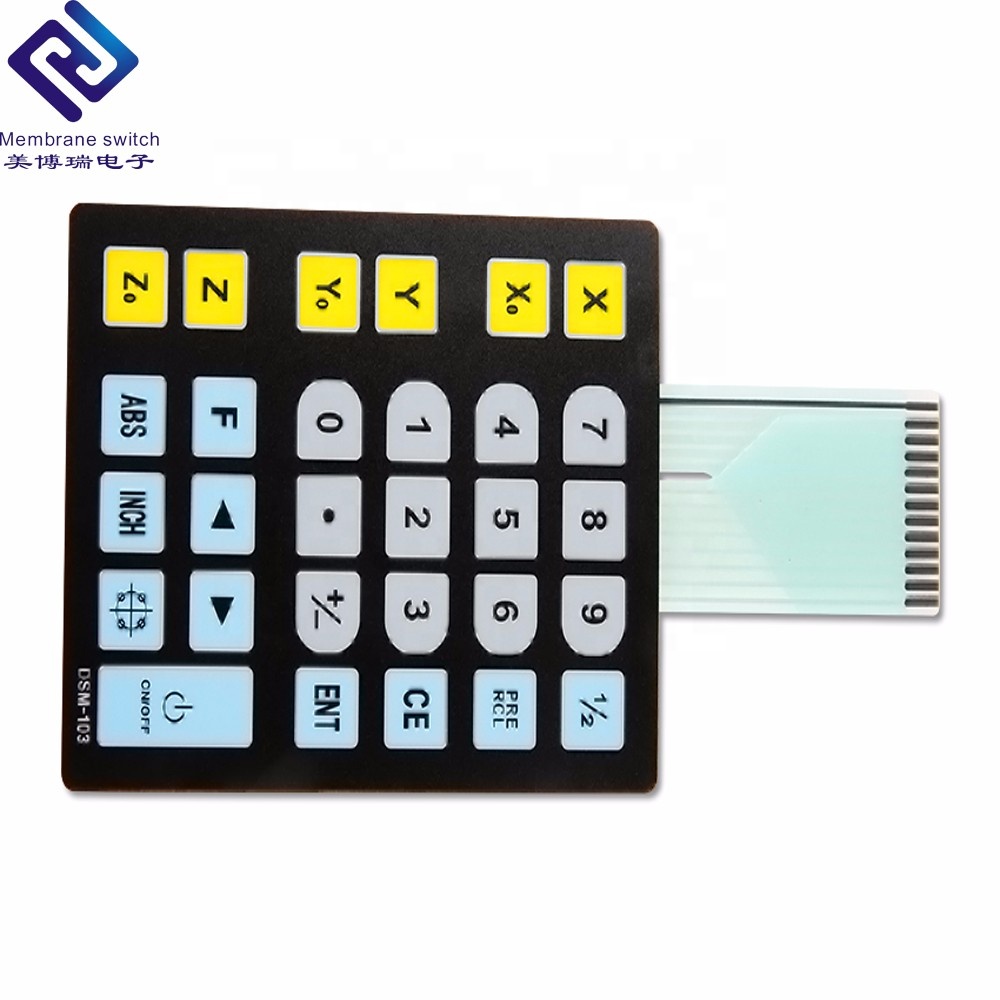
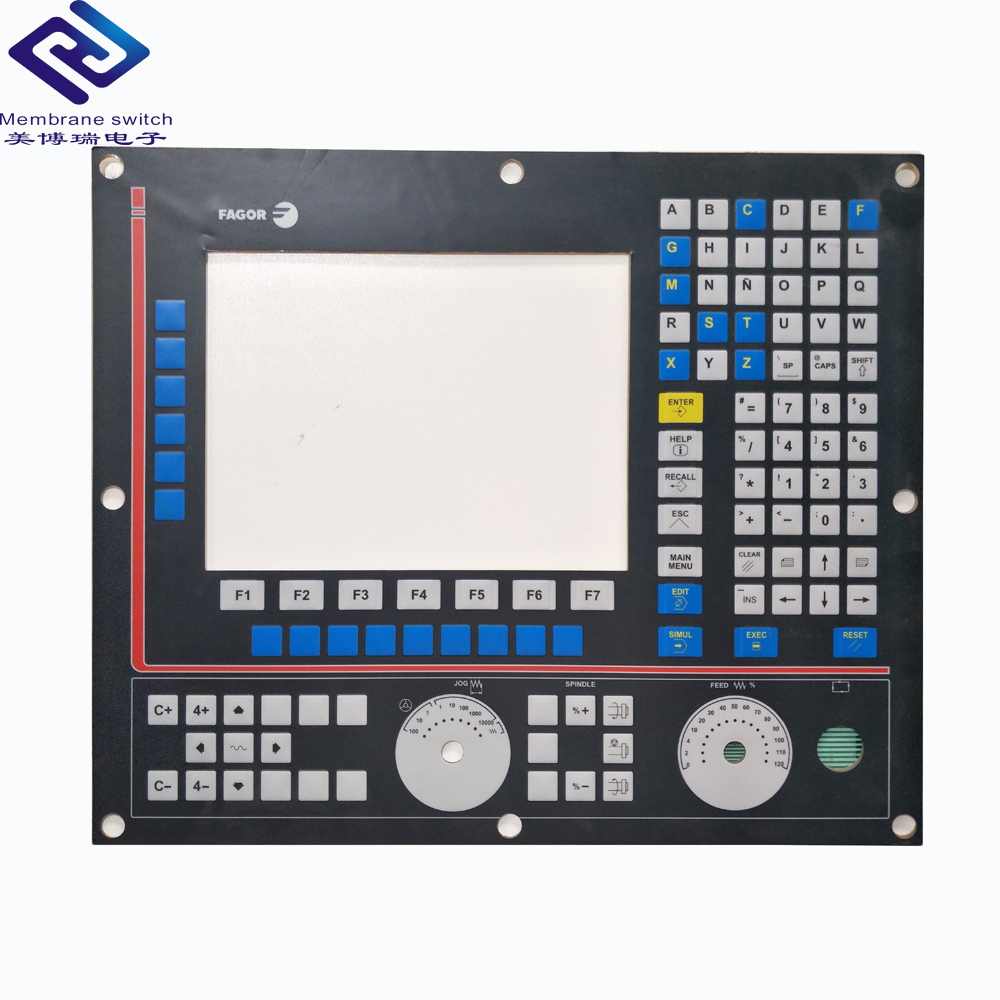
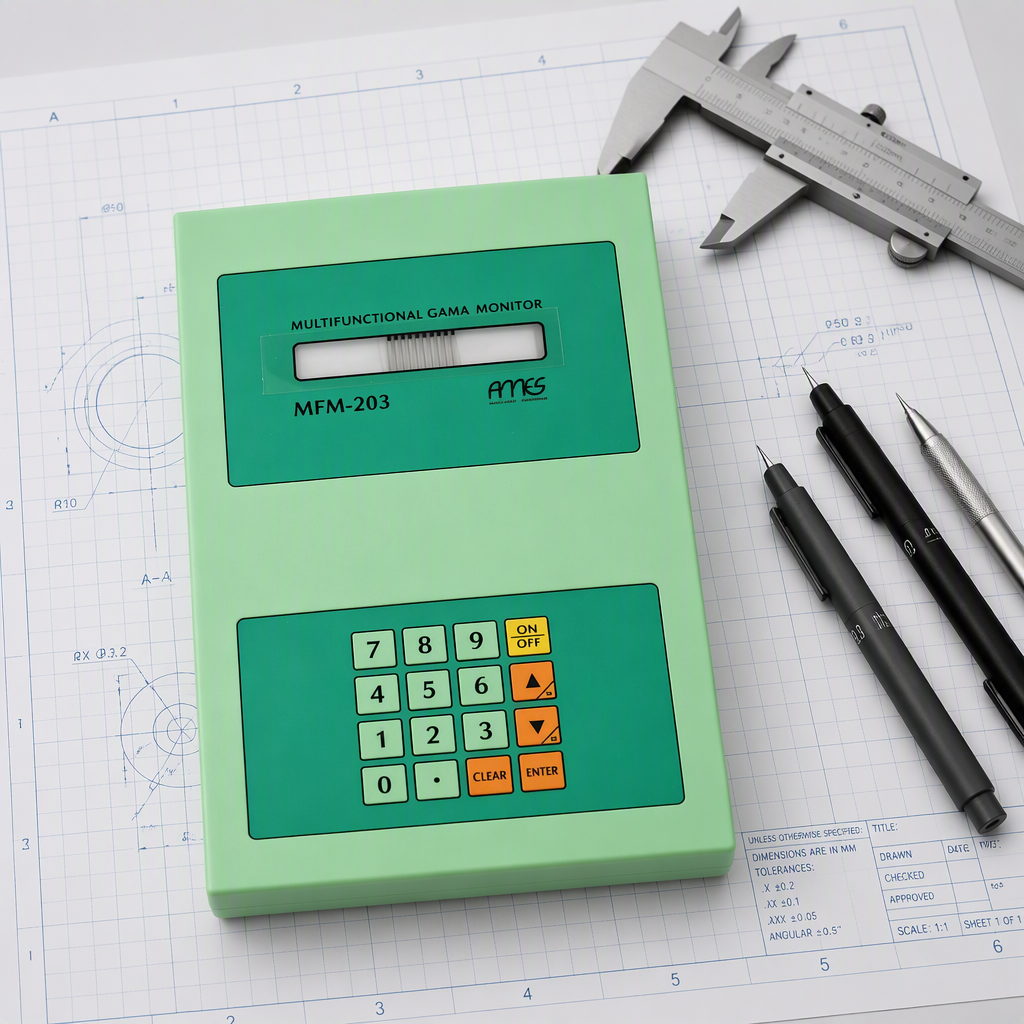
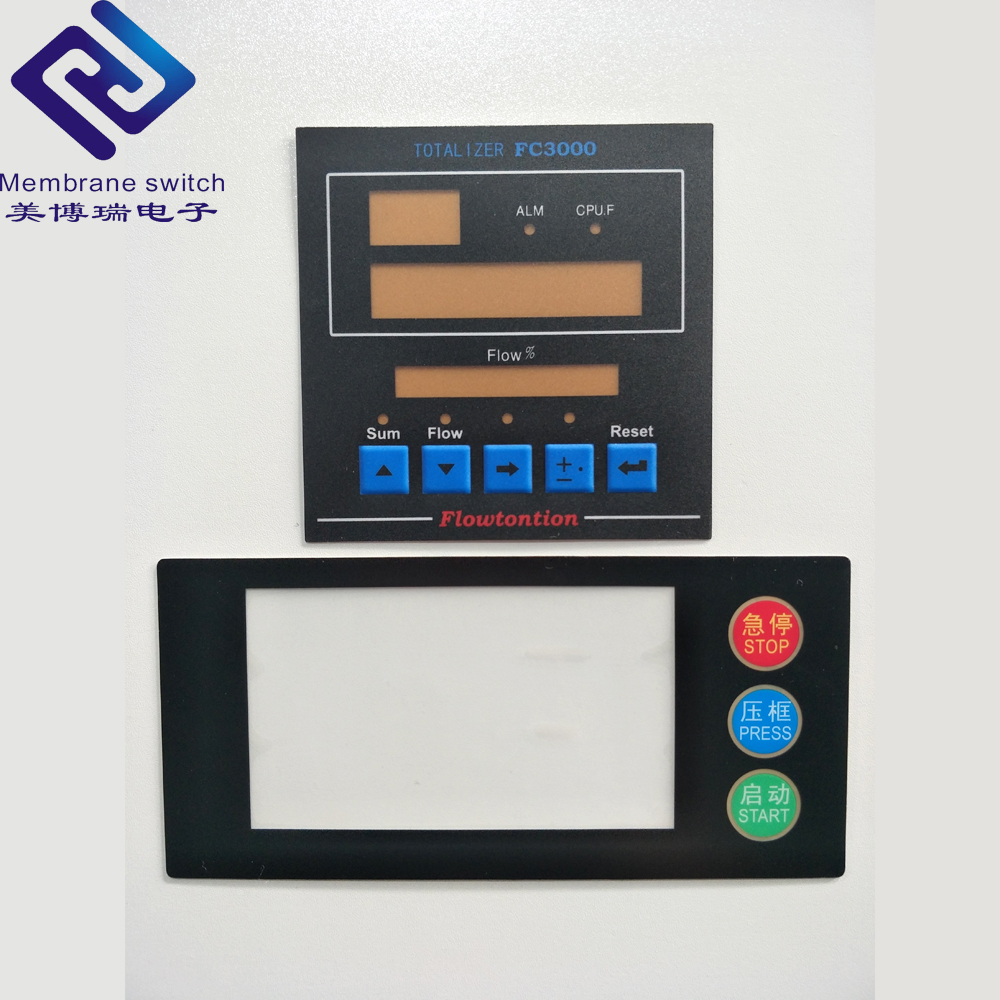
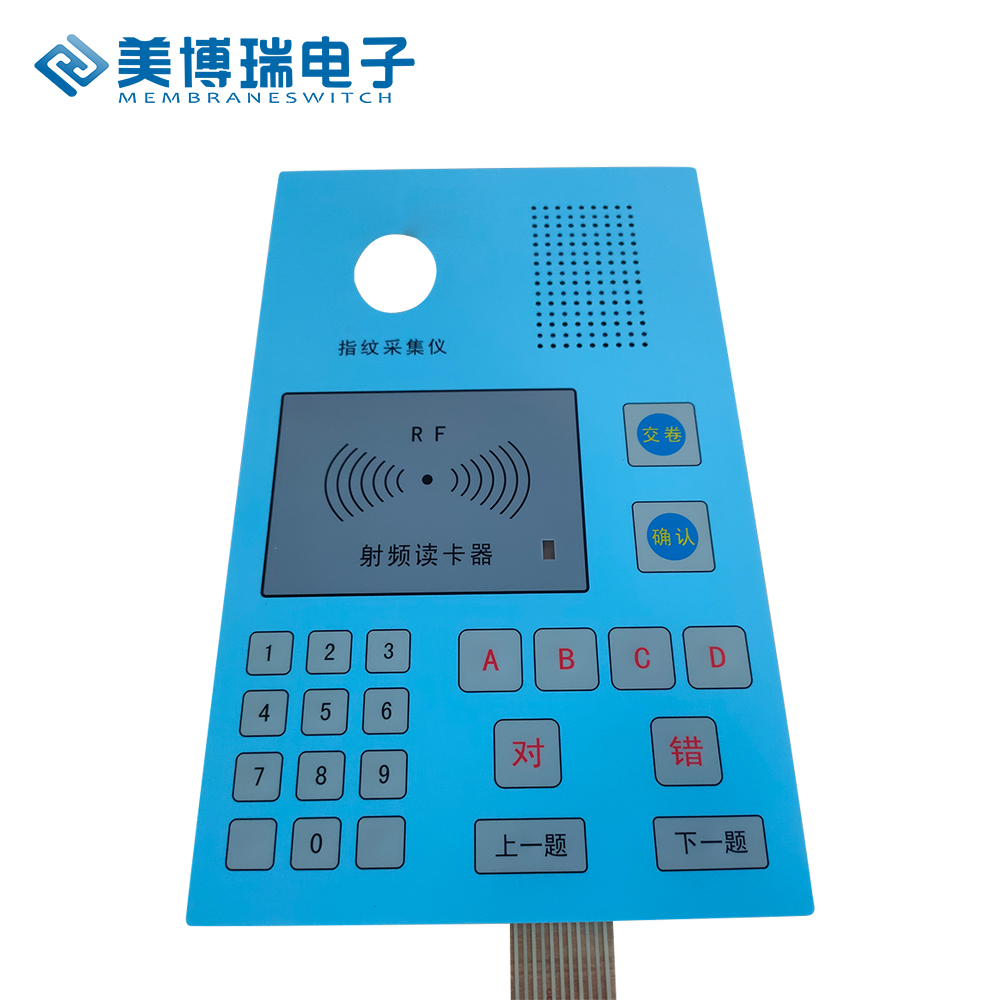
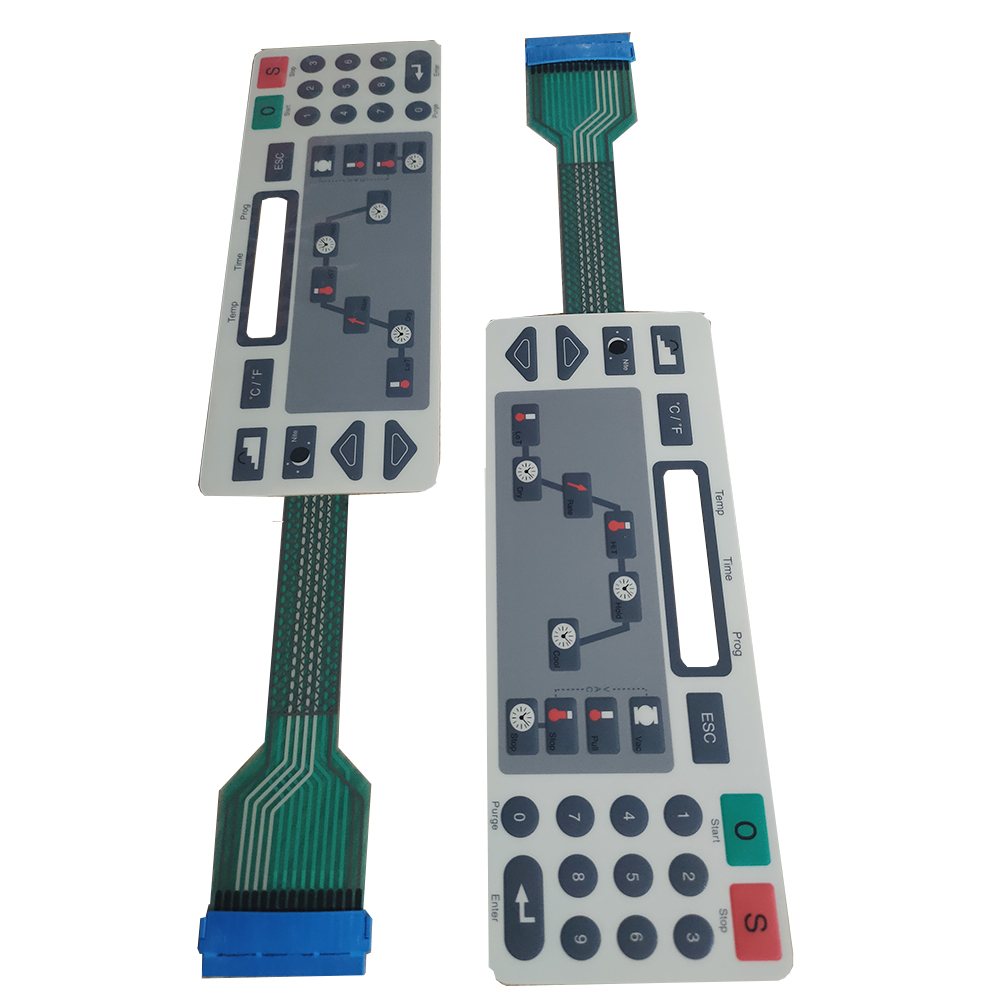
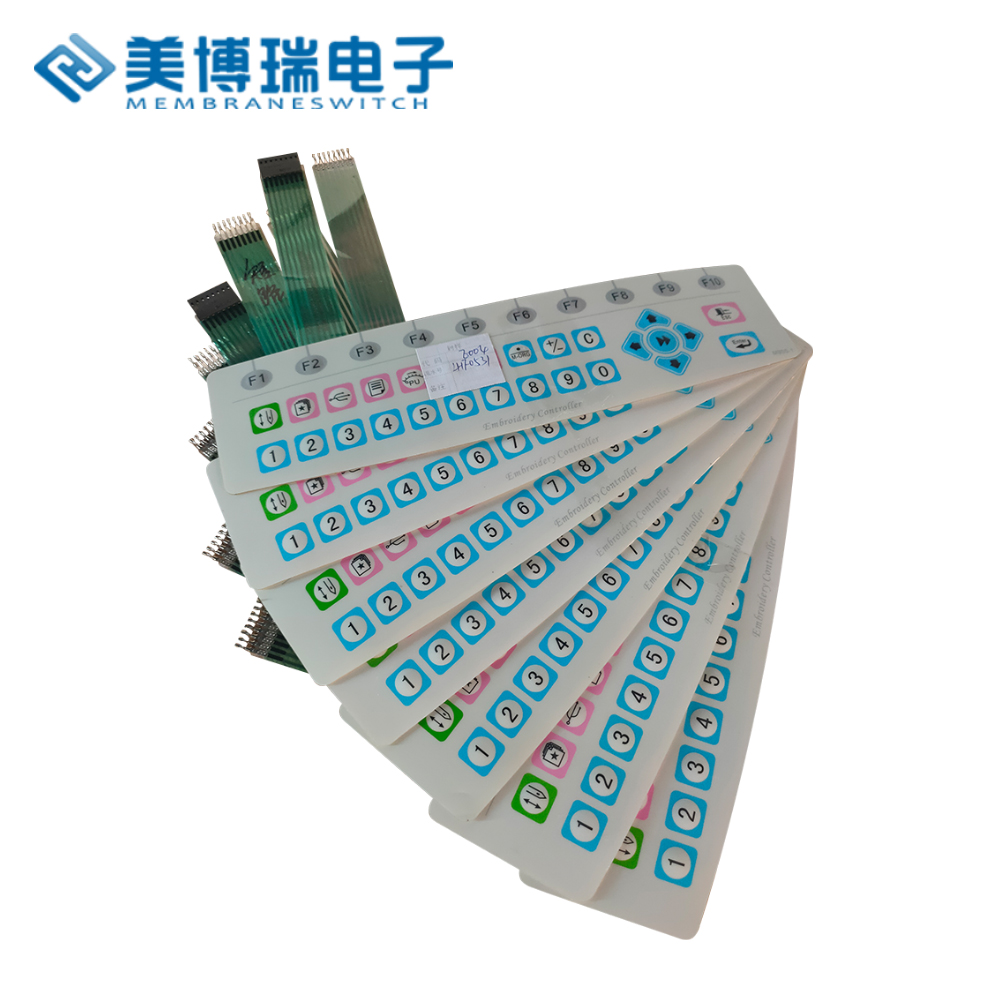
High-performance human-machine interface (HMI) graphic overlays, IP67/IP68 sealed membrane switches, and custom capacitive control fascias tailored for the Bay of Plenty's maritime, agritech, and advanced industrial automation sectors.
1990+
Membrane Switch Manufacturing Heritage
1,000,000+
Actuation Cycles per Tactile Keypad
IP67/IP68
Harsh Marine & Washdown Ingress Protection
37Units
Precision Silkscreen & Digital UV Lines
Precision Product Portfolio
Recommended Overlay Panels & Membrane Switches for Tauranga OEMs
Engineered to endure the intense UV radiation of New Zealand's coastal latitudes, cyclic marine salinity from the Bay of Plenty, and rigorous food safety washdown protocols in local packhouses.
Engineering Resilient Graphic Overlays & HMI Panels for the Tauranga Industrial Ecosystem
The Port of Tauranga stands as New Zealand’s premier export gateway, anchoring a dynamic regional economy spanning Mount Maunganui, Sulphur Point, Tauriko Business Estate, and the Te Puke agricultural corridor. For local original equipment manufacturers (OEMs), control system integrators, and electronic instrument designers, the physical human-machine interface (HMI) represents both the primary user touchpoint and the first line of defense against hostile environmental operating conditions.
"In coastal Bay of Plenty environments, standard consumer-grade polycarbonate overlays suffer micro-crazing, yellowing, and delamination within 18 months due to intense Southern Hemisphere UV exposure (UVI exceeding 11+) combined with high atmospheric chloride concentrations. Industrial longevity demands biaxially oriented, UV-stabilized polyester substrates backed with modified acrylic adhesive matrices."
1. Substrate Chemistry: Autotex® XE Outdoor Polyester vs. Stabilized Polycarbonate
When engineering instrument fascias for Tauranga’s marine logistics and horticultural packing facilities, material selection dictates mechanical fatigue resistance and optical longevity. Polycarbonate (PC)—such as Sabic Lexan™ 8010 or HP92W—offers exceptional impact resistance and dimensional stability under thermal cycling. However, uninhibited polycarbonate exhibits rapid polymer degradation under solar ultraviolet wavelengths (specifically UVA 315–400 nm and UVB 280–315 nm), resulting in embrittlement and catastrophic tactile dome failure.
To address this vulnerability, our Tauranga-directed overlay programs specify MacDermid Autotex® XE, a hard-coated, texturized polyester film chemically engineered with integrated UV absorbers. Unlike standard films that merely employ surface lacquers, Autotex XE incorporates the UV-blocking formulation throughout its 150 µm to 200 µm cross-section. This yields:
Zero Visual Yellowing (ΔE < 2.0): Tested over 3,000 continuous hours in our programmable xenon-arc weathering chamber according to ASTM G155 Cycle 1.
Superior Flex Fatigue: Endures upwards of 5,000,000 actuations without hinge rupture or key-flange micro-tearing.
Chemical Barrier Properties: Complete resistance to organic fruit-packing chemical washes, including caustic washdowns, peracetic acid (PAA), quaternary ammonium sanitizers, diesel exhaust residue, and maritime salt spray.
Instrument failure across Tauranga packhouses and timber mills (e.g., Kawerau pulp facilities) is rarely caused by switch electrical breakdown; it almost universally stems from moisture migration along the tail exit or adhesive boundary delamination. When high-pressure washdown procedures (complying with MPI food safety mandates) are executed, water driven at 100 bar easily penetrates standard double-sided tapes.
We implement an advanced multi-tier hermetic sealing architecture:
Continuous Perimeter Gaskets
By engineering custom laser-cut boundary channels utilizing 3M™ 200MP / 300LSE acrylic adhesives, we eliminate the traditional 0.5 mm venting gap, achieving a continuous 360° bond line that isolates internal silver conductors from external moisture ingress.
Hydrophobic Micro-Venting
Rapid atmospheric barometric shifts between maritime high-pressure coastal air and refrigerated cool-store interiors create internal pressure differentials. We incorporate microscopic ePTFE hydrophobic membrane vents that equalize internal pressure while repelling liquid water.
Potting & Tail Strain Relief
The transition zone where the flexible circuit tail exits the rigid assembly is fortified with UV-curable dielectric encapsulants, eliminating conductor micro-fractures caused by continuous machinery vibration on industrial conveyor graders.
3. Quantitative Technical Specifications Table
Engineers in Mount Maunganui and Tauriko require verified laboratory data to satisfy AS/NZS machinery safety standards and IP compliance ratings. Below is our baseline performance matrix:
Performance Parameter
Standard Polyester (PET) Build
Extreme Marine / Outdoor Specification
Testing Standard
Rated Actuation Lifetime
1,000,000 cycles
5,000,000+ cycles (Stainless Domes)
ASTM F1578
Operating Temperature
-20°C to +70°C
-40°C to +85°C (Continuous)
IEC 60068-2-14
Ingress Protection Rating
IP65 (Dust tight, water jet)
IP67 / IP68 (Submersion & high-pressure)
IEC 60529 / NEMA 4X
Salt Fog Corrosion Resistance
48 Hours (5% NaCl)
168+ Hours (Continuous salt chamber)
ASTM B117 / ISO 9227
Actuation Force (Tactile)
250g - 350g (±30g)
400g - 500g (Heavy Industrial Glove Use)
ASTM F2592
Circuit Resistance
< 100 Ω (Silver ink printed)
< 5 Ω (Flexible Copper FPC)
ASTM F1689
Contact Bounce
< 5 ms
< 1 ms (Snap-action gold-plated dome)
ASTM F1661
Adhesive Shear Strength
15 N/cm (Standard acrylic)
35+ N/cm (3M 300LSE on low-energy plastics)
ASTM D3654
This quantitative engineering profile ensures that instrument fascias deployed on Tauranga logging machinery, marine vessel bridge interfaces, and automated post-harvest sortation lines operate reliably without intermittent continuity errors or circuit oxidation.
Regional Application Scenarios
Where Our HMI Solutions Power Tauranga & Bay of Plenty Industries
Custom engineered to fulfill the operational demands of four primary regional economic engines.
Port of Tauranga & Marine Instrumentation
Sulphur Point and Mount Maunganui wharf infrastructure demands boat instrumentation, winch controller fascias, and tugboat telemetry panels capable of enduring constant salt-fog saturation. We integrate anti-glare, UV-stabilized Lexan overlays with optically bonded (OCA) anti-reflective acrylic LCD display windows, ensuring legibility under direct midday sunlight while maintaining complete IP67 seal integrity.
In Te Puke and Tauriko, automated sortation machines and optical weight sizers operate in wet, sanitized packing shed environments. Our graphic overlays withstand daily sanitization by chemical surfactants, biocides, and hot-water washdowns. Raised tactile metal domes deliver affirmative tactile feedback so operators can actuate controls accurately while wearing thick latex or work gloves.
Primary Tech: Autotex XE + High-Force Stainless Domes (400g)
Forestry & Timber Milling Control Consoles
Serving Kawerau and the greater central North Island forestry logistics hub, timber processing equipment undergoes extreme mechanical shock, cyclic vibration, and wood-dust abrasive contamination. We fabricate aluminum-backed rigid membrane switches featuring internal EMI/RFI aluminum shielding foils, preventing electromagnetic interference from nearby high-horsepower saws and milling motors.
Outdoor agronomy sensors, irrigation controllers, and weather monitoring stations deployed across Bay of Plenty avocado orchards and dairy pastures require ultra-low-power capacitive touch fascias and dead-front LED status indicators. We manufacture hermetic overlays with integrated light-guide film (LGF) providing uniform backlighting with negligible battery draw.
Technological Evolution in the Bay of Plenty's HMI Market
New Zealand's industrial automation sector is executing a generational pivot away from bulky mechanical electromechanical pushbuttons toward integrated, low-profile smart graphic panels. Three distinct procurement trends dominate the Tauranga engineering corridor today:
Transition to Hybrid HMI Architectures: Designers are combining sleek capacitive touch surfaces for daily adjustments with embossed tactile snap domes for critical safety sequences (E-Stop, Cycle Start). This guarantees zero accidental triggers while providing positive sensory confirmation.
Rapid Adoption of Heat-Stabilized Digital UV Printing: While traditional high-volume silkscreen printing remains king for high-volume baseline colors, our Mimaki digital UV printing systems allow Tauranga startup innovators to test multiple multi-color graphic variants, localized bilingual warning legends (English / Māori), and serialized barcodes without costly physical screen plate setup charges.
Total Assembly Sourcing (Turnkey Interface Modules): Rather than purchasing an overlay from one vendor, a PCB from another, and an aluminum enclosure locally, engineering procurement teams increasingly require pre-bonded, fully tested assemblies comprising the overlay, metal dome array, copper FPC circuit, SMT surface-mount LEDs, and rigid backer plates delivered ready for direct drop-in integration.
Proven Factory Capabilities
Why Tauranga Engineers Partner Directly with Our Manufacturing Plant
Direct-from-factory engineering support, closed-loop vertical integration, and world-class testing standards eliminate intermediaries and technical compromises.
30+ Years of Manufacturing Integrity
Tracing our manufacturing heritage back to 1990, our facility has maintained a singular dedication: researching and fabricating high-reliability membrane switches, graphic overlay panels, and flexible printed circuits. We operate verified production facilities situated within the Robot Industry Port of Xianghe Economic & Technological Development Zone, supported by a secondary production plant in Huizhou.
Operating strictly under our ISO 9001 quality management framework, our operations have undergone comprehensive onsite assessments by Intertek. With long-standing technological cooperation with European membrane switch pioneers, our tooling tolerances and production consistency fulfill stringent international aerospace and medical criteria.
100% In-House Processing: CAD layout, film photoplotting, screen mesh stretching, digital UV printing, precision embossing, laser cutting, SMT LED placement, and final inspection occur entirely under our direct oversight.
German Technical Heritage: Production alignment with European tolerances (dimensional tolerances to ±0.1 mm, registration accuracy to ±0.05 mm).
Verified Global Tier-1 Supplier: Our assemblies have served industry leaders including Siemens, ABB, and Haier, with verified deployment in bullet train cabs and aerospace programs.
Flexible Production Runs for NZ OEMs: Dedicated pilot production lines support prototype batches from 10–50 pieces up to mass production runs exceeding 500,000 units per annum.
Every membrane switch matrix undergoes automated continuity, contact bounce, loop resistance, and dielectric insulation resistance testing (up to 500V DC) before dispatch.
Programmable Environmental Chamber
Thermal shock and extreme cyclic humidity verification (-40°C to +120°C, 95% RH) ensures zero silver migration, conductor whisker growth, or adhesive bubble formation.
ASTM B117 Salt Fog Chamber
Accelerated marine environment simulation exposes assembled panels to constant saline mist, confirming zero corrosion across edge seal boundaries and gold-plated contact tails.
Xenon Arc Weathering (ASTM G155)
Full-spectrum solar UV simulation replicating 10+ years of unfiltered Southern Hemisphere UV exposure on our hard-coated polyester and polycarbonate films.
Actuation Fatigue Testers
High-speed pneumatic cycling heads apply continuous 1.5x nominal force to tactile metal domes to verify snap ratio retention and zero material cracking across millions of presses.
Digital Thickness & Peel Adhesion
180° peel adhesion testing on stainless steel, aluminum, and powder-coated enclosures verifies that 3M adhesive bonds surpass customer mechanical pull-off thresholds.
Engineering & Sourcing Guidance
Frequently Asked Questions for Tauranga Procurement Teams
Everything design engineers, product managers, and purchasing officers need to know about custom overlay production, logistics to New Zealand, and technical validation.
What is the standard turnaround time for prototypes and bulk deliveries into Tauranga or Auckland?
For rapid custom prototyping, our engineering review and photoplotting take 24–48 hours upon CAD artwork sign-off. Precision laser-cut prototype samples (5 to 20 units) are typically fabricated and tested within 7 to 10 working days. For serial production orders (500 to 10,000+ units), factory manufacturing requires 15 to 20 working days. Shipments are air-freighted via DHL, FedEx, or air cargo directly into Auckland Airport (AKL) with fast domestic line-haul into Tauranga / Mount Maunganui within 3 to 5 business days, or sea freight routed directly to the Port of Tauranga container terminal for container-volume contracts.
How do you guarantee color accuracy and brand alignment across repeat manufacturing batches?
We formulate inks using precision spectrophotometers to strictly match designated Pantone (PMS) or RAL color specifications. Second-surface printing (reverse printing onto the sub-layer of transparent film) shields the pigment layer from abrasion, scratching, and chemical contact. For every production run, physical color-swatch proofs are retained in our archive under controlled temperature and light conditions. Repeat orders are calibrated to a Delta-E (ΔE) color deviation threshold below 1.0, ensuring absolute consistency across years of product manufacturing.
Can you manufacture graphic overlays with clear LCD/OLED windows that avoid rainbow patterns (Newton's rings)?
Yes. Newton's rings occur when two ultra-flat, highly polished surfaces (such as the underside of an overlay window and an LCD glass panel) come into microscopic proximity, causing optical light interference. To eliminate this phenomenon, our cleanroom facility applies selective anti-glare anti-Newton ring texturing coatings to the underside of display apertures. Alternatively, we perform optical clear adhesive (OCA) full-lamination bonding, which eliminates the air gap entirely, drastically boosting daylight contrast for outdoor marine instruments deployed on Tauranga waters.
What engineering file formats are required to begin the DFM (Design for Manufacturability) review?
Our engineering team accepts mechanical outline drawings in Vector DXF, DWG, STEP, or PDF formats indicating dimensional tolerances, cutout locations, key embossing boundaries, and tail exit coordinates. For graphic artwork, we prefer Adobe Illustrator (.AI), vector PDF, or CorelDRAW (.CDR) files with fonts outlined and Pantone/RAL callouts embedded. For electrical membrane switches, a schematic pinout diagram defining common bus configurations or matrix coordinates (Row/Column) ensures error-free tooling.
Which 3M adhesive is recommended for mounting onto powder-coated aluminum or low-surface-energy (LSE) plastics?
For smooth bare metals, stainless steel, and high-energy plastics (ABS, PC), standard 3M 467MP (50 µm) or 3M 468MP (130 µm) high-performance acrylic adhesive is optimal. However, many industrial enclosures manufactured in Tauriko or Mount Maunganui feature textured powder coatings or polypropylene/polyethylene housings. For these low-surface-energy (LSE) substrates, we exclusively specify 3M™ 300LSE high-tack adhesive. 3M 300LSE overcomes non-wetting surfaces to establish a bond strength that exceeds the structural tensile strength of the polyester film itself.
Are your manufacturing facilities and materials compliant with RoHS, REACH, and New Zealand environmental regulations?
Yes, 100% of the raw substrates, conductive silver inks, carbon tracks, dielectric isolation coatings, and adhesive films we procure comply strictly with EU RoHS Directive 2011/65/EU (and its amendment 2015/863) as well as REACH Regulation (EC 1907/2006). Certificates of compliance and full material data sheets (MDS) are delivered with initial production sample inspection reports (ISIR) to satisfy your quality and audit archives.
Accelerate Your Tauranga Instrumentation Project
Connect directly with our senior application engineers. We offer complimentary DFM evaluations, stack-up optimization, material sample swatch kits, and rapid quoting within 12 hours.