High-Reliability Membrane Switches & HMI Subsystems
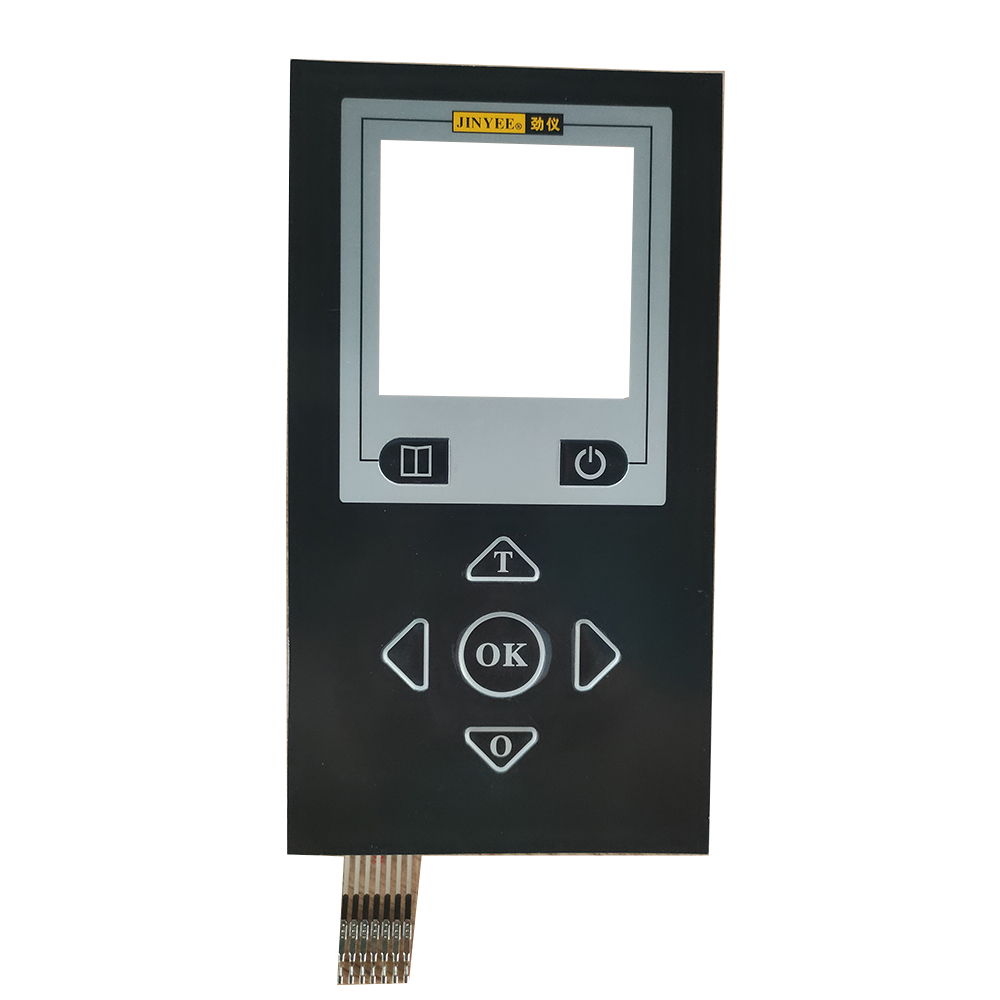
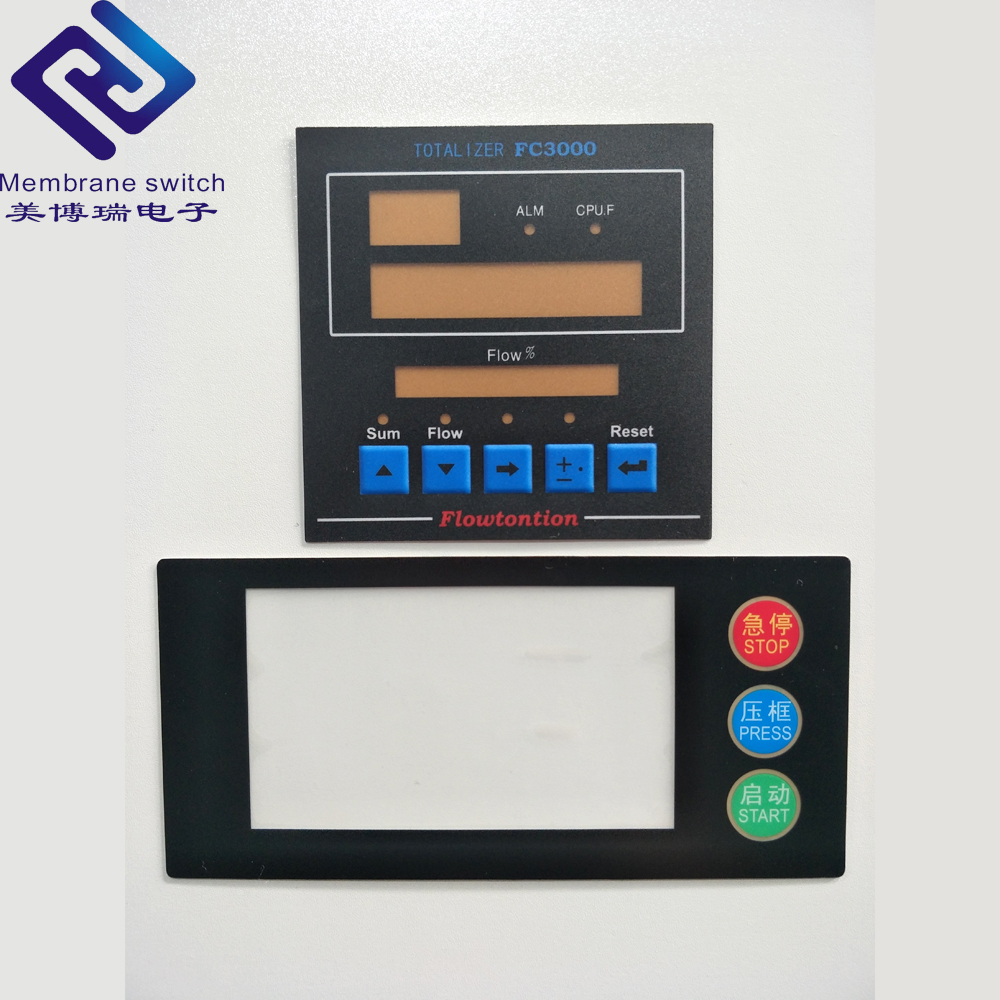
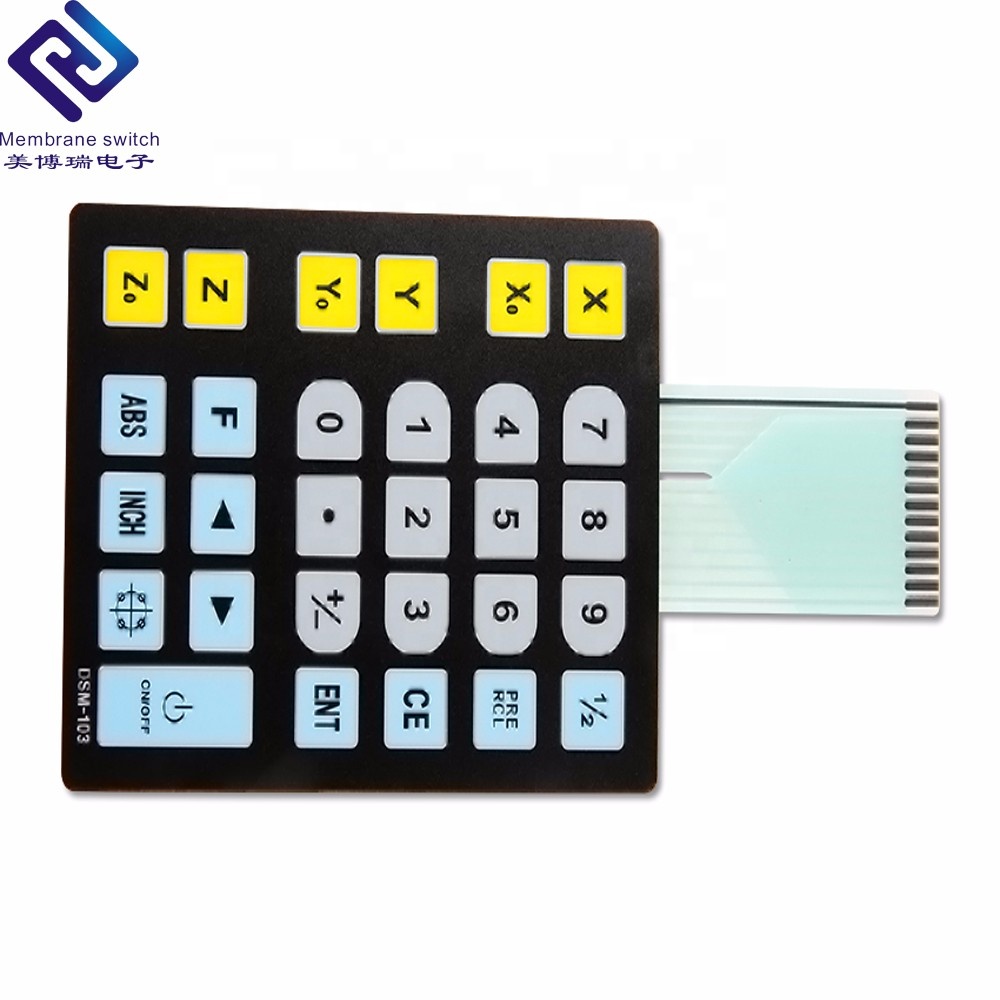
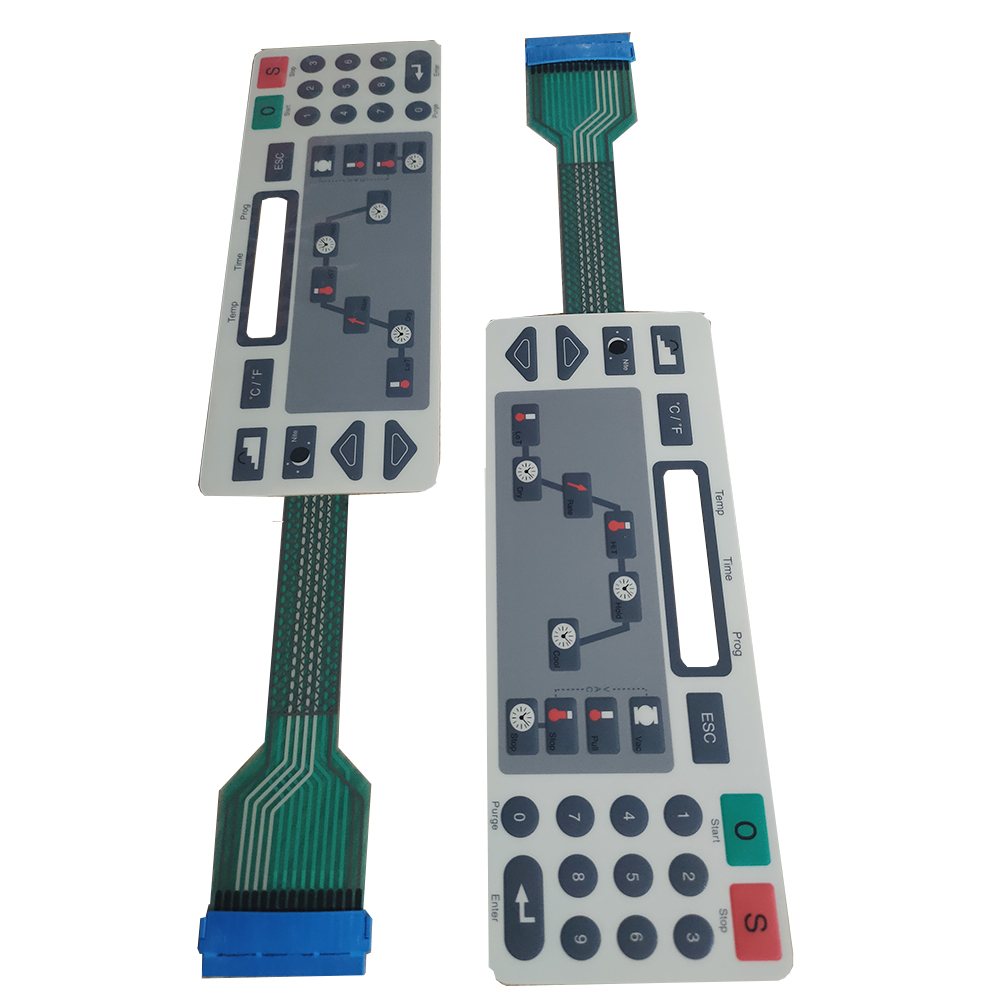
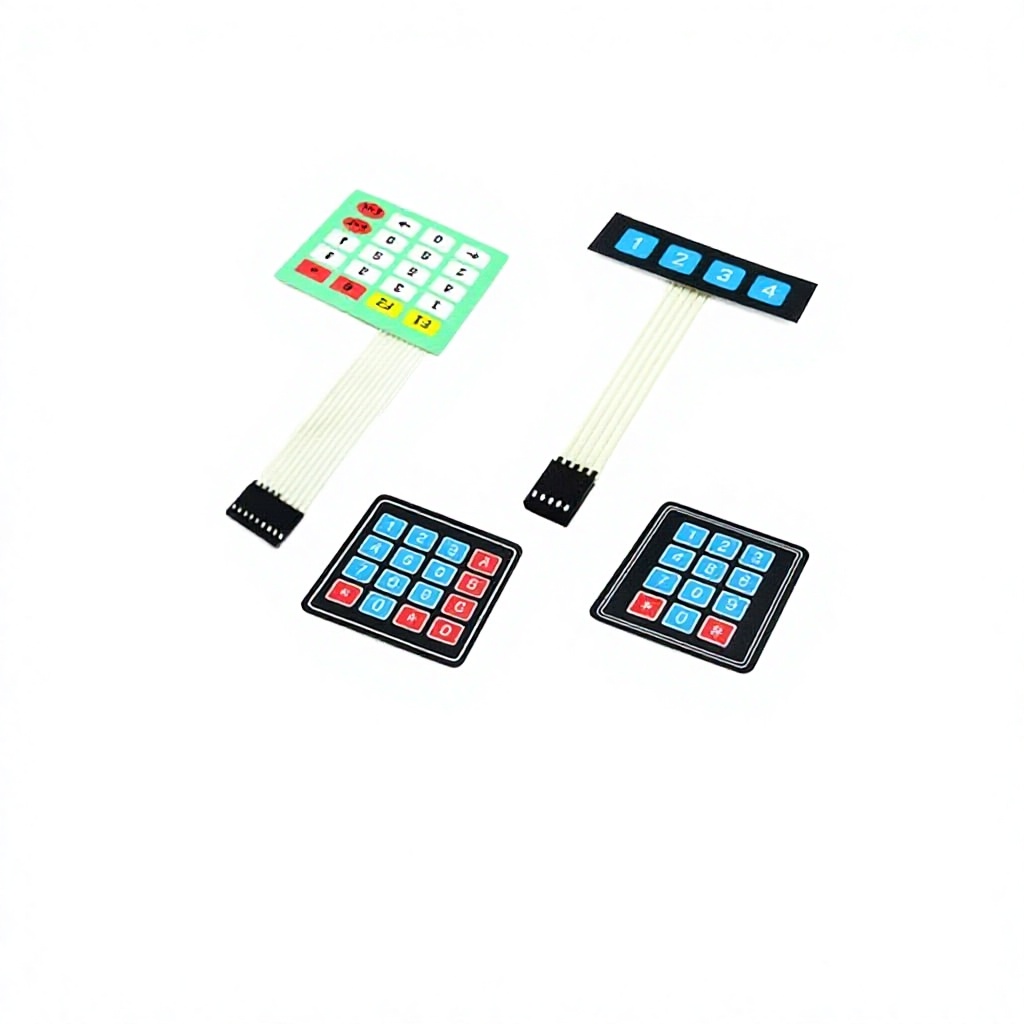
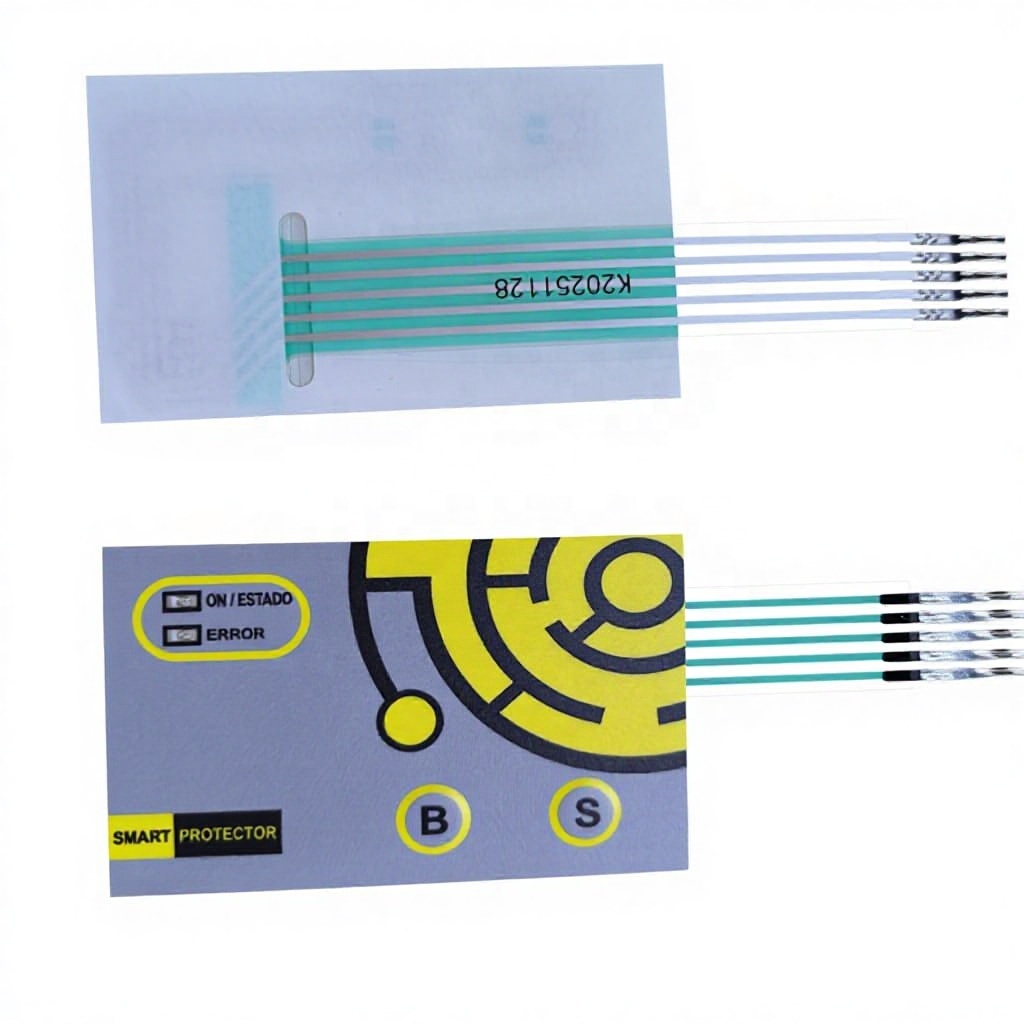
Explore our certified Human-Machine Interface portfolio. Each system is fully customizable with LGF backlighting, metal or poly dome arrays, custom connectors, and multi-layer environmental sealing tailored for European OEM deployment.
Precision Optical Physics: Light Guide Film (LGF) Integration
In modern industrial Human-Machine Interfaces (HMI), illumination uniformity, low-profile packaging, and thermal efficiency are critical design parameters. Traditional discrete LED arrays often result in objectionable hot-spotting, excessive z-axis height (often exceeding 2.5mm), and elevated parasitic power consumption. Light Guide Film (LGF) technology resolves these electro-mechanical constraints through the application of Total Internal Reflection (TIR) principles within a microscopic optical film layer.
An LGF membrane switch integrates a precision-molded or laser-etched optical-grade polycarbonate (PC) or polymethyl methacrylate (PMMA) thin film—typically ranging from 0.125 mm to 0.250 mm in thickness—directly beneath the graphic overlay and above or around the tactile dome array. Ultra-thin, side-firing surface-mount (SMD 0603 or 0805) LEDs inject high-flux photons into the perimeter edges of the film. Light propagates along the medium until striking engineered micro-optical dot matrix extractors (variable density dotting). These micro-dots refract the light upward at precise 90-degree vectors, yielding a luminance uniformity across legends and key borders exceeding 85% to 90% without light leakage or shadows.
Cross-Sectional Architecture & Layer Stack-Up
Our LGF assemblies manufactured for European instrument builders follow a multi-tier hermetic stack-up, designed to withstand continuous mechanical actuation while preventing moisture ingress and delamination:
| Layer Depth | Subsystem Component | Material Selection | Functional Specification |
|---|---|---|---|
| Layer 1 (Top) | Graphic Overlay | Autotex PET / Lexan HP92S PC (0.15–0.20 mm) | Anti-glare, chemical-resistant, UV-stabilized, 3H–5H hardness |
| Layer 2 | Optically Clear Adhesive | 3M 8171 / 8172 OCA Film | Refractive index matched (n ≈ 1.49) to eliminate Fresnel loss |
| Layer 3 | Light Guide Film (LGF) | Optical Grade Polycarbonate (0.125–0.25 mm) | Laser-etched micro-dot matrix pattern engineered per key layout |
| Layer 4 | Diffuser & Reflector Sublayer | White Toray Lumirror / Enhanced Specular Reflector | >98% directional reflectance redirecting downward photons |
| Layer 5 | Dome Retainer & Spacer | 3M 467MP / Polyester Spacer Die-Cut | Precision venting channels to stabilize actuation force curve |
| Layer 6 | Tactile Dome Array | Nickel/Gold-Plated Stainless Steel SUS301 | 180g–450g trip force; crisp tactile ratio (>45%); >10⁶ cycles |
| Layer 7 | Circuit Substrate | Dupont Silver / Rolled Annealed Copper FPC | Trace pitch down to 0.5 mm; loop resistance <10Ω; SMT LEDs bonded |
| Layer 8 (Base) | Rear Adhesive / Structural Backer | 3M 300LSE / AL5052 / FR4 Aluminum Stiffener | High-tack bond to low-surface-energy (LSE) housings and chassis |
Serving the Industrial & High-Tech Corridor of Strasbourg
Strasbourg occupies an exceptional geostrategic position along the Rhine Valley, functioning as both the European Parliamentary capital and a powerhouse of biomedical engineering, cross-border rail infrastructure, and Industry 4.0 automation. We engineer HMI solutions calibrated to the operating conditions of Alsace and the Upper Rhine innovation network.
Alsace BioValley & MedTech Devices
Within the biomedical cluster of Illkirch-Graffenstaden and the Nextmed medical innovation park in Strasbourg, clinical diagnostics and robotic surgery apparatus require completely non-porous, crevice-free front panels. Our IP67/IP68 sealed LGF switches withstand continuous wipe-downs with harsh hospital disinfectants, quaternary ammonium compounds, and vaporized hydrogen peroxide (VHP) without graphic degradation or optical hazing.
Rail & Mass Transit Signaling Systems
Connecting with the Reichshoffen rail engineering corridor and regional transit locomotives operating along the Strasbourg-Kehl border, human-machine interfaces must endure continuous structural vibration and wide temperature differentials (-30°C to +85°C). We deploy rugged metal-backed LGF keypads featuring night-vision compatible (NVIS), dimmable backlighting and tactile snap-action feedback that train operators can actuate reliably with gloved hands.
Precision Machinery & Food Processing
From automated viticulture machinery in the Alsatian vineyards to high-speed chemical filling equipment along the Rhine port basin, controllers operate in damp, high-particulate surroundings. Our custom LGF panels incorporate complete circumferential water-dam gaskets, ESD shielding layers rated up to 15kV air discharge, and scratch-resistant hard-coated finishes resistant to abrasive cleaning and airborne acids.
Emerging HMI Engineering Trends in the French & German Cross-Border Zone
The industrial landscape of the Grand Est is governed by rigorous European norms, accelerated by the transition toward smart, interconnected factory automation. Sourcing managers and R&D directors in Strasbourg are prioritizing three foundational technological advancements when specifying membrane keypad assemblies:
1. Eco-Design & REACH/RoHS 3 Compliance
Environmental lifecycle stewardship is no longer optional for components entering the European Union. In strict adherence to EU Directive 2015/863 (RoHS 3) and Regulation (EC) No 1907/2006 (REACH), our fabrication pipelines completely eliminate restricted plasticizers (such as DEHP, BBP, DBP, DIBP) and heavy metals. Graphic overlays are printed using solventless or UV-cured inks on bio-stable polyesters that facilitate mechanical recycling and separation at end-of-life disposal.
2. Hybrid HMI Interfaces: FPC, Capacitive Touch & LGF Convergence
Modern machine consoles rarely rely on standalone discrete pushbuttons. We observe high demand across Alsatian engineering teams for hybrid interface panels where flexible copper circuits (FPC) merge capacitive slider controls, OCA-laminated OLED/TFT display windows, and physical tactile keys with LGF illumination on a single continuous panel. This hybrid structure eliminates mechanical bezel joints, delivering flat, modern aesthetic surfaces with tactile certainty.
3. Electromagnetic Compatibility (EMC) in High-Frequency Installations
With automated guided vehicles (AGVs) and wireless IoT sensors proliferating across Strasbourg distribution hubs, stray electromagnetic interference (EMI) can trigger ghost activations or signal distortion. Our assemblies incorporate continuous vapor-deposited aluminum or selective screen-printed silver grid shielding planes tied directly to chassis ground via low-impedance tail tabs, achieving attenuation levels greater than 60 dB in the 30 MHz to 1 GHz band.
End-to-End In-House Manufacturing & Verification
Unlike trading intermediaries that outsource critical production steps, we maintain 100% internal control over the entire production cycle across our dual manufacturing bases in Hebei and Huizhou. Every switch is engineered, printed, cut, assembled, and verified under one unified quality system.
Advanced Fabrication Fleet
Our workshop floor houses 60 CNC precision mold-making machines, 37 precision silkscreen printing stations, 4 Mimaki high-resolution digital UV printers, and 18 automated laser-cutting stations. This deep capital equipment infrastructure enables rapid tooling fabrication and micron-level mechanical tolerances on custom cutouts.
Rigorous In-House Testing Laboratory
Every membrane switch batch is validated in our specialized testing facility. Quality assurance routines include computerized circuit continuity analyzers, button actuation life-cycle testers (logging past 3,000,000 cycles), programmable temperature/humidity environmental chambers, xenon UV weatherometers, and automated salt spray fog chambers for marine/harsh environment verification.
German Partnership & European Logistics
Benefiting from long-standing technical collaboration with German membrane switch engineers—encompassing tooling methodology, material formulations, and engineer exchanges—we bridge European design requirements with competitive high-capacity production. We ensure smooth DDP/DAP shipments directly to Strasbourg, Mulhouse, or Colmar with full customs documentation.
Frequently Asked Questions for Sourcing in Strasbourg
Key technical, commercial, and logistical clarifications for engineering managers and strategic buyers sourcing custom LGF membrane switches from our facility.
What CAD files and technical documentation are needed to initiate an LGF membrane switch project?
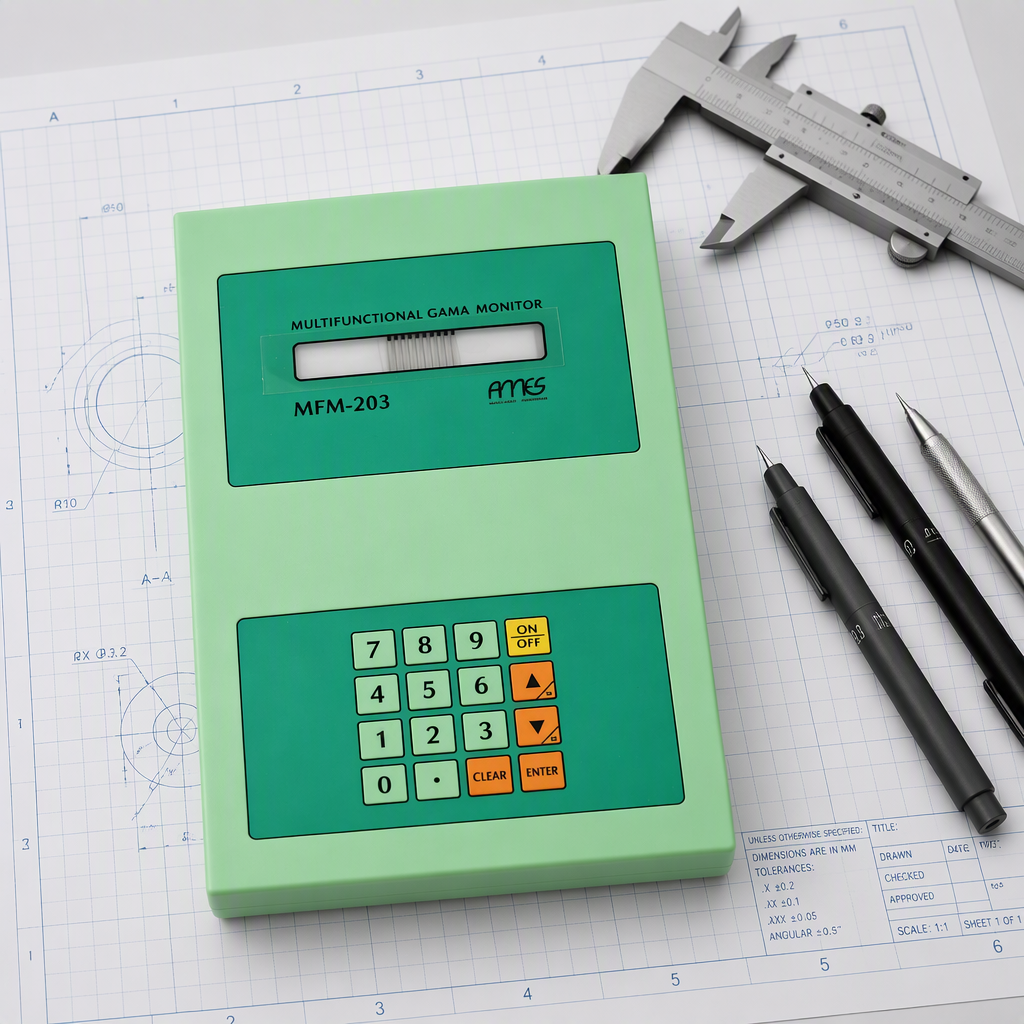
To provide a complete DFM (Design for Manufacturability) review and precision quotation, our engineering team prefers 2D mechanical outlines in DXF, DWG, or PDF format, accompanied by 1:1 vector graphic artwork in Adobe Illustrator (.AI), CorelDraw (.CDR), or EPS with designated Pantone (PMS) or RAL color references. Circuit connection matrices should specify tail pin-outs, connector pitch (e.g., 2.54mm or 1.0mm ZIF), LED forward voltage/current ratings, and required tactile actuation force (typical range: 250g to 400g). If you have preliminary 3D models in STEP format, we can assess housing clearances directly.
How do you handle shipping logistics, customs clearance, and lead times to the Grand Est region?
We routinely support European delivery terms including DAP and DDP Strasbourg (via Strasbourg-Entzheim Airport, Frankfurt Hub, or Paris CDG). Rapid prototypes typically ship within 5 to 7 working days following engineering proof approval via priority express (DHL/FedEx/UPS), reaching your facility in Alsace in 3 to 4 transit days. Pilot runs and production volumes are scheduled via air or multimodal consolidated sea/rail freight, accompanied by commercial invoices, Packing Lists, Certificates of Origin, and EUR.1 documentation where applicable.
Can LGF backlighting support multi-color zones and day/night dimming without light bleed?
Yes. By laser-segmenting the optical Light Guide Film into isolated photon chambers and applying opaque physical light-blocking barrier masks (silkscreened black light-blocker inks and die-cut perimeter gaskets), we can incorporate distinct chromatic zones—such as amber emergency keys, emerald operating indicators, and white continuous legend backlighting—within a single unified panel without color cross-talk. When coupled with PWM (Pulse Width Modulation) controllers on your host MCU, the LGF system allows continuous dimming across a 1% to 100% brightness range.
How does TAVO ensure compliance with European environmental and chemical directives?
All raw substrates (including Autotex polyesters, 3M adhesives, Dupont conductive silver inks, and SUS301 metal domes) are sourced with full mill test certs and third-party laboratory verification (SGS/Intertek). We issue formal Declarations of Conformity for EU RoHS 3 (Directive 2015/863/EU) and REACH (EC 1907/2006) SVHC candidate list statements with every production order, giving Alsatian medical and transit equipment manufacturers complete supply chain audit confidence.
What are your minimum order quantities (MOQ) for custom prototypes versus serial production runs?
Recognizing the specialized nature of European precision machinery and medical instrumentation development, we do not impose punitive MOQs. We readily accommodate prototype and validation batches as small as 5 to 50 units to support your clinical testing, field trials, or design verification milestones. Our flexible digital printing line eliminates expensive silkscreen setup charges on low-volume runs, allowing engineering teams in Strasbourg to iterate quickly before committing to hard tooling for high-volume serial manufacturing.
How do you achieve IP67 or IP68 environmental sealing against aggressive industrial washdowns?
True IP67/IP68 ingress protection is achieved by combining three structural barriers: (1) a continuous graphic overlay without through-holes, (2) a complete closed-loop perimeter sealing gasket using high-cohesion 3M 300LSE or 200MP acrylic adhesives that bond permanently to smooth or textured housings, and (3) an internal labyrinth venting network that routes air pressure equalization through the tail into the housing enclosure rather than outside the panel border. This prevents liquid aspiration during rapid thermal cycling or high-pressure spray cleaning.
Request a Technical DFM Review & Quotation
Collaborate directly with our senior application engineers. Share your mechanical CAD drawings, overlay artwork, or target electrical specifications for a fast-turnaround feasibility analysis and competitive factory-direct quote.
Instant engineering consultation · Typical reply under 60 minutes