
Factory Engineered Hardware
Featured Interface Assemblies for Critical Equipment
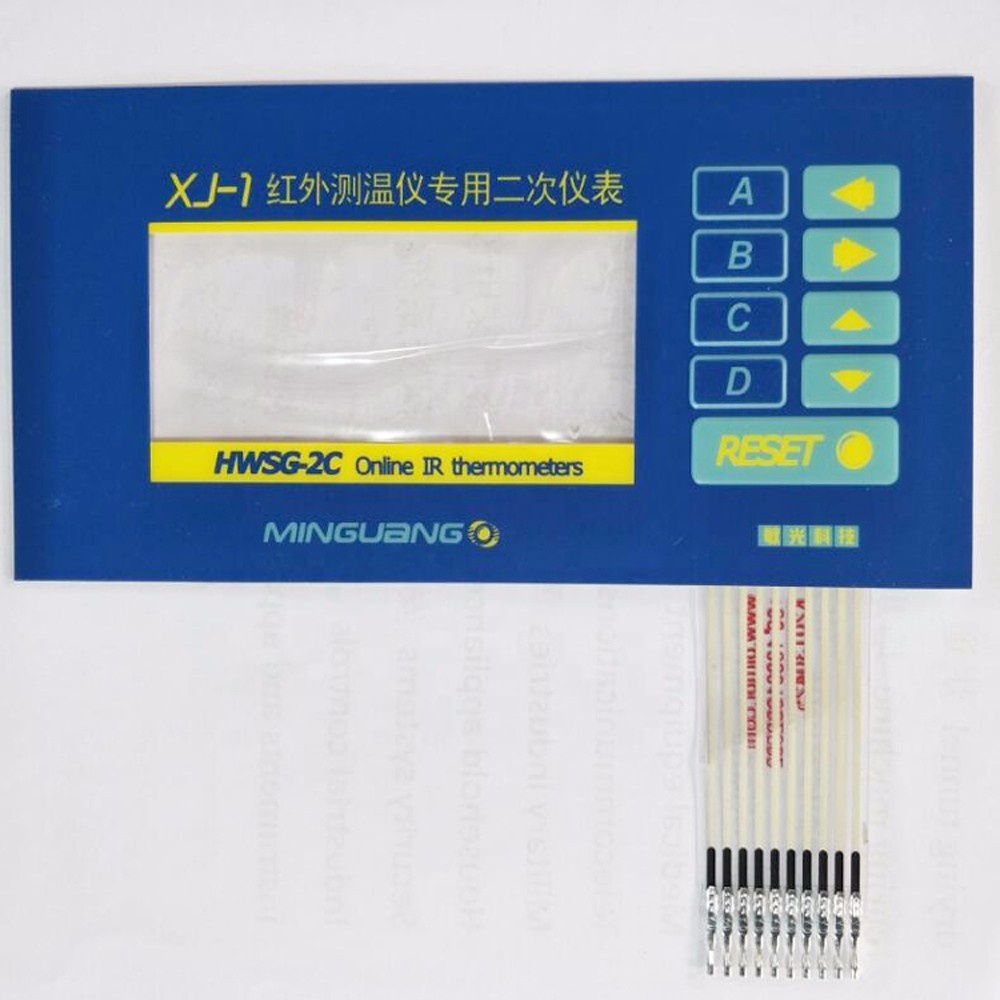
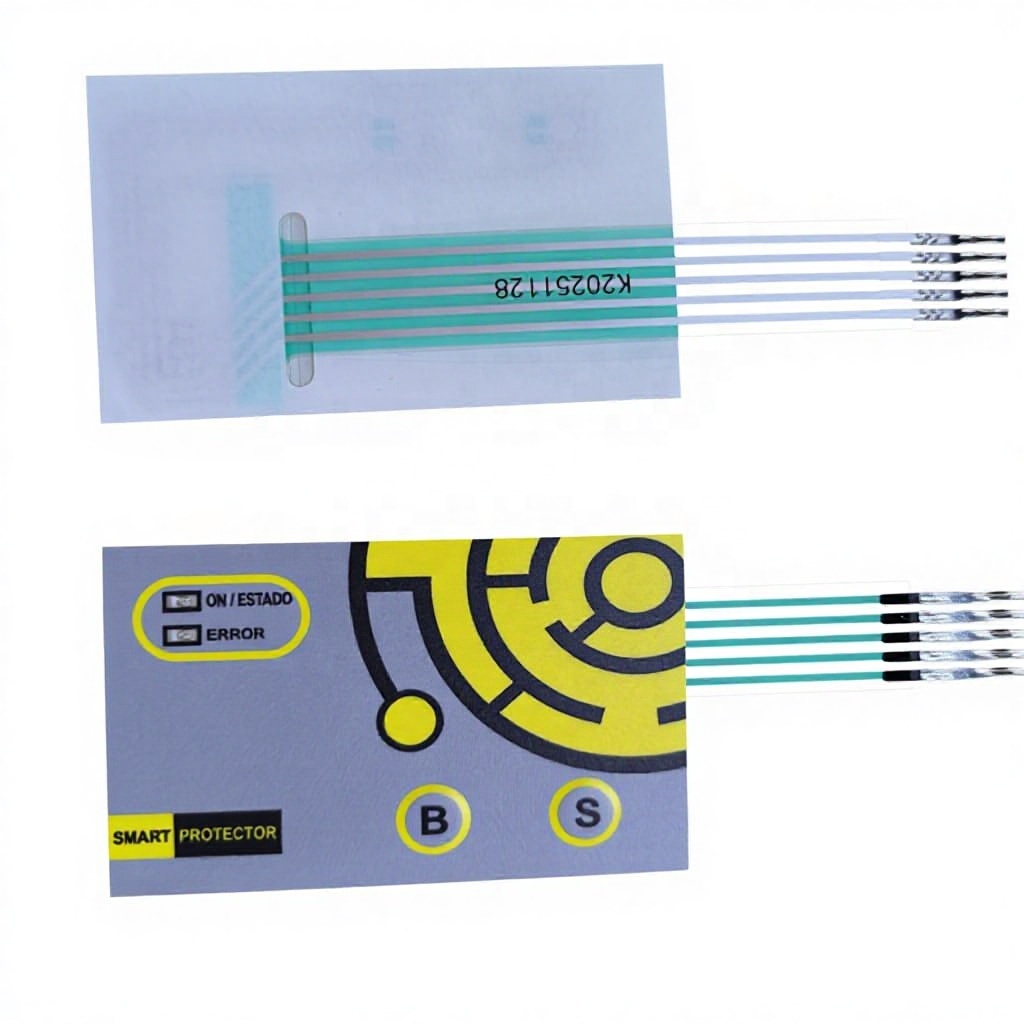
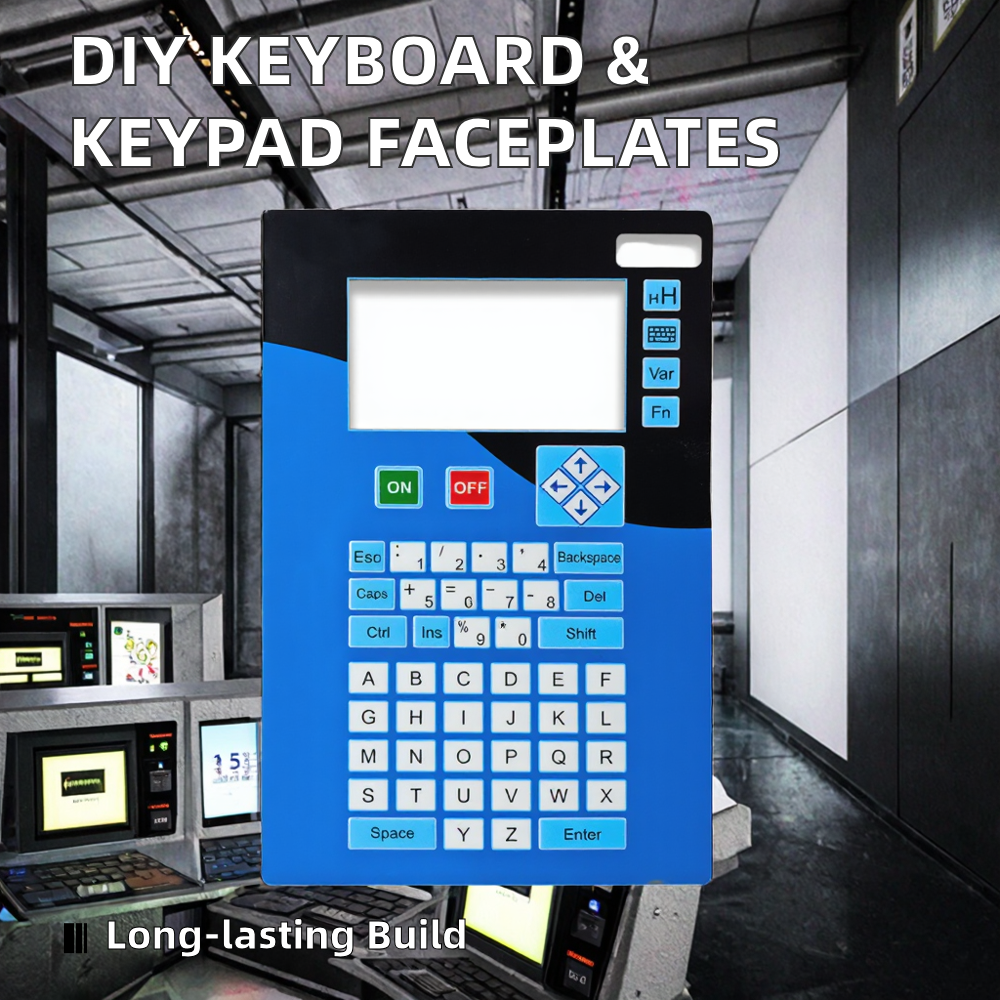
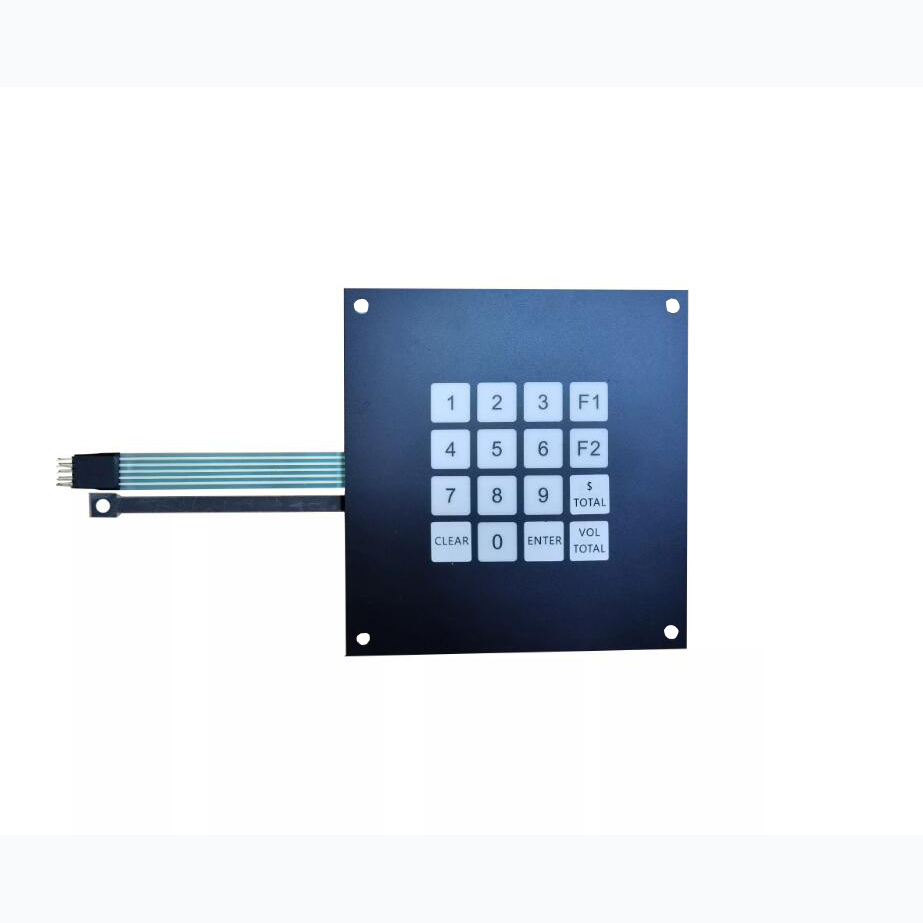
Explore high-spec industrial keyboard caps, hermetic PET overlays, waterproof mechanical switch interfaces, and custom membrane control panels manufactured to ISO 9001 and Intertek verified standards.
1990+
Manufacturing Heritage
111Verified
Onsite Assessed Specialists
10M+
Non-Tactile Actuations MTBF
IP67/IP68
Hermetic Ingress Protection
Engineering Whitepaper & Architecture
Non-Tactile Membrane Switch Engineering & Scientific Principles
An authoritative technical breakdown of flat-surface non-tactile switch geometries, substrate material science, flexural endurance, and galvanic trace stabilization.
Zero-Deformation Micro-Gap Travel Dynamics
Unlike tactile tactile keypads that incorporate stainless steel domes or poly-domes that deform mechanically, non-tactile switches rely on a calibrated air-gap spacer layer (typically between 0.075mm to 0.125mm). Actuation occurs purely via elastic finger deflection of the top PET membrane into direct physical contact with the underlying silver or copper trace pads. Because no metal fatigue occurs, actuation life spans frequently exceed 10,000,000 cycles without mechanical hysteresis.
Hermetic Polymer Encapsulation & Surface Tension
Non-tactile switch panels feature completely planar, flush faceplates. By omitting embossed rims and mechanical seams, particulate aggregation is eradicated. TAVO utilizes biaxially oriented polyester (Autotex / MacDermid Autotype PET) and medical-grade Polycarbonate (PC) treated with sub-micron silica coatings. This creates a chemically inert barrier resisting aggressive industrial ketones, chlorinated washdowns, hydraulic fluids, and broad ultraviolet degradation.
Micro-Ohmic Conductor Printing & Anti-Migration
Signal traces are silk-screened using high-purity, thermoplastic conductive silver inks with electrical trace resistance held below <0.5 Ω/cm. In humid or maritime environments, silver electromigration is a catastrophic failure risk; TAVO applies a cross-linked conductive carbon coating or dielectric over-glaze atop the silver contact nodes, creating a stable barrier that prevents galvanic oxidation and trace bridging under continuous DC electrical potential.
| Architecture Metric | Non-Tactile Membrane Panel (Flat) | Tactile Dome Membrane Switch | Traditional Mechanical Pushbuttons |
|---|---|---|---|
| Mechanical Lifecycle | >10,000,000 Actuations | 1,000,000 – 3,000,000 Actuations | 100,000 – 500,000 Actuations |
| Actuation Travel Stroke | 0.10mm – 0.25mm | 0.30mm – 0.80mm | 1.50mm – 4.00mm |
| IP Ingress Rating Potential | IP67 / IP68 Continuous Submersion | IP65 / IP67 Dynamic Seal | IP40 – IP65 (Requires O-Rings) |
| Sterilization & Chemical Washdown | Impermeable / Wipe-Clean Planar | Good (Pockets Around Embossing) | Poor (Particulate Lodging in Crevices) |
| EMI / RFI Attenuation Capabilities | Integrated Al/Cu Foil Shield (>60dB) | Integrated Printed Grid (>40dB) | Requires Discrete Metal Casing |
| Feedback Mechanism | Auditory Buzzer / LED Optical Confirmation | Snap Action Click (Tactile Feel) | Physical Spring Resistance |
Localized Deployment Engineering
Serving Berekua: High-Performance Interface Deployments
Addressing the severe tropical marine climate, geothermal activity, and essential utility infrastructures of Berekua, Dominica, and the broader Windward Islands.
Geothermal & Hydroelectric Power Ingress Protection
The southern district of Dominica surrounding Berekua (Grand Bay) is characterized by active geothermal basins and severe high-humidity rainfall corridors. Hydroelectric plants and nascent geothermal exploration wells require instrumentation control panels resistant to atmospheric hydrogen sulfide (H2S) gas and continuous 95%+ relative humidity. Non-tactile switch assemblies featuring 3M 300LSE adhesive matrices completely seal the switch core, preventing sulfuric gas corrosion from attacking delicate internal contact nodes.
Coastal Agro-Processing & Botanical Extraction Panels
Berekua's agricultural economy relies heavily on essential oil distillation (such as bay oil), citrus refining, and agro-processing facilities. Distillation equipment operates under elevated thermal envelopes and utilizes caustic sanitizers. Planar non-tactile graphic overlays made from chemically stabilized Autotex Steel PET resist terpene vapours, caustic soda washdowns, and pressurized rinse cycles without delaminating, cracking, or suffering optical yellowing.
Marine Port Telemetry & Desalination Systems
Bordering the exposed Atlantic and Caribbean waters, coastal infrastructure in Grand Bay suffers intense salt-spray fog and ultraviolet bombardment. PBT keyboard assemblies and non-tactile switch interfaces configured with UV-stabilized digital inks withstand accelerated xenon lamp aging and ASTM B117 salt fog exposure. Whether applied to maritime radio transceivers, reverse-osmosis desalination controllers, or municipal pump housings, our hermetic panels guarantee zero saltwater leakage.
Regional Industrial Trajectory
Emerging Technological Trends in Caribbean Industrial HMIs
How industrial digitization, climatic resilience standards, and decentralized microgrids are transforming hardware procurement in Commonwealth regions.
1. Hybridization of Capacitive Touch & Non-Tactile Panels
Traditional full-glass capacitive screens suffer frequent false-triggering in tropical regions due to water condensation and workers operating in heavy protective gloves. The dominant trend in the southern Caribbean is the adoption of hybrid capacitive non-tactile membrane surfaces. By combining planar graphic overlays with tuned electric-field non-tactile sensor loops and perimeter mechanical interlocks, operators achieve modern flush aesthetic panels that remain immune to rain drops and condensation streaks.
2. Extreme UV Resistance & Solar Micro-Grid HMIs
Dominica's national commitment to becoming the world's first climate-resilient nation has accelerated solar photovoltaic microgrid installations across Berekua and surrounding valleys. Inverter interface panels, battery energy storage systems (BESS), and transformer monitoring stations require membrane switch panels that resist continuous high Solar UV Index ratings (11+). Utilizing Mimaki UV-cured acrylic formulations and fluoropolymer clear coats ensures that warning indicators, branding, and optical LCD windows remain transparent without haze or yellowing over 15+ years of direct outdoor exposure.
3. Rapid Prototyping & Modular Maintenance Spares
Historically, small municipal utility boards and private agro-industrial operators in remote Caribbean districts faced multi-month downtime waiting for OEM European or North American replacement switches. Procurement strategies have dramatically pivoted toward partnering with direct manufacturers capable of supporting low-MOQ fast-delivery engineering runs. Utilizing CNC digital cutting and CAD-integrated silkscreen setups allows replacement panels to be reverse-engineered, prototyped, and dispatched within accelerated production cycles.
Factory Authority & Engineering Rigor
Why Global & Regional Engineers Partner with TAVO
Tracing our roots to 1990, TAVO combines extensive production infrastructure, German technical cooperation, and zero-outsourcing manufacturing control.
ADVANTAGE 01
End-to-End In-House Production
Every production phase — circuit layout, film plotting, silkscreen and digital UV printing, laser kiss-cutting, CNC tooling, and cleanroom bonding — happens within our verified 2,219m² production facilities in Xianghe and Huizhou.
ADVANTAGE 02
German Technical Cooperation
Our engineering protocols benefit from long-standing technical alliances with German membrane switch factories. We deploy European precision standards across tension monitoring, paste viscosity, and laser alignment tolerances.
ADVANTAGE 03
Massive Machining Capacity
Operating 60 CNC mold-making workstations, 37 precision screen printers, 18 laser-cutting machines, and 4 Mimaki UV flatbed engines guarantees scalable output without bottlenecks, whether for 50 prototypes or 1,000,000 units.
ADVANTAGE 04
ISO 9001 & Intertek Inspected
Our manufacturing processes, workforce credentials (111 onsite staff), and metrology facilities are independently audited by Intertek. Every batch undergoes 100% automated computer circuit testing before packaging.
Procurement Knowledge Base
Frequently Asked Questions for Engineers Serving Berekua
Clear, definitive technical and commercial answers addressing shipping, environmental resistance, CAD interchange, and small-batch custom builds.
What are the key technical differences between tactile and non-tactile switch panels? +
Non-tactile switch panels omit the internal metal snap-dome or thermoformed poly-dome found in tactile variants. Actuation relies on an elastic deflection of the top graphic membrane across a calibrated 0.075mm – 0.125mm spacer gap directly onto the lower circuit pad. While tactile switches provide physical "click" feedback, non-tactile switches offer an entirely smooth, flat surface. Non-tactile panels boast significantly higher mechanical lifecycles (exceeding 10 million cycles compared to 1–3 million for tactile), completely eliminate crevices for total cleanroom wipe-down, and are traditionally paired with optical LEDs or auditory beepers on the host PCB to confirm actuation.
How do your non-tactile panels resist high humidity and marine salt air in Caribbean territories? +
For coastal Caribbean environments like Berekua, standard silver-printed circuits can suffer from silver electromigration caused by humidity infiltration. TAVO prevents this through three defenses: First, we employ continuous perimeter gasket seals using genuine 3M 300LSE or 200MP acrylic adhesives that block moisture ingress up to IP67/IP68 standards. Second, we apply a cross-linked conductive carbon barrier layer directly over silver contact pads to eliminate galvanic corrosion. Third, we specify biaxially oriented Autotex PET overlay materials that resist water vapour transmission, mold growth, and high ambient temperatures (-40°C to +85°C).
Can non-tactile panels be customized with clear display windows and embedded LEDs? +
Yes. We integrate transparent or smoke-tinted optical windows for LCD, OLED, and seven-segment LED displays. Using optically clear adhesives (OCA) and anti-glare, anti-scratch hard-coated films, display readability remains crisp in direct sunlight. Furthermore, we routinely mount surface-mount technology (SMT) LEDs directly inside the membrane switch spacer layer, allowing status illumination and key backlighting without requiring separate exterior indicator lamps on your equipment chassis.
What engineering drawings and technical files are required to initiate an OEM/ODM order? +
To commence production tooling, clients typically provide mechanical outline drawings in DXF, DWG, or PDF formats indicating dimensions, window positions, cutouts, and tail exit points. Graphic artwork should be supplied in vector formats (Adobe Illustrator .AI, CorelDraw .CDR, or vector PDF) with color codes specified in Pantone matching formulas. Additionally, please provide an electrical pin-out schematic indicating common bus, X-Y matrix, or individual trace assignments, along with connector pitch requirements (typically 2.54mm or 1.0mm FPC ZIF). Our engineering team converts your data into production fabrication blueprints for sign-off prior to hard tooling.
Does TAVO support small batch orders and prototypes for replacement or pilot projects? +
Yes. Unlike large-scale suppliers with prohibitive minimum order quantities, TAVO operates digital UV printing engines (Mimaki) and high-speed laser kiss-cutting stations that bypass expensive steel-rule die tooling. This allows us to economically deliver prototype batches, pilot production runs (10 – 100 units), and specialized equipment replacement runs for local industrial plants, municipal utilities, and engineering labs with rapid lead times.
What shipping terms, logistics handling, and payment options apply to shipments to Dominica? +
We provide full international trade flexibility supporting EXW, FOB, CFR, and CIF incoterms. For rapid delivery to the Caribbean, shipments are dispatched via express air freight (DHL, FedEx, UPS) directly to Melville Hall / Douglas-Charles Airport (DOM), or consolidated sea freight via regional container transshipment ports. Accepted payment terms include Wire Transfer (T/T), Letter of Credit (L/C), and D/P D/A in USD or CNY, fully supported by export certificates, commercial invoices, and packing lists compliant with customs authorities.
Request an Engineering Consultation & Prototype Quotation
Collaborate directly with our 30+ veteran membrane interface engineers. Send your CAD dimensions, color requirements, and environmental specifications for a thorough design-for-manufacturability (DFM) review and competitive factory quote.
Free DFM & File Pre-Flight Review
Strict NDA & Intellectual Property Protection
Low Prototype MOQs Supported
Comprehensive In-House Reliability Testing
Contact Us
Technical Engineering Desk Online
Direct Engineering Support
Connect immediately with our technical account team to discuss project feasibility, pin-out configurations, and sample evaluation packages for municipal, agricultural, and industrial deployments in Berekua and global sectors.
ISO 9001:2015
INTERTEK ASSESSED
ROHS & REACH COMPLIANT
MIL-STD-202 COMPLIANT