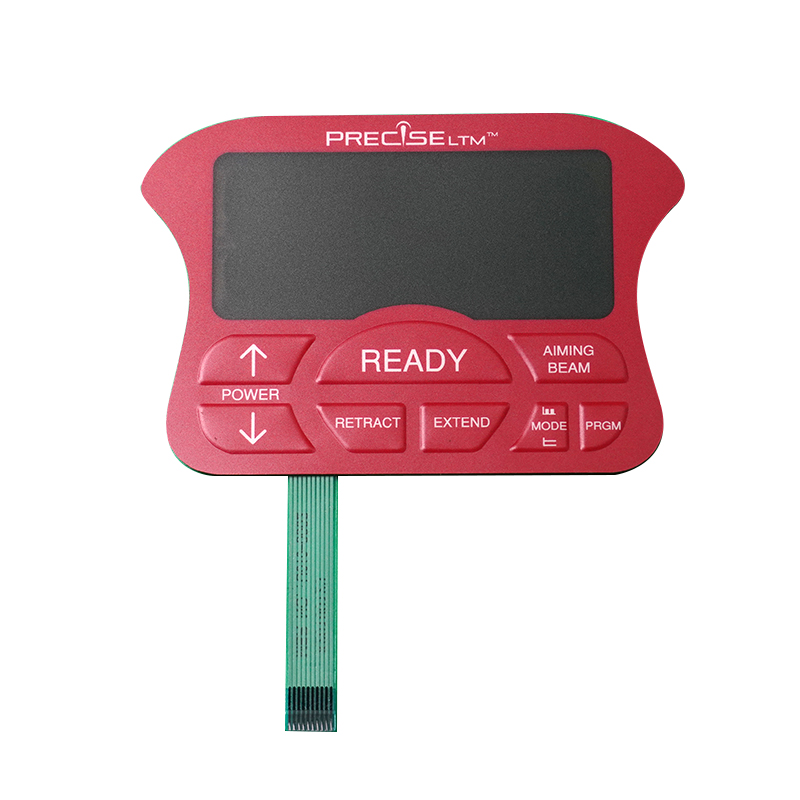
Precision Product Showcase
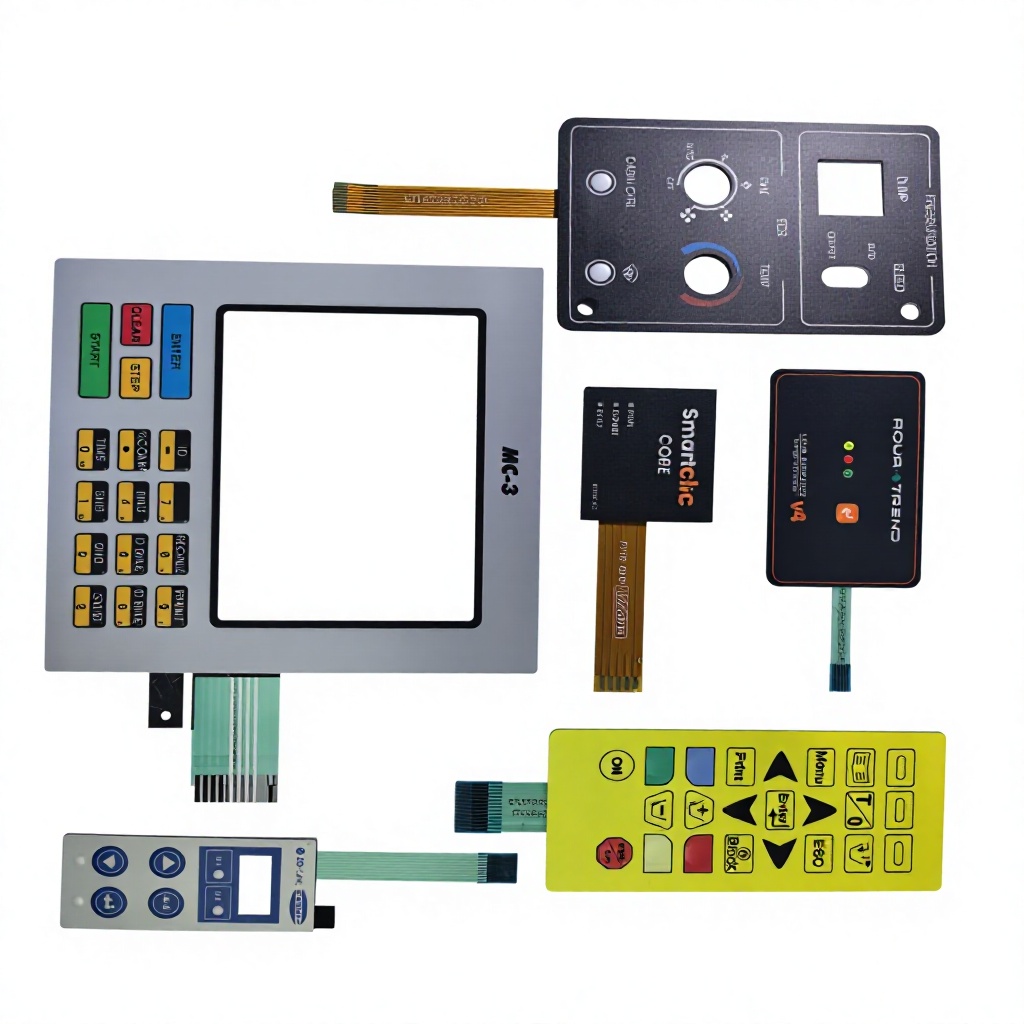
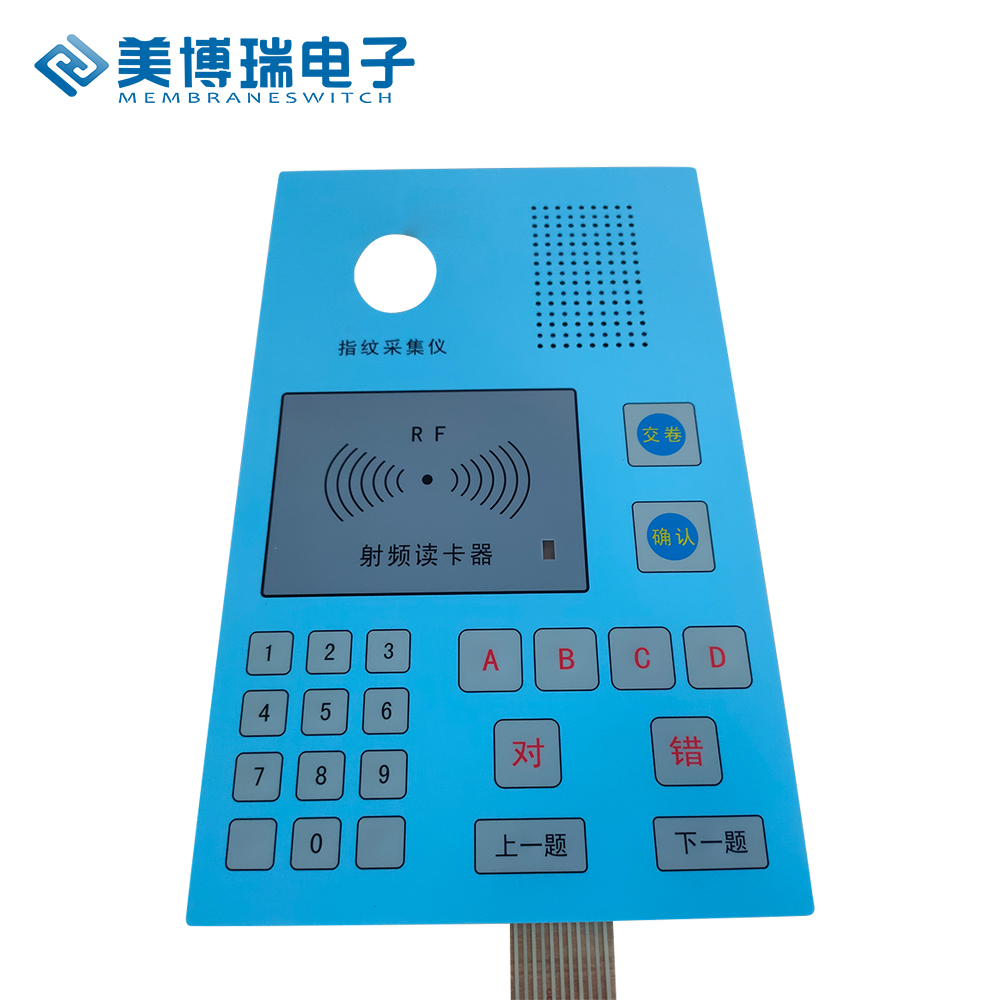
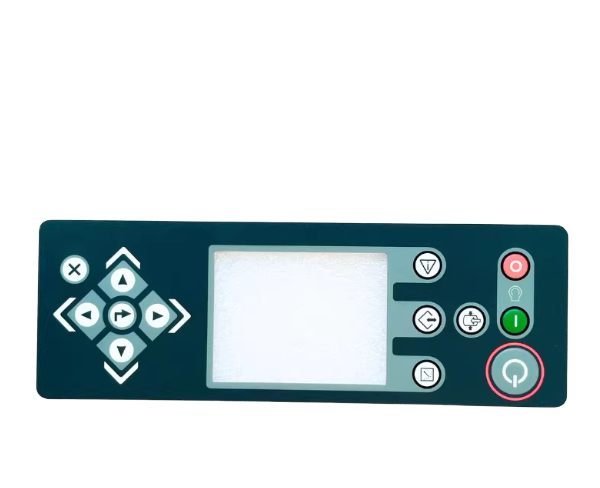
High-Reliability Overlays & HMI Control Assemblies
Engineered for mission-critical instruments, high-voltage substations, medical analytics, and smart logistics across Luxembourg and Greater Region hubs.
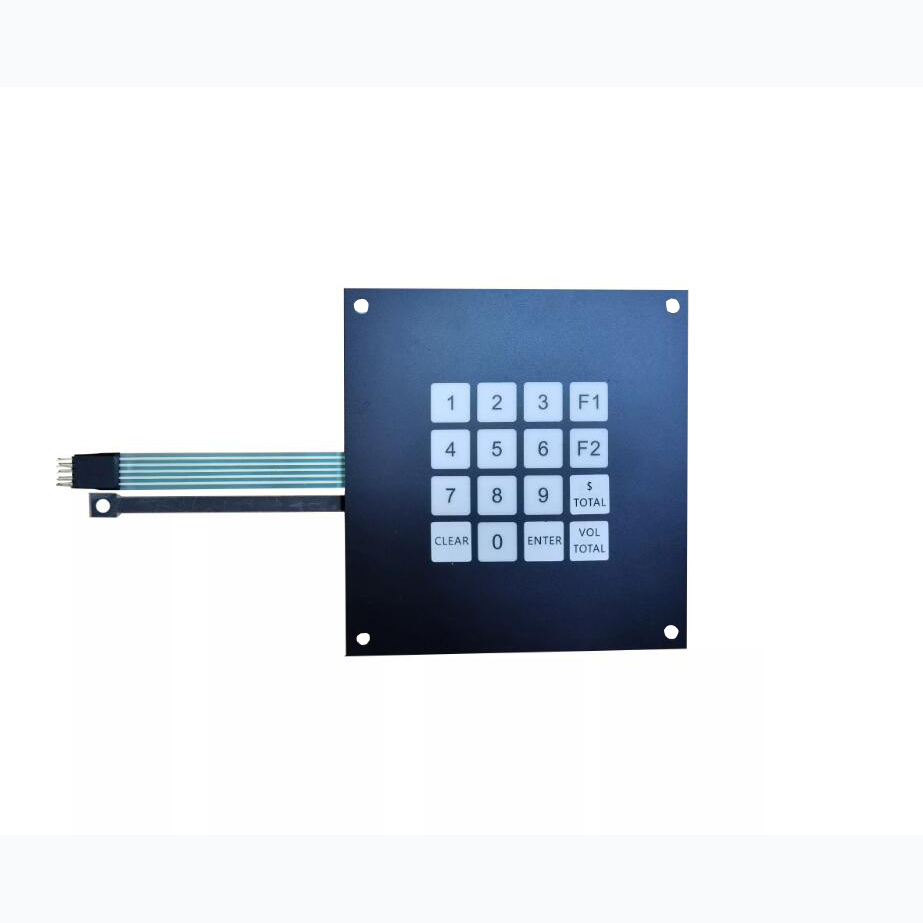
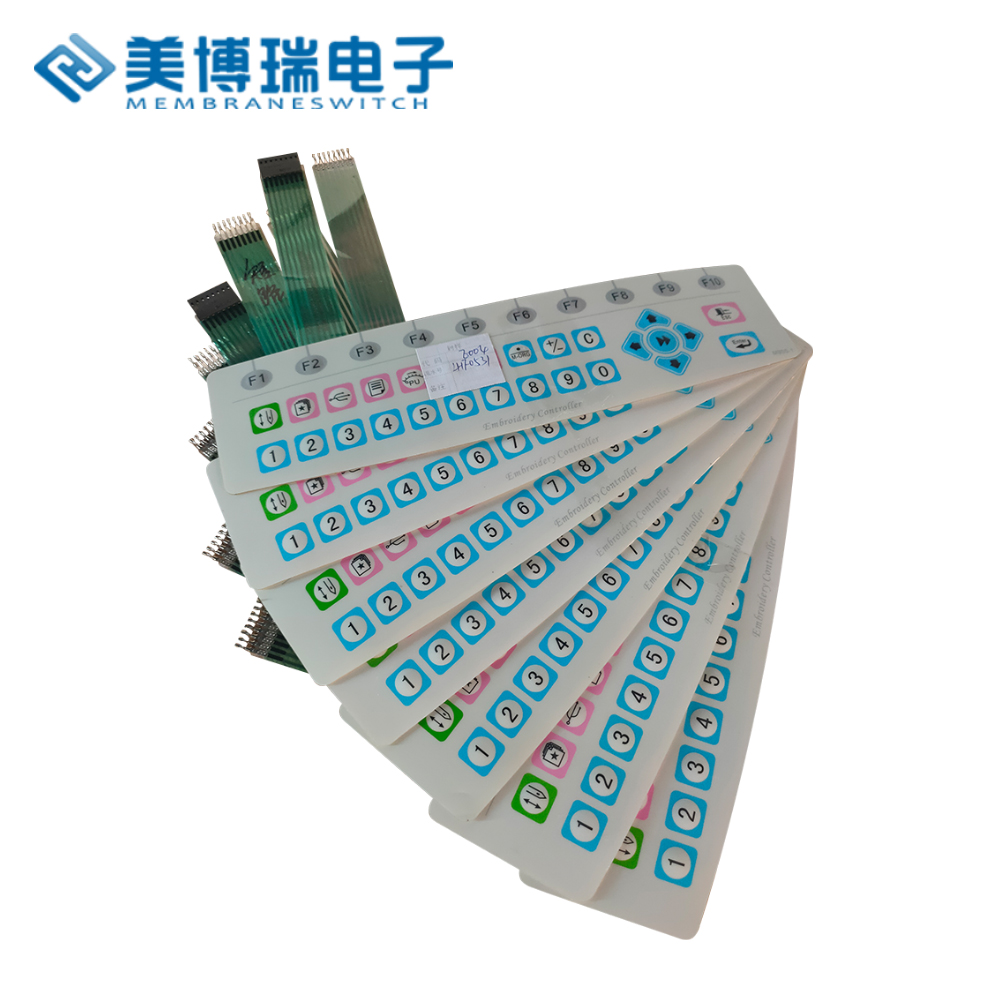

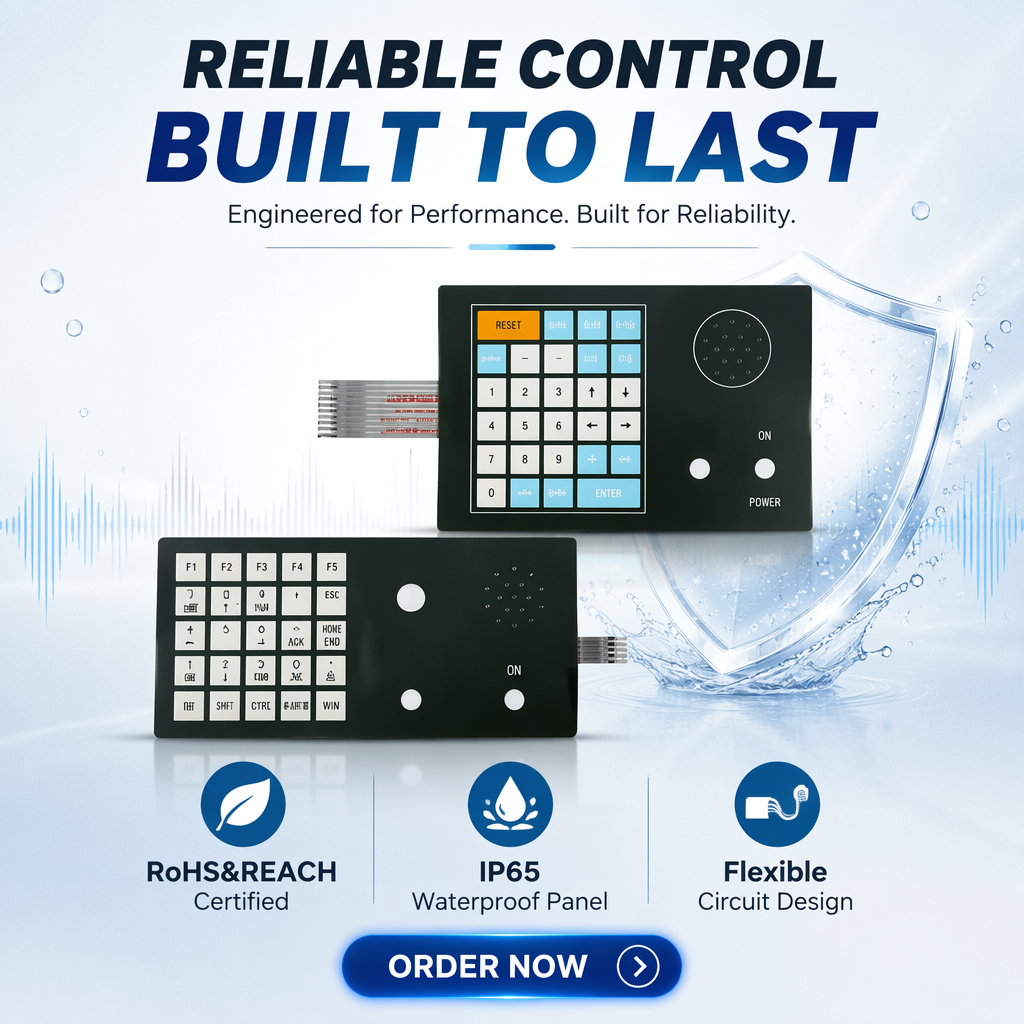
Technical Engineering Whitepaper
Physics, Adhesion Chemistry & Optoelectronic Optimization of OCA Overlays
A rigorous inspection of refractive index matching, anti-Newton ring dynamics, and environmental degassing criteria for high-precision European deployments.
Optical Refraction Matching
Traditional air-gap overlays introduce two internal reflective surfaces, yielding Fresnel reflections that reduce light transmission by up to 8.5%. By applying high-transmittance (>99%) Optically Clear Adhesive calibrated to an index of refraction of n ≈ 1.474–1.490, reflection losses are suppressed below 0.2%, maximizing TFT-LCD and OLED readability under direct sunlight.
Anti-Newton Ring Engineering
When flexible graphic films contact smooth display lenses, micro-gap variances cause destructive optical wave interference visible as rainbow patterns. TAVO utilizes dual-action proprietary anti-glare (AG) or micro-etched coatings on the window underside combined with bubble-free autoclave degassing at 0.5 MPa, eradicating optical Newton rings permanently.
Thermal & UV Cleavage Resistance
Industrial displays deployed in outdoor energy substations face relentless UV-A and UV-B exposure. Our optical overlays incorporate UV-blocking chemistry that guarantees less than ΔE < 1.5 color shift and zero yellowing over 1,000 hours of xenon arc exposure (ISO 4892-2), preventing delamination across an extended thermal envelope of -40°C to +85°C.
| Performance Parameter | Standard Air-Gap Window | TAVO OCA Optical Window Overlay | Validation / Test Protocol |
|---|---|---|---|
| Total Light Transmittance | 86% – 89% | ≥ 98.8% (Bonded Subsystem) | ASTM D1003 / CIE Standard C |
| Optical Haze Value | 3.2% – 5.5% | ≤ 0.5% (Ultra-Clear Formulation) | JIS K7136 Spectrophotometry |
| Adhesive Peel Adhesion (180°) | 8 – 12 N/25mm (Boundary tape) | ≥ 24 N/25mm (Full-surface cohesive bond) | ASTM D3330 (Stainless Steel / PMMA) |
| Thermal Shock Resilience | Prone to fogging & moisture trapping | Zero condensation (-40°C ↔ +85°C, 500 cycles) | IEC 60068-2-14 Rapid Temperature Change |
| Impact Dissipation & Bursting | Direct transfer of impact energy | IK08 / IK09 achieved with 0.25mm buffer layer | EN 62262 Mechanical Impact Testing |
Regional Engineering Focus
Engineered for Luxembourg's Precision Sectors
Addressing the specific regulatory, mechanical, and climatic demands of the Grand Duchy's industrial champions.
Smart Logistics & Cold-Chain Systems (Contern & Bettembourg)
Luxembourg stands as an intermodal hub for trans-European logistics. Automated Guided Vehicles (AGVs) and warehouse terminals operating across Bettembourg logistics hubs demand display overlays resistant to constant thermal swings between frozen cold-chain facilities (-28°C) and ambient loading docks. TAVO's non-condensing, OCA-laminated overlays prevent internal moisture fogging, ensuring uninterrupted barcode and touch screen operation.
Advanced Automotive & E-Mobility Sensors (Bissen & Differdange)
With Tier-1 automotive engineering companies innovating in Luxembourg, human-machine interfaces must withstand intense vibration, aggressive hydraulic oils, and brake fluids. Our chemically strengthened PET and polycarbonate overlays feature specialized hard-coats (up to 3H pencil hardness) and IP67-rated peripheral gasket bonds that survive the automotive vibration profiles detailed in ISO 16750-3.
Satellite Communications & Cleanroom Instruments (Betzdorf)
Luxembourg's prominent space telecommunications and biotech hubs necessitate human-machine interfaces that exhibit near-zero outgassing under thermal vacuum scenarios. Our low-VOC, medical-grade acrylic and silicone-based optical resins avoid lens haze and micro-droplet condensation, fulfilling high-reliability criteria for analytical cleanroom consoles and outdoor tracking stations.
European Standards & Horizon 2030
Luxembourg Industry Trends & Compliance Trajectories
Navigating the convergence of European decarbonization directives, cybersecurity for control machinery, and ergonomic HMI integration.
Circular Economy & EU REACH / RoHS-3
Luxembourg enforces some of Europe's strictest ecological compliance mandates under the EU Circular Economy Action Plan. Sourcing managers require documentation verifying zero hazardous halogens, heavy metals, or SVHC plasticizers. TAVO delivers comprehensive REACH (EC 1907/2006) and RoHS-3 (EU 2015/863) declarations of conformity, backed by audited third-party spectrographic analysis.
Integration of Capacitive Sensor Hybrids
Luxembourg's Industry 4.0 production cells are migrating away from mechanical buttons toward flush-surface capacitive touch panels that facilitate hygienic washdowns. By unifying OCA optical window overlays with multi-touch projected capacitive sensors (PCAP) and silver-printed trace paths, TAVO supplies seamless front surfaces resistant to aggressive sanitizers, IPA, and industrial caustic washes.
Electromagnetic Immunity (EMC) in Dense Plants
With widespread adoption of high-frequency power electronics and 5G industrial campus networks in Luxembourg factories, interface panels are vulnerable to radio-frequency interference (RFI). We integrate micro-etched ITO films, conductive mesh grounding layers, and silver-printed grids into our optical overlay stack-up, dampening electromagnetic emissions in accordance with EN 61000-6-2 and EN 61000-6-4 standards.
1990
Heritage & R&D Foundation
37
Precision Printing Lines
100%
In-House Optical Inspection
1M+ Pcs
Annual European Export Footprint
The TAVO Manufacturing Advantage
Why Luxembourg OEM Buyers Partner with TAVO
Direct manufacturer capabilities eliminating broker delays, engineered with German technical collaboration and verified by Intertek.
End-to-End In-House Production
Every phase of your overlay production—from precision laser cutting (18 machines), CNC mold preparation (60 units), screen and Mimaki digital UV printing, to class-1000 cleanroom OCA bonding—is executed within our own facilities. No third-party outsourcing ensures strict confidentiality, rapid design iterations, and end-to-end trace control.
German Engineering Heritage
Benefiting from our long-term technical cooperation with a German membrane switch factory, our processes align with VDE, DIN, and European quality control norms. Our senior engineering core averages over 15 years of individual field tenure, providing DFM (Design for Manufacturability) analysis on your Gerber, CAD, and vector files within 24 hours.
Comprehensive Reliability Laboratory
Before shipment to Western Europe, production batches undergo rigorous validation in our accredited test center. Testing covers button life-cycle stress tests (exceeding 1,000,000 actuations), programmable temperature & humidity cycling, xenon lamp accelerated aging, and automatic salt fog corrosion resistance, ensuring fault-free field operation.
Procurement Knowledge Base
Frequently Asked Questions by Luxembourgish Engineering Teams
Clear, direct technical responses addressing customs, import documentation, tolerances, and batch validation.
How do you guarantee bubble-free OCA bonding on display windows for extreme temperatures?
Our lamination occurs inside ISO Class 5 (Class 100) and Class 6 cleanrooms using precision roll-to-plate equipment. Following placement, every bonded assembly undergoes a secondary thermal autoclave cycle at 50°C and 0.5 MPa pressure for 20 minutes. This forces microscopic entrapped gases into complete molecular solution within the acrylic resin matrix, guaranteeing zero outgassing bubbles or micro-void formation even under continuous high-temperature duty cycles (+85°C).
Can TAVO supply complete HMI sub-assemblies including rigid metal backers and FPC flex circuits?
Yes. Beyond stand-alone graphic overlays and window sheets, we frequently engineer complete turn-key HMI units. This includes polyimide (PI) flexible printed circuits (FPC) with surface-mount LEDs and resistors, aluminum or stainless steel structural backers with self-clinching studs (PEM fasteners), and integrated silicone elastomer touch arrays. You receive a fully tested, plug-and-play assembly ready for chassis installation.
What are the Incoterms and customs protocols for delivery into Luxembourg?
We routinely operate under DAP (Delivered at Place, Luxembourg City, Esch-sur-Alzette, or Contern), CIF (Findel International Airport), or FOB/EXW terms according to your logistics framework. All consignments are issued with complete commercial invoices, packing lists with net/gross weights, certificates of origin, and explicit HS code classifications (typically 8537.10 or 3926.90) to ensure zero customs friction at European Union entry ports.
What design files are required to initiate an optical overlay engineering quote?
We work directly with vector artwork (Adobe Illustrator .AI, vector .PDF, or .CDR) containing Pantone color designations for graphic layers. For mechanical dimensions, window cut-outs, and adhesive boundary zones, standard 2D/3D CAD files (.DXF, .DWG, or .STP) are optimal. If your project includes conductive traces or backlighting, schematics with connector pin-outs enable us to complete a unified DFM within 24 hours.
How do you maintain color consistency between prototyping batches and high-volume runs?
We deploy X-Rite spectrophotometers to digitally calibrate ink formulations against specified Pantone, RAL, or custom physical master color chips under standard CIE D65 illumination. Every production run is maintained within a strict Delta E (ΔE) ≤ 1.0 color variance threshold. First-article sign-off samples are kept on file in our clean storage archive for automated comparison across future production orders.
Accelerate Your Luxembourg HMI Project
Connect with our senior technical engineering team for manufacturability feedback, optical transmission consultation, and custom prototypes with accelerated European turnaround.