Engineered Assemblies
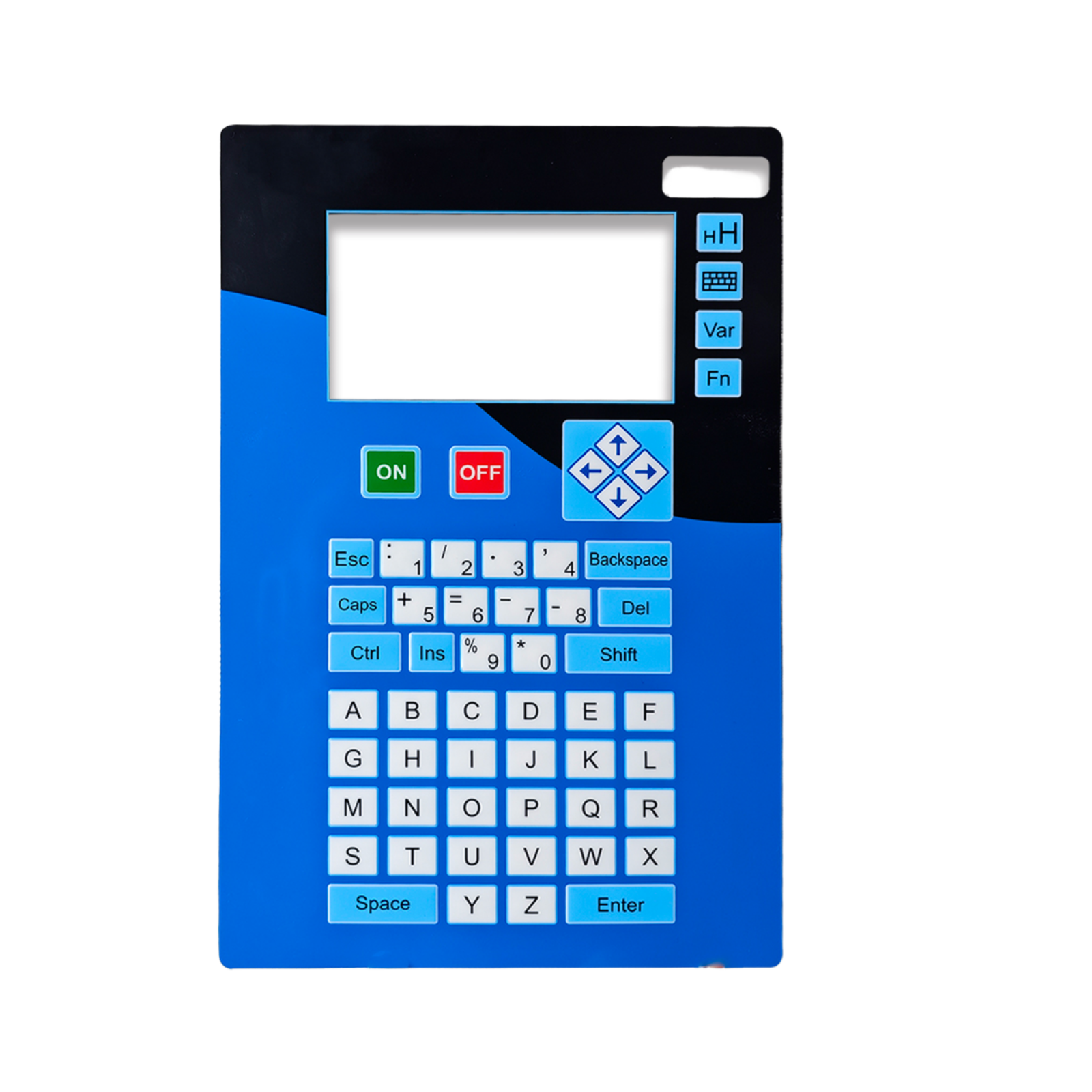
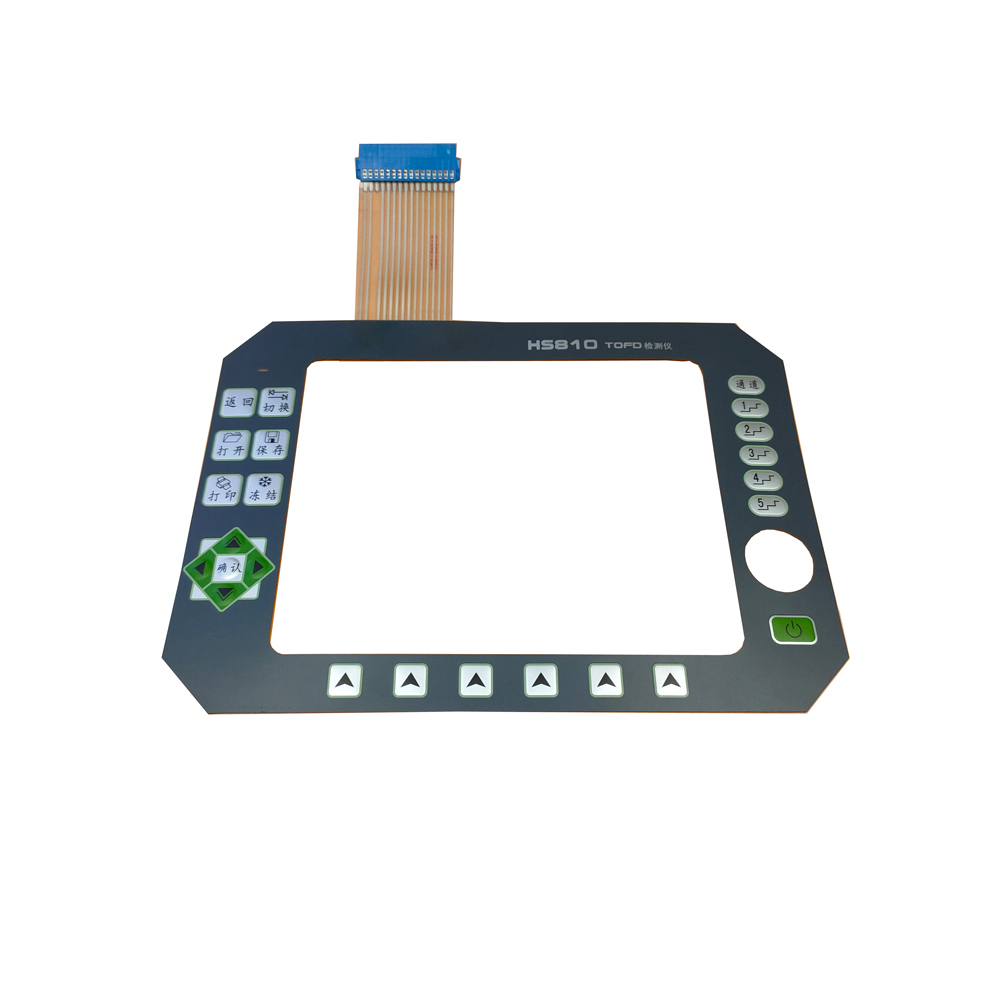
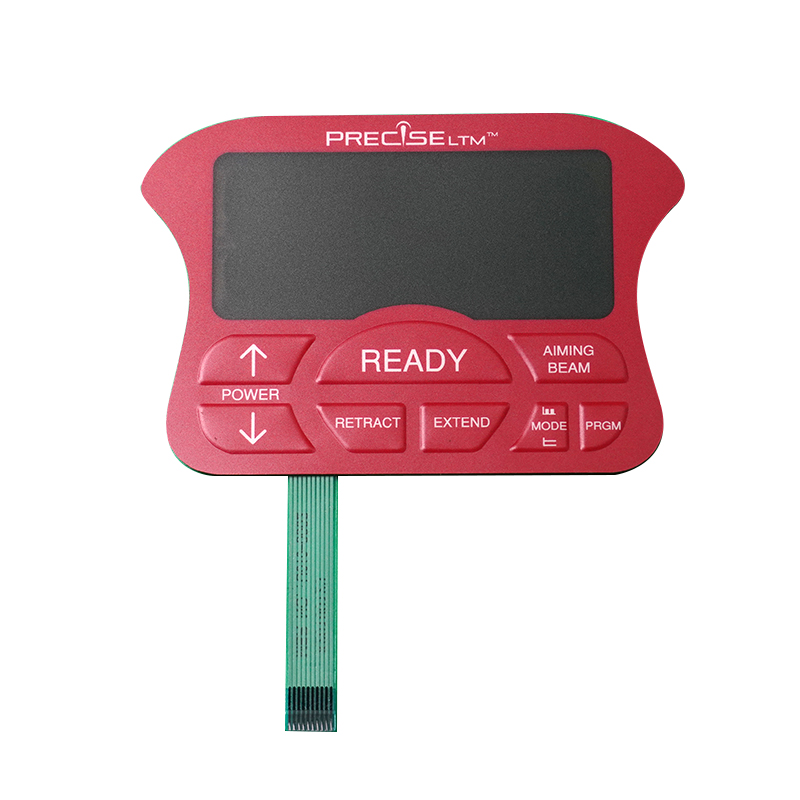
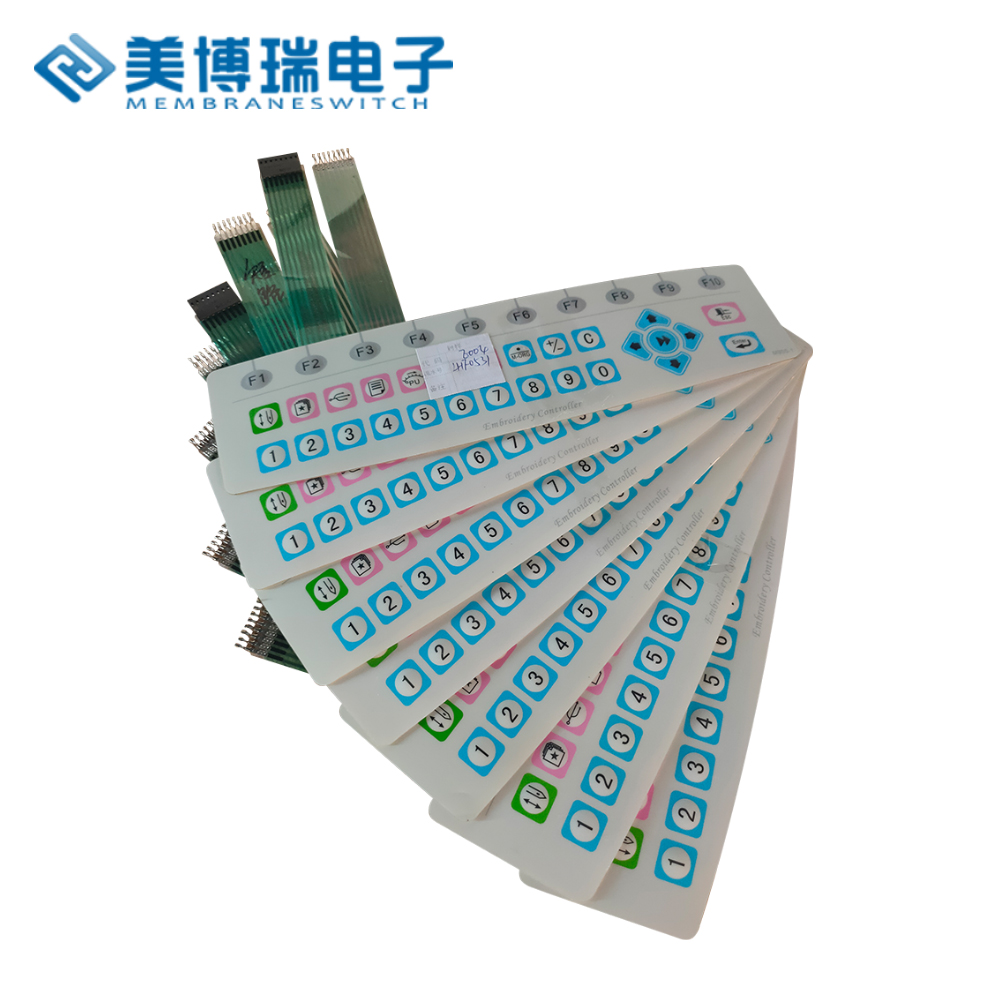
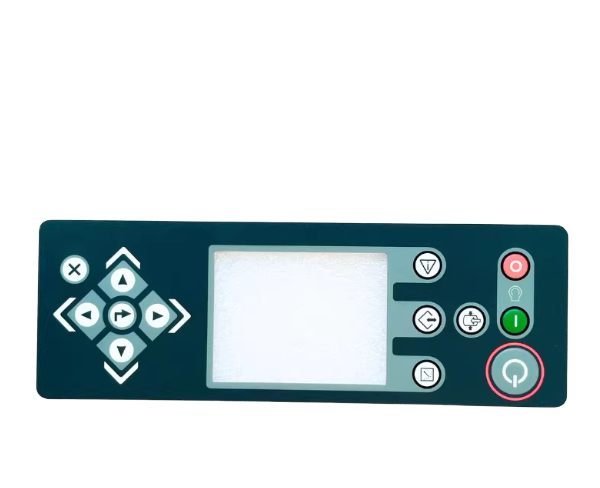
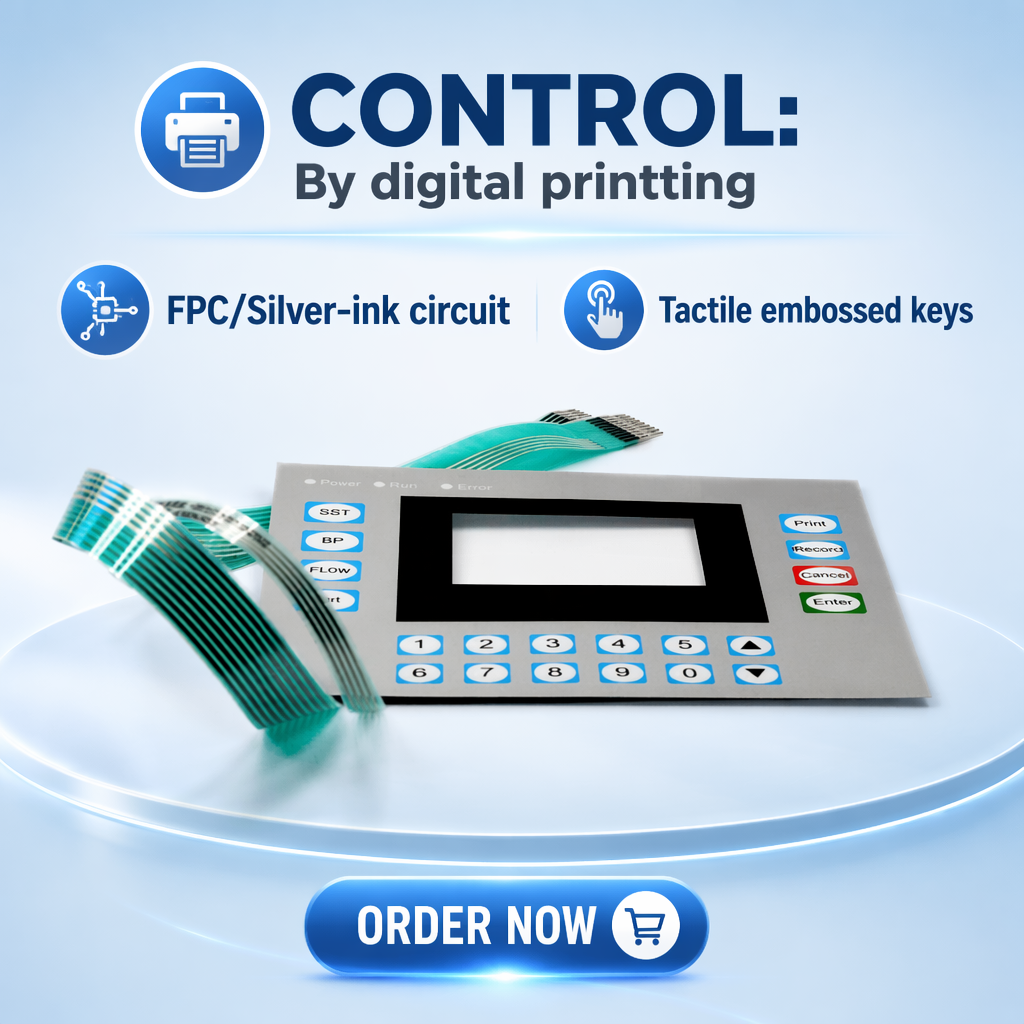
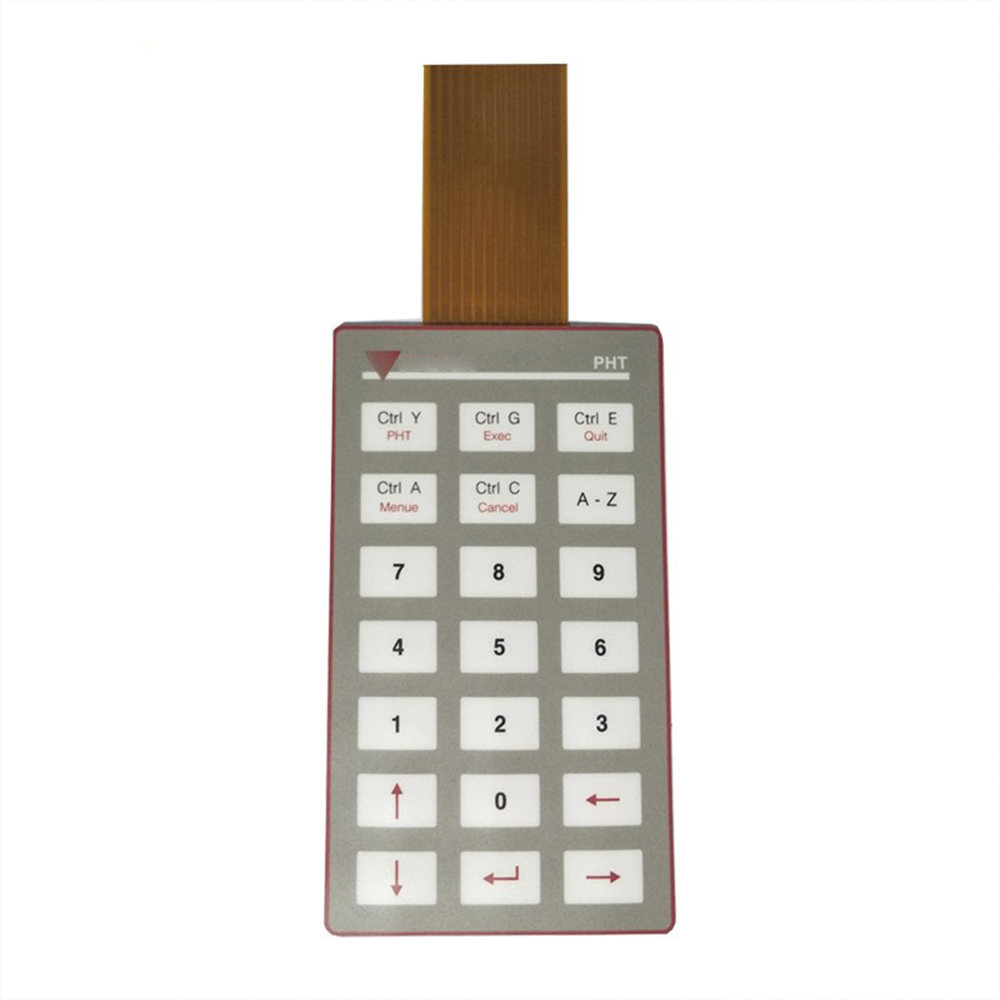
Precision HMI & PET Circuit Product Portfolio
Explore our core industrial control interfaces designed for rugged operating conditions, exceptional tactile feedback, and high electrical repeatability.
Technical White Paper
Engineering Architecture of Industrial PET Membrane Circuitry
A rigorous examination of substrate stability, conductive paste metallurgy, interfacial dielectric behavior, and multi-layer adhesive sealing.
Biaxial Substrate Metallurgy
Our printed flex circuits utilize heat-stabilized, optical-grade Biaxially Oriented Polyethylene Terephthalate (BOPET) films (predominantly DuPont Teijin Melinex or Toray Lumirror) engineered for residual thermal shrinkage below 0.05% at 150°C. This dimensional stability prevents track fracture during silver-paste thermal sintering and preserves mechanical pitch over high-cycle switch operation.
Micro-Encapsulated Silver Traces
We screen-print polymer thick-film (PTF) conductive silver ink containing pure, sub-micron flake morphologies. Formulations achieve surface sheet resistances below 0.025 Ω/sq/mil. Overprinted polymeric carbon shields protect all switch contacts and trace intersection points, guarding against electrochemical silver ion migration across humid Balkan seasonal cycles.
Multi-Tier Lamination Sealing
Interlayer isolation relies on UV-curable, highly crosslinked dielectric coatings with breakdown thresholds exceeding 1.5 kV DC. Circuit stacks are married to differential acrylic adhesives (such as 3M 467MP, 468MP, or VHB systems), creating complete hermetic barriers rated up to IP67. This prevents particulate contamination and fluid intrusion from aggressive cleaners.
1990EST
Membrane Switch Manufacturing Roots
2,219m²
Dual-Plant Production Footprint
5,000,000+
Actuation Cycles (Metal Dome Testing)
111+
Certified Technical Engineers & Operators
| Performance Characteristic | PET Screen-Printed Silver Circuit | Polyimide Flexible Copper (FPC) | FR-4 Rigid PCB Backed HMI |
|---|---|---|---|
| Base Substrate Material | Heat-Stabilized PET (125μm – 188μm) | Polyimide (PI / Kapton, 25μm – 50μm) | Glass-Reinforced Epoxy Laminate |
| Conductor Metallurgy | Polymer Thick Film (PTF) Conductive Silver | Electrodeposited or Rolled Annealed Copper | Etched 1 oz / 2 oz Copper Cladding |
| Trace Resistance per cm | 0.5 Ω – 2.0 Ω (Trace width dependent) | < 0.05 Ω (High current tolerance) | Negligible (< 0.01 Ω) |
| Tactile Life Expectancy | > 1,000,000 to 5,000,000 cycles | > 5,000,000 cycles | > 5,000,000 cycles |
| Thermal Operating Window | -25°C to +85°C continuous | -40°C to +125°C continuous | -40°C to +130°C continuous |
| Bending & Dynamic Flexing | Excellent for static & single-curve flex | Superior for dynamic multi-radius flexing | Rigid (Non-flexible structural base) |
| Tooling Cost & Prototyping Speed | Lowest initial tooling; fast iteration | Moderate tooling; higher lead time | Standard tooling; moderate cost |
Polog Valley Industrial Ecosystem
Localized Applications Across Tetovo & North Macedonia
Addressing the exact environmental, operational, and mechanical requirements of industrial operators in the TIDZ Tetovo free economic zone and broader regional supply chains.
Automotive Component Manufacturing
Tetovo's industrial zones (TIDZ Tetovo / TIRZ) house Tier-1 and Tier-2 automotive suppliers. Our PET circuits drive sub-assemblies for auxiliary controls, steering column interfaces, cabin climate switch arrays, and battery monitoring diagnostic housings where low profile, anti-vibration resistance, and stable contact resistance under mechanical shock are mandatory.
Agro-Food & Milk Processing Equipment
The Polog Valley is a major agricultural hub for dairy, beverage, and agricultural machinery. Equipment interfaces face daily high-pressure washdowns and sanitizing solutions. We supply IP67-rated sealed membrane switch arrays with antimicrobial, chemical-resistant polyester overlays (Autotex XE/Steel) that prevent fluid seepage and graphic degradation.
Wood Processing & CNC Machine Control
Tetovo's long-standing wood craftsmanship and furniture manufacturing clusters rely heavily on computerized CNC routers and edge banders. In dusty, particulate-heavy factory floors, our tactile membrane keypads replace open mechanical switches, preventing sawdust ingress from clogging contacts and causing electrical failures.
HVAC, Heat Pumps & Pellet Boilers
Due to continental Balkan winters in the Šar Mountains region, Tetovo is a prime manufacturer and consumer of domestic and commercial biomass heating appliances. Our temperature-resistant PET control panels with integrated clear LED windows reliably endure ambient fluctuations ranging from -20°C to +75°C without overlay delamination.
Market Dynamics & Nearshoring
Strategic Nearshoring Trends in the Western Balkans
How the evolution of Corridor VIII and European industrial relocation are accelerating the demand for precision PET circuits and HMI modules in North Macedonia.
The Nearshoring Pivot from Central Europe
European original equipment manufacturers (OEMs) in Germany, Austria, and northern Italy are moving Tier-2 production to North Macedonia to shorten lead times and de-risk maritime supply chains. Tetovo provides an operational crossroads along Pan-European Corridor VIII. Suppliers who offer rapid turnkey prototyping and reliable, audited Chinese component manufacturing allow local contract manufacturers to maintain lean, just-in-time delivery models.
Transition to Capacitive & Thin-Profile HMIs
Traditional bulky mechanical push-buttons are disappearing across newly developed industrial hardware in the Polog region. Engineers are adopting slim, sealed PET membrane switches with capacitive touch sensing, back-lit light guide film (LGF) arrays, and optically bonded display windows. This shift reduces front-panel assembly depth from 45 mm down to under 2.5 mm, minimizing chassis metalwork and enclosure tooling expense.
Strict EU Harmonization: CE, RoHS & REACH
Because finished equipment built in Tetovo is frequently exported to EU member states, compliance documentation must be airtight. Every PET film, conductive silver formulation, adhesive layer, and surface treatment we ship comes backed by full material test certifications, ensuring full compliance with the EU RoHS Directive (2011/65/EU) and REACH (EC 1907/2006) regulations.
Manufacturing Verification
Why Tetovo Industrial Buyers Partner with TAVO
Combining three decades of precision membrane engineering, dual-plant scalability, and German technical cooperation to deliver superior reliability.
100% In-House Processing
Every step—graphic film output, screen printing, digital UV printing, key embossing, laser die-cutting, cleanroom assembly, and automated circuit testing—is executed internally. With 37 silkscreen printing machines, 4 Mimaki UV digital units, and 18 laser cutters, we eliminate outsourced subcontractors, safeguarding product consistency.
German Technical Alignment
Our long-term technical cooperation with a German membrane switch factory brings European engineering disciplines directly to our production lines. We adhere to rigorous DIN/ASTM actuation life testing and maintain full traceability across our ISO 9001:2015-certified cleanrooms, audited on-site by Intertek.
Dual-Factory Load Balancing
Operating complementary manufacturing facilities in Xianghe Robot Industry Port (Hebei) and Huizhou (Guangdong), we balance order volume across 2,219 square meters of production floorspace. Your projects are never delayed by single-line bottlenecks or regional logistics constraints.
Rigorous Test Laboratory
All batches undergo computer-controlled continuity mapping, contact loop resistance validation, button actuation life cycling, xenon lamp aging, programmable humidity/thermal chambers (-40°C to +150°C), and automated salt spray chambers to guarantee long-term field survivability.
Procurement Intelligence
Frequently Asked Questions for Tetovo & Regional Buyers
Direct technical and logistical clarity for engineering teams and supply chain professionals across North Macedonia.
How do you manage freight logistics and customs clearance for factories in Tetovo?
We routinely supply international OEMs under FOB, CFR, CIF, and EXW incoterms. For urgent prototype runs and pilot batches destined for Tetovo or Skopje, we utilize direct express air freight (DHL, FedEx, UPS) arriving at Skopje International Airport (SKP) within 4 to 6 business days.
For recurring volume production shipments, consolidated ocean cargo arrives through the Port of Thessaloniki (Greece) or Port of Durrës (Albania), followed by bonded truck transit across the border directly into the Polog customs terminal. Complete documentation—commercial invoices, packing lists, CE/RoHS material certificates, and Certificates of Origin—is provided for fast local customs processing.
Can your membrane circuits withstand harsh Balkan winters and seasonal thermal swings?
Yes. The Polog basin experiences significant seasonal temperature shifts, ranging from -15°C in mountain winters to over +38°C in summer. We utilize heat-stabilized polyester film combined with high-tack, low-temperature resistant adhesives (such as 3M 467MP/468MP series) and flexible conductive silver pastes containing anti-embrittlement polymeric additives.
Our programmable environmental chambers verify switch continuity and layer cohesion through thermal cycling tests between -40°C and +85°C, ensuring switch packs will not crack, lose contact conductivity, or delaminate in the field.
What engineering files must our Tetovo design team submit to obtain a prototype quote?
To produce an exact manufacturability analysis and rapid price quote, please provide:
1. Dimensional outline drawing (DXF, DWG, PDF, or STEP) specifying external dimensions, cutout apertures, and tail position.
2. Graphic overlay artwork (Vector format: Adobe Illustrator .AI, CorelDRAW .CDR, or vector PDF) with specified Pantone or RAL color references.
3. Electrical schematic indicating trace mapping, pin-out configuration, termination pitch (typically 1.0mm, 1.27mm, or 2.54mm), connector socket type (Nicomatic, FCI/Amphenol, or bare ZIF tail), and dome tactile force requirements (ranging from 180g to 450g). Our 10-person CAD engineering group reviews design-for-manufacturing (DFM) variables within 24 hours.
How do you protect PET silver traces against electrochemical migration in high humidity?
Electrochemical silver ion migration can occur when fine-pitch silver conductive tracks are exposed to DC bias voltage in humid environments. To prevent trace degradation, we apply two distinct engineering safeguards:
First, we deposit an overprinted, high-density polymer carbon resistor coating over all exposed contact fingertips and switch pads. Second, we apply UV-cured dielectric insulation layers that completely encapsulate the silver traces. This isolation barrier prevents moisture and atmospheric contaminants from bridging adjacent conductor lines, maintaining insulation resistance values well over 100 MΩ at 100V DC.
What is the typical tooling cost and lead time for custom membrane switch prototypes?
Tooling and setup charges for custom membrane switches are substantially lower than for plastic injection molds. For standard tactile PET prototypes, initial laser-cut sample tooling usually ranges between $150 and $400 USD depending on layer complexity, embossing needs, and connector terminations.
Working sample prototypes are produced and dispatched within 7 to 10 working days following artwork and mechanical drawing sign-off. High-volume production steel die tooling and dedicated testing jigs are finalized concurrently for subsequent bulk runs.
Can you integrate backlighting, surface-mount LEDs, and rigid backer plates?
Yes. We offer fully integrated HMI panels. We can bond miniature 0603 or 0805 surface-mount device (SMD) LEDs directly onto the PET circuit tracks using specialized conductive epoxy with UV-cured potting encapsulants for vibration resistance.
For uniform illumination across graphic overlays, we integrate micro-patterned Light Guide Film (LGF) layers. For rugged machine enclosures, the entire membrane switch assembly can be laminated onto CNC-milled aluminum, stainless steel, or rigid FR-4 backer plates with pressed-in threaded studs for direct chassis mounting.
Are your materials and inks compliant with European RoHS, REACH, and environmental directives?
Every raw material utilized across our facilities—including polyester films, screen-printing inks, conductive silver and carbon compounds, metal domes, and pressure-sensitive transfer adhesives—fully complies with the EU RoHS Directive (2011/65/EU) and REACH Regulation (EC No 1907/2006).
We provide full third-party laboratory verification reports (SGS / Intertek) confirming that our assemblies are free from heavy metals, halogenated flame retardants, and restricted phthalates, allowing your finished equipment to enter EU markets without compliance friction.
How do you accommodate low-volume, high-mix pilot orders for regional product development?
Unlike rigid volume-only factories, we maintain flexible digital manufacturing cells. By utilizing Mimaki high-resolution digital UV flatbed printing paired with computer-controlled laser cutting systems, we produce high-mix pilot batches (50 to 500 units) without requiring costly screen setups or hard punch tooling.
This allows Tetovo machine builders and startups to test product variations, validate ergonomic feedback, and iterate graphic designs with low upfront financial exposure.
Accelerate Your Next HMI Project in Tetovo
Connect with our technical design group for DFM review, layer stack recommendations, sample evaluations, and volume quotes tailored to your production schedule.