Featured Polycarbonate & Membrane Switch Assemblies
High-durability human-machine interfaces designed for rigorous German and international OEM operating specifications.
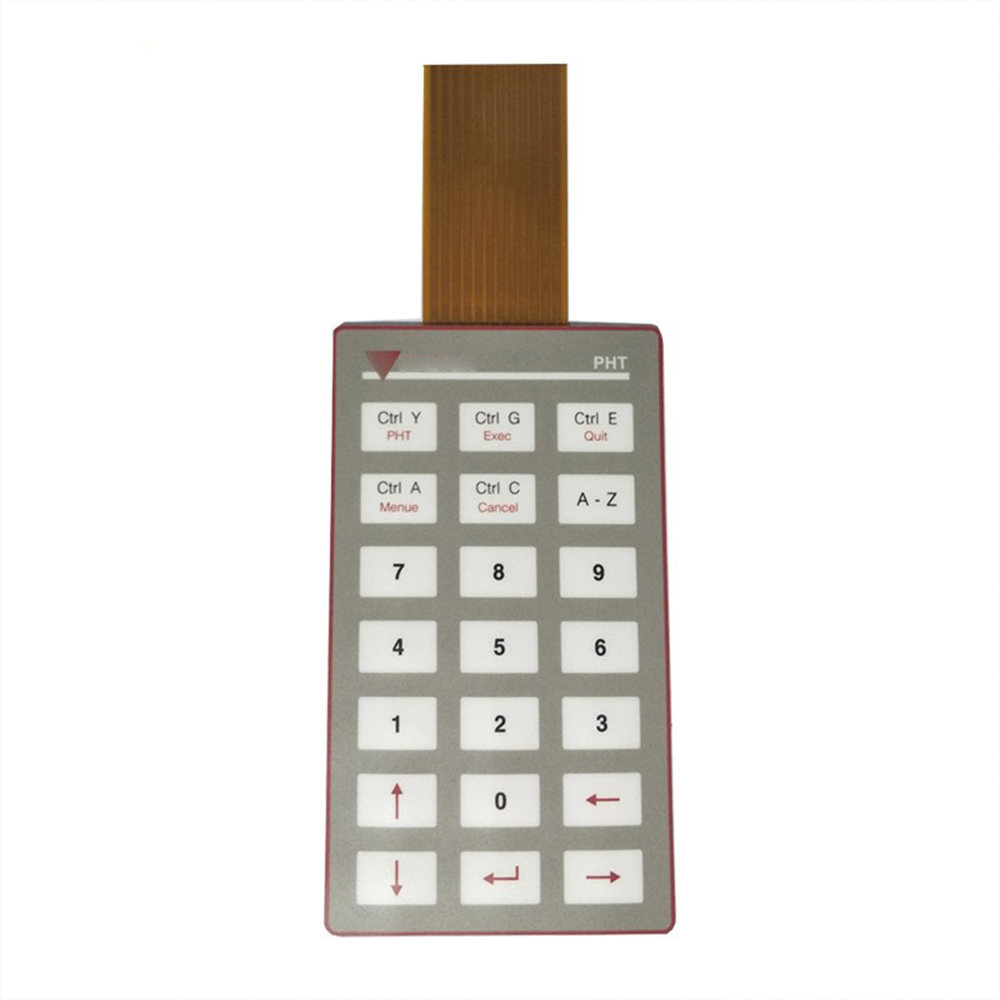
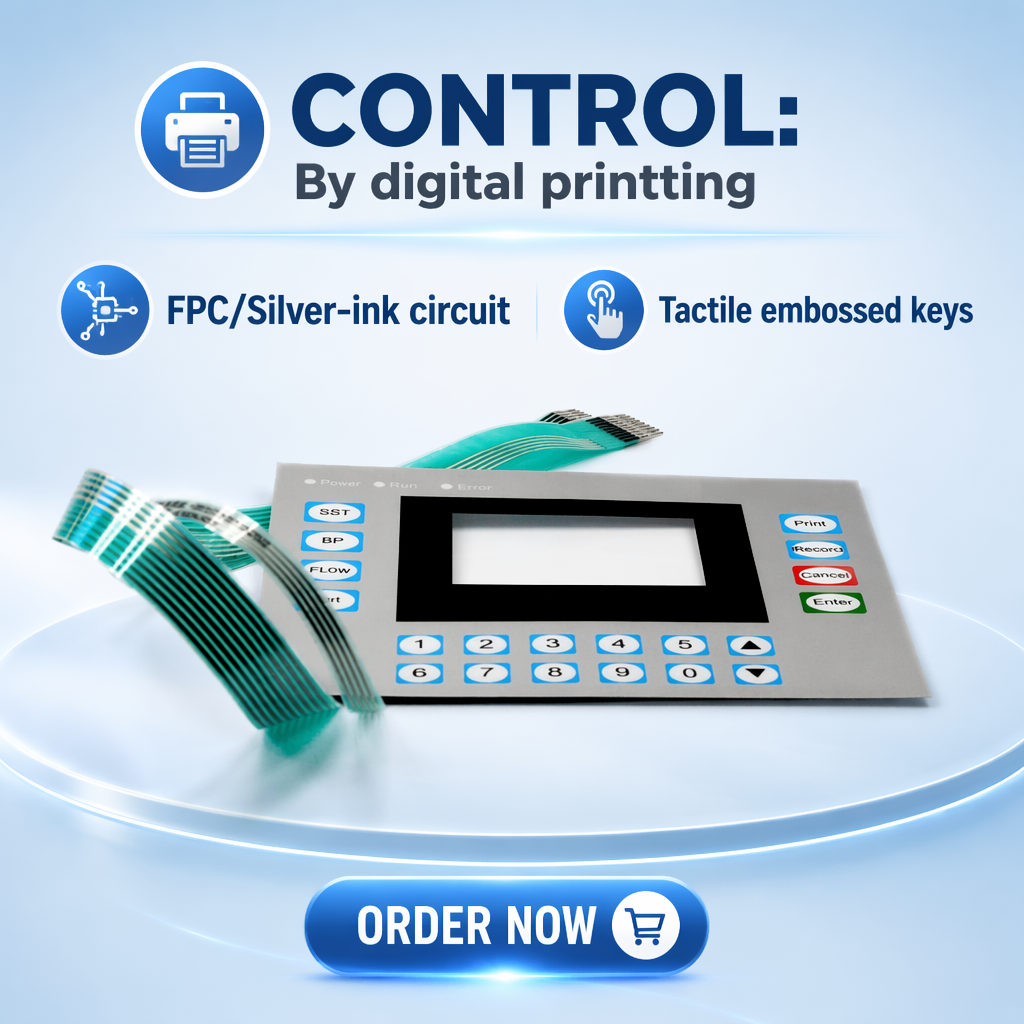
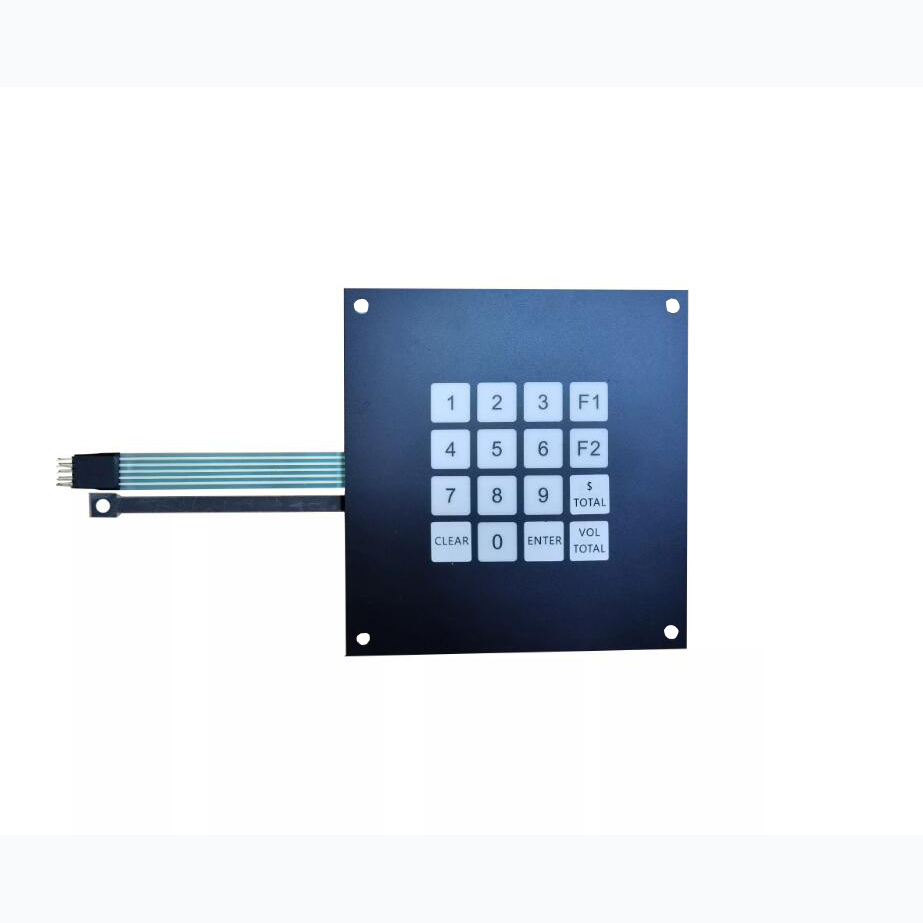
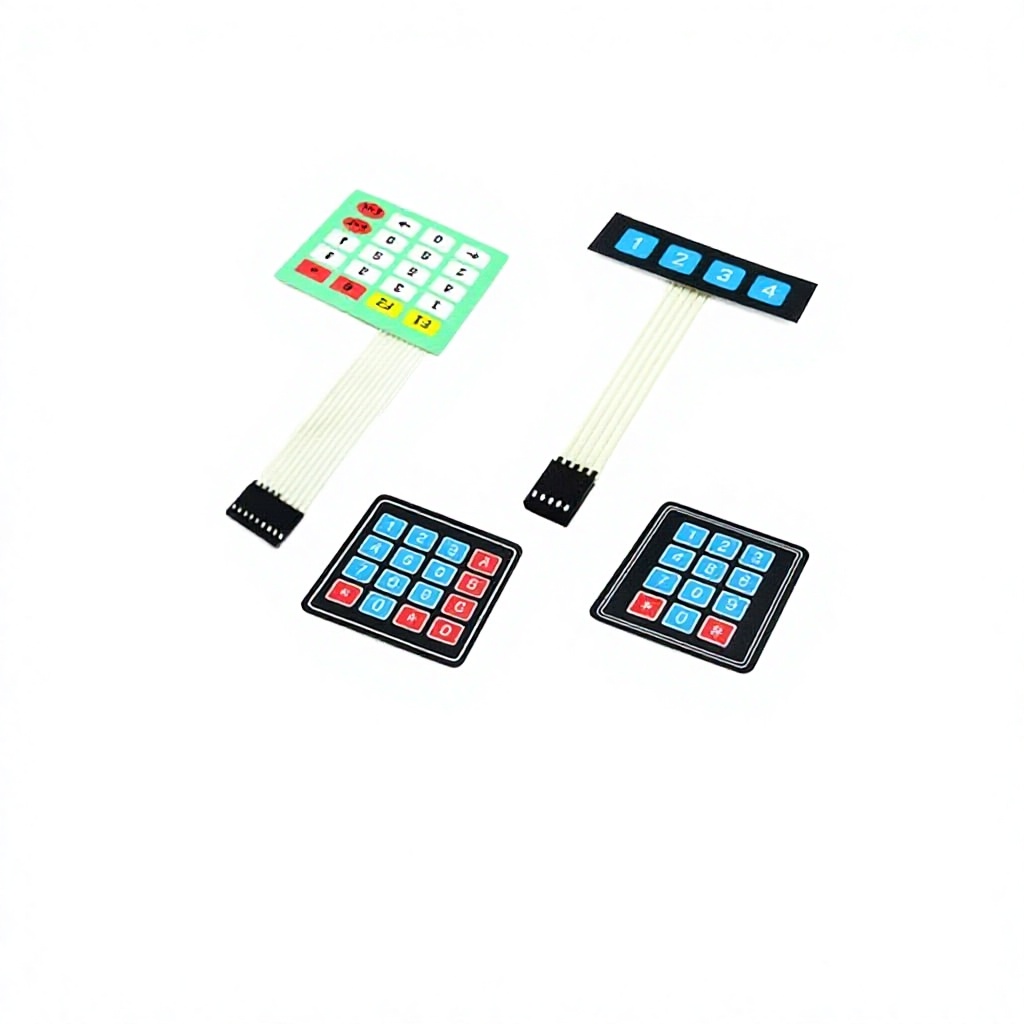
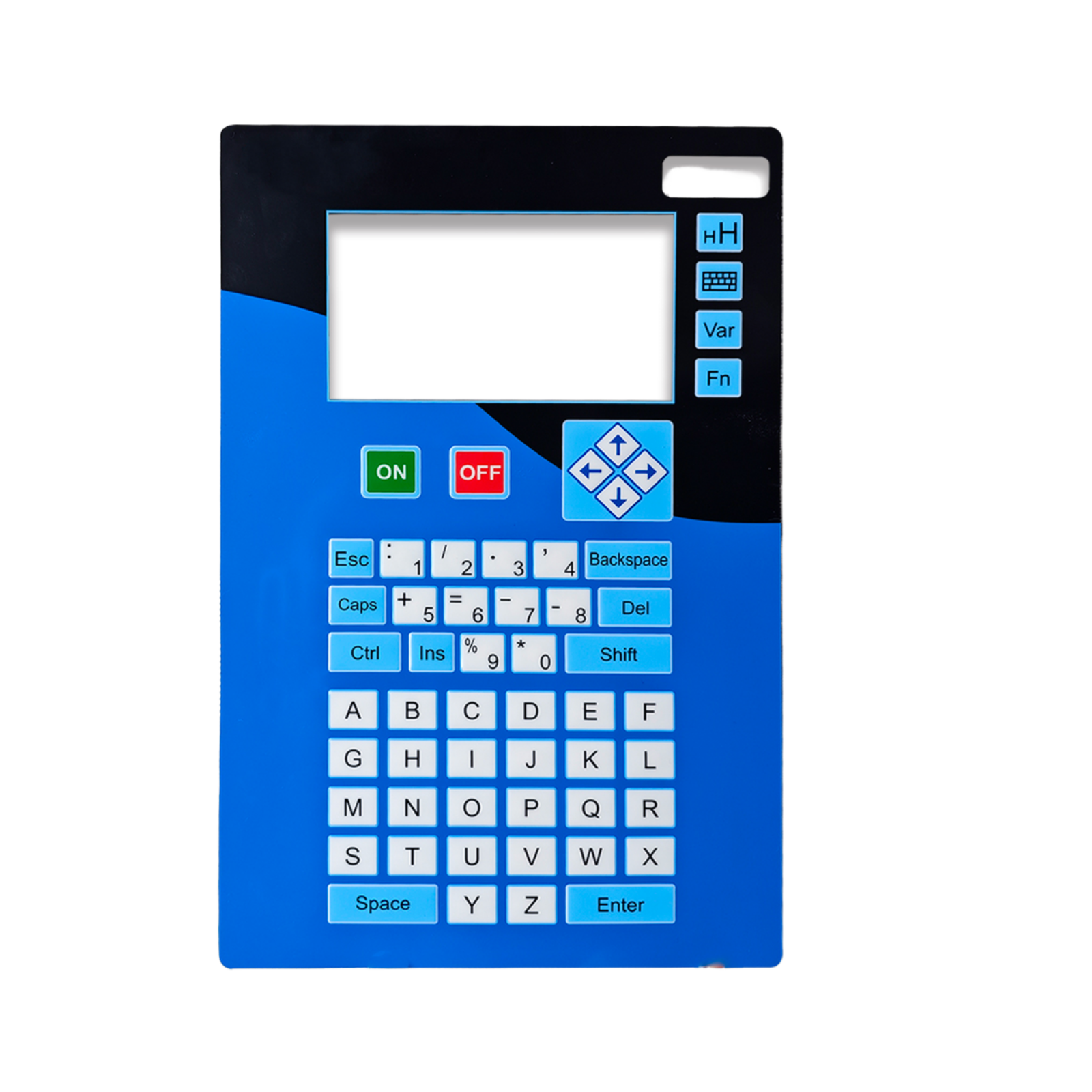
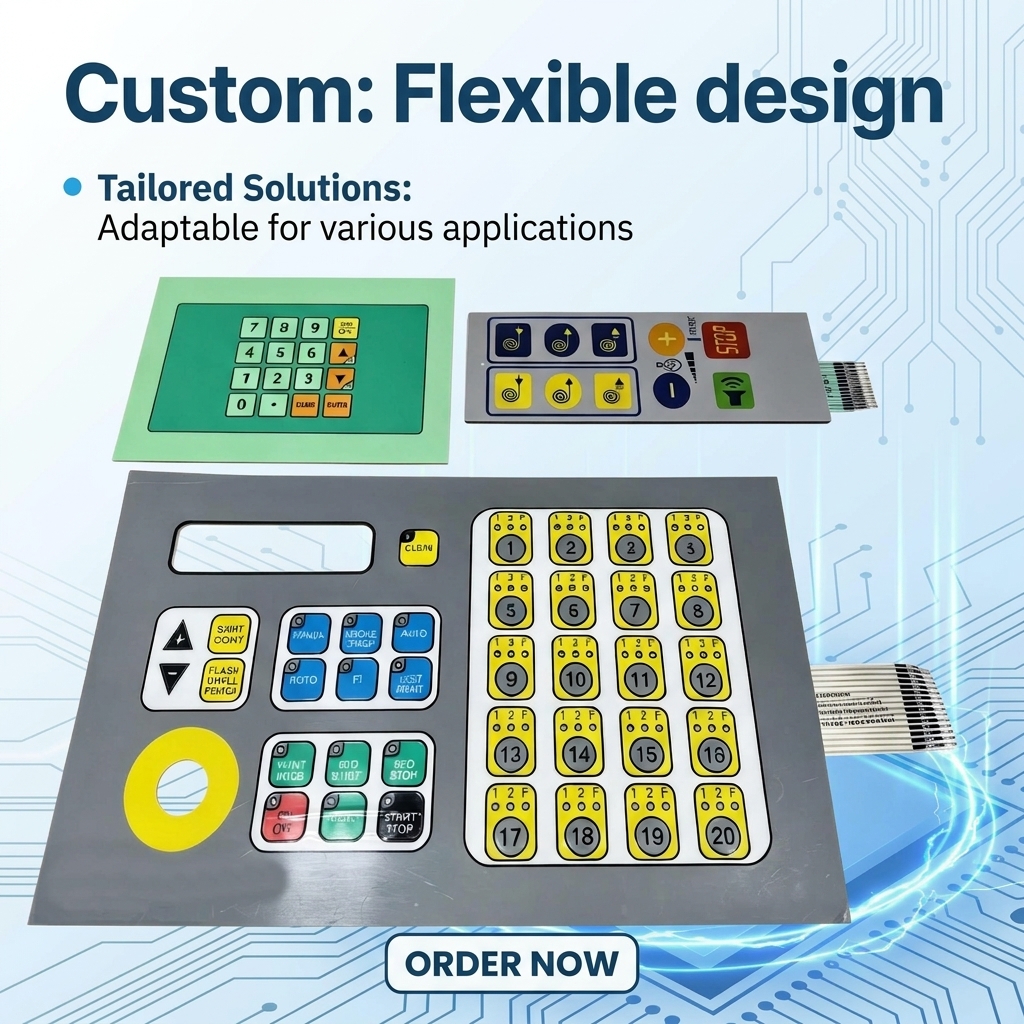
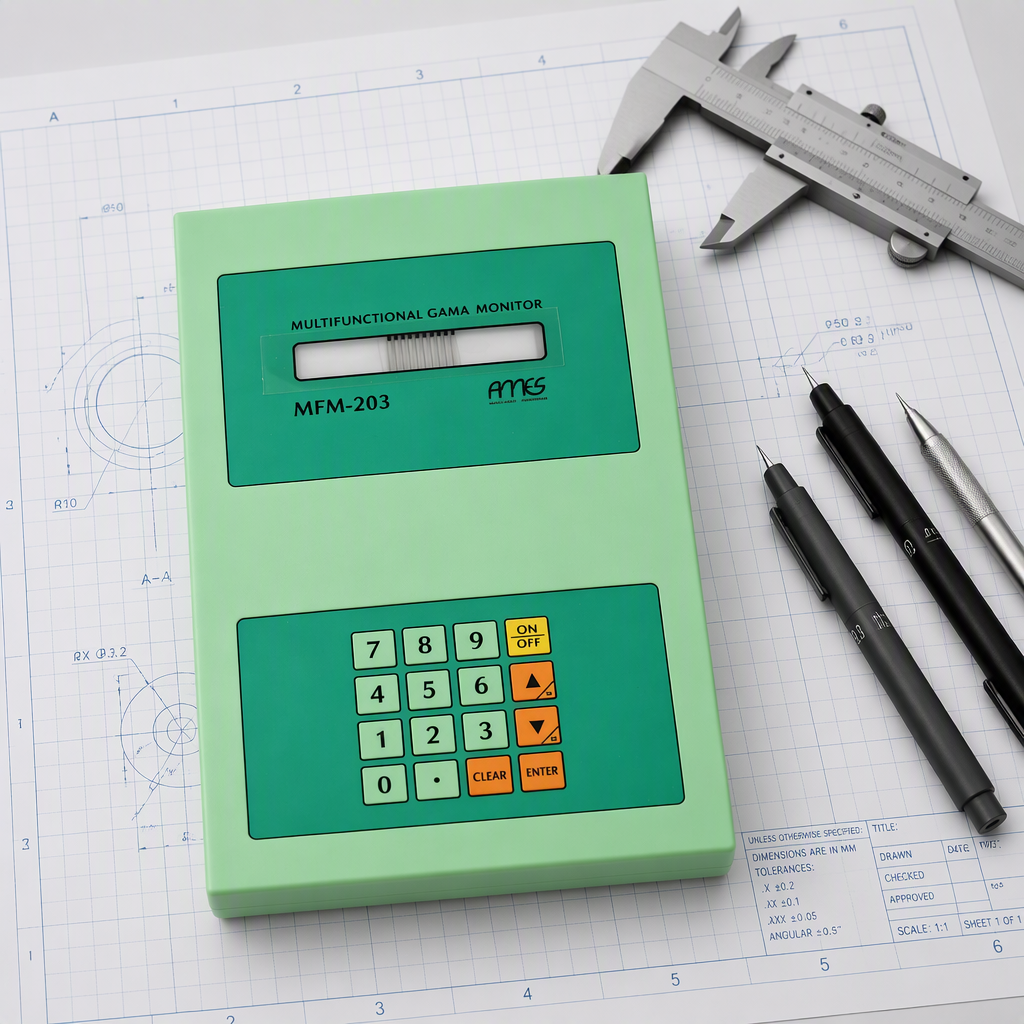
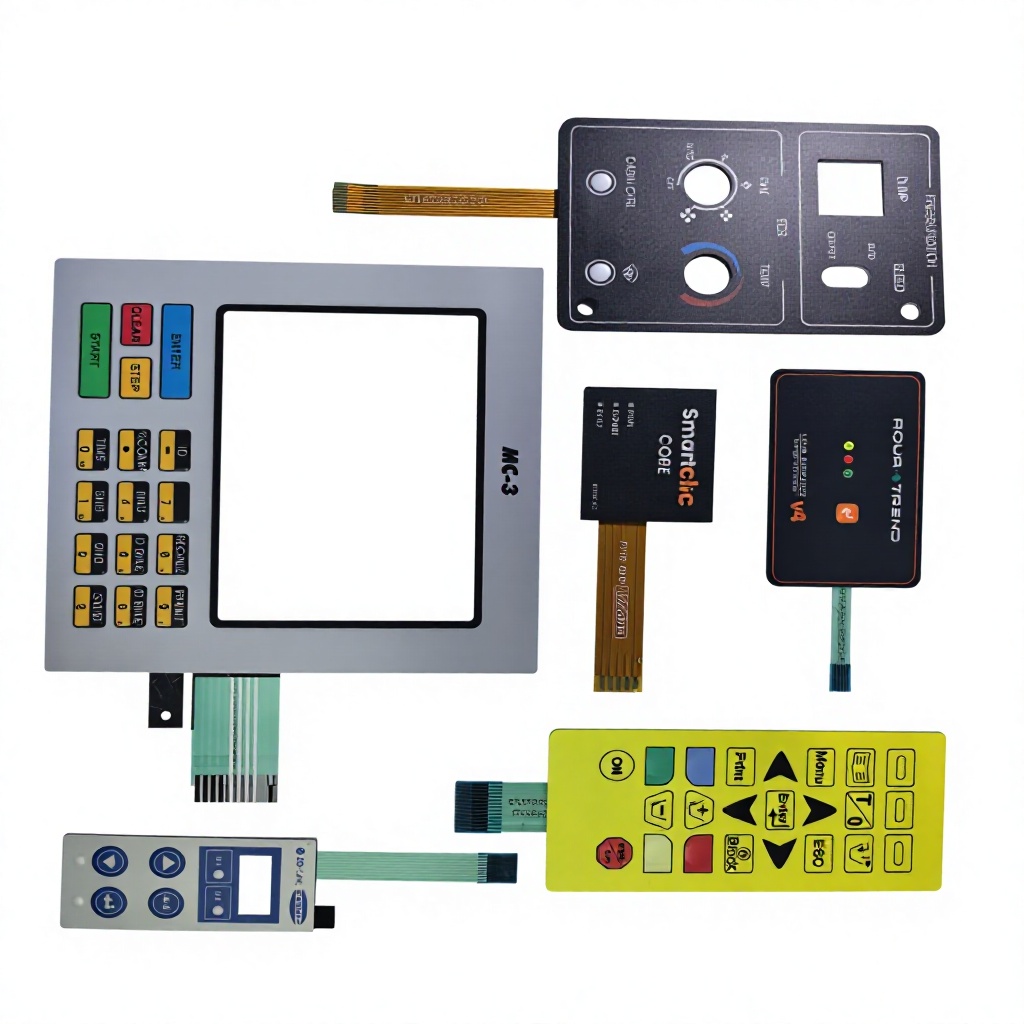
Engineering White Paper: Polycarbonate Graphic Overlay Architecture for European Industrial Machinery
In modern human-machine interface (HMI) design, front-panel graphic overlays do far more than communicate brand identity; they act as the primary hermetic and mechanical barrier guarding delicate electronics against industrial contamination, hydraulic mist, aggressive sanitation chemicals, and abrasive wear. For apparatus deployed across the Federal Republic of Germany—particularly within the Rhine-Main innovation nexus encompassing Frankfurt am Main, Darmstadt, Offenbach, and Hanau—the selection of sub-surface printed polycarbonate (PC) substrates is driven by demanding physical, optical, and thermal prerequisites governed by DIN EN standards.
Polycarbonate (derived chemically through the polycondensation of bisphenol A and phosgene, marketed under engineered designations like Sabic Lexan™ and Covestro Makrofol®) provides an exceptional combination of high impact resistance (Charpy impact notched > 25 kJ/m²), glass-like optical transmission exceeding 89%, high heat deflection temperatures (HDT of 135°C under 1.8 MPa load), and predictable dimensional stability (±0.05 mm under thermal cycling from -40°C to +105°C). Unlike surface-printed metal tags or topical paper labels, custom graphic overlays produced by TAVO utilize sub-surface screen and digital UV printing. In this setup, color pigments, metallics, block-out barriers, and light diffuser masks are reverse-applied onto the second surface (the rear) of the optical-grade polycarbonate film. The polycarbonate film itself shields the ink layer from abrasive friction, UV photolysis, mechanical scuffing, and chemical wipe-downs.
| Substrate Parameter | Optical Polycarbonate (Lexan / Makrofol) | Biaxially-Oriented PET (Autotype Polyester) | Cast Acrylic (PMMA) |
|---|---|---|---|
| Mechanical Flexural Actuations | Up to 100,000 cycles (ideal for non-tactile keys/flat windows) | > 5,000,000 cycles (superior for high-travel switch domes) | Brittle; not suited for switch embossing or actuation |
| Impact Resistance (Charpy Notch) | > 25 - 35 kJ/m² (Virtually shatterproof) | 8 - 12 kJ/m² (Good ductile strength) | 1.5 - 2.5 kJ/m² (Prone to cracking under sharp shock) |
| Continuous Temperature Range | -40°C to +125°C (+135°C short excursions) | -40°C to +85°C (Special thermal grade to 120°C) | -20°C to +70°C (Limited thermal endurance) |
| Dielectric Breakdown Voltage | 18 - 25 kV/mm (Excellent ESD barrier) | 15 - 20 kV/mm (Dependable insulation) | 20 kV/mm (Moderate dielectric stability) |
| Optical Window Clarity | Clear gloss, anti-glare velvet, matte velvet textures | Natural semi-translucent; clear requires glossy coats | Extreme optical purity; high gloss clarity |
| Chemical Wipe Resistance | Resistant to aliphatic hydrocarbons, oils, mild acids | High resistance to harsh solvents, MEK, acetone, alcohols | Vulnerable to alcohols, esters, and chlorinated solvents |
To balance mechanical actuation life with high impact requirements, TAVO frequently implements a hybrid structural architecture: an outer textured polycarbonate layer with custom dead-front windows bonded via optically clear acrylic adhesive (OCA) over an inner polyester (PET) or flexible copper printed circuit (FPC). This configuration provides the shatterproof durability and optical window precision of polycarbonate along with the multi-million-actuation fatigue endurance of PET or polyimide inner switch layers.
Frankfurt & Rhine-Main Strategic Application Sectors
Customized HMI overlays, durable keyboard membranes, and front panels tailored to the high-density industrial and logistics sectors of Hessen.
Industriepark Höchst Process & Chemical HMIs
As one of Europe's largest chemical and life-science centers, Industriepark Höchst requires human-machine interfaces that withstand continuous exposure to process solvents, disinfectant alcohols, and frequent washdowns. Our chemically hard-coated polycarbonate overlays feature hermetic perimeter gasket adhesives (3M 300LSE/468MP) delivering IP66-sealed barriers against harsh vapors and aggressive fluids.
Frankfurt Airport (FRA) Logistics & Ground Support
Frankfurt Airport operates as Europe's busiest airfreight handling center. Automated material handling units, cargo conveyors, automated guided vehicles (AGVs), and aviation fuel dispensers demand outdoor-rated front panels capable of handling UV-radiation, torrential rains, fuel splatters, and wide thermal variations (-30°C winter frosts to +60°C solar tarmac absorption).
Rhine-Main Data Centers & Critical Power HMIs
Frankfurt is the primary connectivity hub of continental Europe, centered around the DE-CIX Internet Exchange. Over 60 enterprise data centers in Sossenheim, Gallus, and Hanau rely on mission-critical server rack PDUs, smart transfer switches, and UPS control panels equipped with our matte-finish, anti-glare polycarbonate overlays, dead-front status displays, and integrated LED indicator windows.
Hessen Precision Engineering & CNC Machine Tools
The manufacturing base across Mittelhessen and southern Hessen builds high-precision milling, turning, and sorting machines. Operators manipulate controls wearing oil-slicked protective gloves. Our thermoformed pillow-embossed or rim-embossed tactile switches provide clear mechanical click feedback (actuation force 280g to 420g) alongside aluminum backer plates for rigid structural mounting.
Medical Instrumentation & Diagnostic Apparatus
Medical technology innovators in Marburg, Giessen, and greater Frankfurt develop blood analyzers, infusion pumps, and clinical monitoring setups. These systems require perfectly flat, continuous surface graphic overlays without crevices that harbor bacteria. With anti-microbial hard coatings and optical clear bonding (OCA) over LCD/OLED readouts, our panels facilitate thorough sterilization with isopropyl alcohol and quaternary ammonium solutions.
E-Mobility Infrastructure & Public EV Fast Chargers
Driven by Hessen's green mobility initiatives, public DC fast chargers across the Autobahn routes require graphic overlays capable of enduring constant sunlight, graffiti attempts, road salt corrosion, and extreme user handling. Utilizing UV-resistant hard-coated Makrofol® with reverse silk-screened ceramic-grade UV inks guarantees 10+ years of exterior colorfastness without yellowing or delamination.
Industry 4.0 & Technical Trends Shaping Sourcing in Frankfurt
How German equipment manufacturers are specifying next-generation control panel interfaces.
1. Shift from Pure Touchscreens to Hybrid Tactile HMIs
While capacitive touch displays are widespread, German machinery designers are moving toward hybrid setups. Safety-critical commands (Emergency Stop, Axis Jog, Spindle On/Off) are integrated into embossed membrane keys with tactile metal domes directly bordering the touchscreen, providing eyes-free confirmation and preventing accidental actuations from spurious liquid splashes.
2. Stringent EU Chemical & Environmental Directives
Compliance with EU Regulation (EC) No 1907/2006 (REACH) and RoHS 3 (Directive 2015/863) is non-negotiable for German OEMs. Procurement teams in Hessen audit supplier bills of materials for SVHC (Substances of Very High Concern). TAVO formulates all adhesives, conductive silver tracks, UV dielectric spacers, and graphic inks without restricted phthalates, halogens, or toxic heavy metals.
3. Uniform LGF (Light Guide Film) Low-Power Backlighting
Old-fashioned discrete LEDs often create uneven illumination hotspots. German OEMs now specify ultra-thin Light Guide Film (LGF) layers (0.125 mm to 0.25 mm) side-lit by low-power micro-SMDs. This achieves edge-to-edge balanced white or RGB luminescence through graphic legends, optimizing dark-room data center and locomotive dashboard usability.
4. Demand for Lower Initial Batch Sizes & Pilot Runs
The development cycle of German specialty instrumentation involves rapid iterative prototyping. Buyers avoid costly tooling lock-ins. By combining digital Mimaki UV printing for small-batch graphics with high-speed digital plotter knife/laser cutting, TAVO enables Frankfurt engineers to test pilot batches (10 to 100 units) without expensive steel stamping dies.
5. Direct-to-Metal & Cast Enclosure Integration
Sourcing engineers prefer consolidated sub-assemblies. Rather than purchasing graphic overlays, spacer gaskets, rubber keypads, and sheet-metal brackets separately, buyers order complete assemblies pre-laminated onto CNC-milled aluminum backers with PEM studs, integrated FPC tail headers, and factory-tested pinouts ready for plug-and-play production.
6. Surface Finishes Tailored for Cleanability & Scratch Resistance
Hygiene and durability require tailored surfaces. Textured velvet and fine-matte polycarbonate films diffuse ambient factory lighting while hiding fingerprint oils. In contrast, scratch-resistant hard-coats (pencil hardness up to 2H-3H) prevent micro-scuffs during frequent industrial wiping with harsh cleansers.
TAVO Manufacturing Architecture & Quality Engineering
In-house precision fabrication, international auditing credentials, and long-term German technical collaboration.
Dual-Factory Capacity
Two production centers located in Xianghe (Robot Industry Port) and Huizhou (Guangdong) cover 2,219 m², sharing capacity so orders avoid production bottlenecks.
German Technical Partnership
Long-term operational and technical collaboration with German membrane switch engineers ensures design rules, color tolerances, and reliability test protocols meet European OEM benchmarks.
Intertek Assessed & ISO 9001
Independent on-site assessment by Intertek with audited ISO 9001 quality systems. We maintain closed-loop traceability from raw polymer rolls to shipped assemblies.
Extensive In-House Tooling
Equipped with 37 precision screen printers, 4 Mimaki UV digital units, 18 laser cutters, 60 CNC mold-making workstations, and 7 automated digital engraving platforms.
Laboratory Quality Verification: Reliability That Eliminates Field Failures
Industrial control components intended for installations across Frankfurt and Europe must operate without unexpected breakdown over multi-year duty cycles. TAVO subjects every new design and custom batch to electrical, mechanical, and climatic verification in our in-house testing facility:
Computer Circuit Continuity Testing
Every switch matrix and conductive trace is 100% analyzed on automated computer circuit testers for open/short circuits, contact bounce (<5 ms), contact resistance (<100 Ω loop resistance), and insulation impedance (>100 MΩ at 100V DC).
Climatic & Salt Fog Chambers
Programmable high/low temperature humidity chambers (-40°C to +125°C, 95% RH for 96 hours) test against adhesive delamination and micro-silver migration, while automatic salt fog chambers test against marine/corrosive atmosphere attacks.
Key Actuation & Xenon Weathering
Multi-finger life-cycle actuation rigs stress embossed tactile buttons and stainless-steel domes up to 5,000,000 strokes under controlled 300g force. Programmable xenon arc chambers verify UV color stability against outdoor solar degradation.
Frequently Asked Questions by Purchasing & Engineering Teams
Direct technical and logistical answers for sourcers, system architects, and component buyers in the Rhine-Main territory.
What engineering files and data formats are required to begin tooling and prototyping?
1. Mechanical Outline: DXF, DWG, STEP, or PDF drawings showing outer boundary tolerances, cutouts, window locations, clear zones, and embossed key boundaries.
2. Graphic Artwork: Vector files (Adobe Illustrator .AI, CorelDRAW .CDR, or vectorized vector PDF) with separate layers for print colors, designated Pantone Matching System (PMS) or RAL color codes, and dead-front indicators.
3. Circuit Schematic & Pinout: For assemblies integrating membrane switches or FPCs, provide schematic trace mappings, tail exit coordinates, connector type (e.g., 2.54 mm Berg, Amphenol FCI clincher, or 1.0 mm ZIF pitch), and resistor/LED solder coordinates.
Our 10-person CAD engineering group translates your designs into production-ready assembly drawings within 24 to 48 hours for engineering sign-off prior to tooling.
How does TAVO manage air and ocean freight shipments directly to Frankfurt am Main?
What pressure-sensitive adhesives (PSAs) are recommended for powder-coated or cast metal housings?
• High Surface Energy (HSE) Substrates (Smooth bare aluminum, stainless steel, polycarbonate): We utilize 3M 467MP (0.05 mm) or 3M 468MP (0.13 mm) high-performance acrylic adhesive (200MP series), providing shear strength and resistance to temperatures up to 200°C.
• Low Surface Energy (LSE) Substrates (Powder-coated sheet metals, textured die-cast enclosures, polypropylene): We specify 3M 300LSE adhesive. It is engineered to adhere to powder coatings and lightly textured surfaces without lifting or bubbling.
• Waterproof & Outdoor Applications: Custom closed-cell acrylic foam tapes (e.g., 3M VHB series) are laminated along the panel perimeter to absorb shock and guarantee IP67 hermetic sealing.
Can polycarbonate overlays be combined with clear, anti-fingerprint display windows?
What are the minimum order quantities (MOQ) and lead times for prototype versus series production?
Accelerate Your Custom HMI Project in Frankfurt
Consult directly with our engineering team. Whether you need rapid prototypes for evaluation, custom polycarbonate front overlays with optical windows, or turnkey sealed keypad assemblies with FPC circuitry, our in-house engineering and production facility is ready to support your application.
Request Quotation & DFM Review
Connect with a senior technical specialist for immediate configuration assistance and prototype planning.
Get a Quote